
I have blogged before about one of my favorite graffiti artists, Banksy. Recently there has been some buzz in the ad world about another provocative work attributed to him. It involves a well-known bottle and trademark that Steve has been posting about frequently over the past several weeks. Normally I would post an image
The Hairy Underside of the Butt-Billboard Campaign
– James Mahoney, Razor’s Edge Communications
Not long ago, Steve Baird posted a commentary on a colonoscopy campaign that featured attention-getting, humorous (to some) butt jokes.
I liked ‘em. Thought they were clever and effective. Beyond making me think of my guts, though, they also brought to mind a conversation I had with a mentor
New Challenges for So-Called “Patent Trolls”
– Sri Sankaran, Patent Attorney, Winthrop & Weinstine
Recent developments in executive, legislative, and judicial branches present new challenges for patent trolls (or less pejoratively “non-practicing entities” or “assertion entities”).
The White House recently outlined a series of initiatives to address the impact that patent assertion entities have on the economy. The administration cited a report from the National Economic Council and the Council of Economic Advisers, entitled Patent Assertion and U.S. Innovation. The report states that patent assertion entities bring 62% of all infringement suits and took in $29 billion in 2011 alone. Patent assertion entities are described in the report as not playing a role in the U.S. “invention ecosystem,” and instead focus on aggressive litigation tactics such as threatening to sue thousands of companies at once without specific evidence of infringement of any of them. The report suggests that patent assertion entities have a negative impact on innovation and economic growth that far outweighs any benefit to the assertion entities themselves. Pointing to a study of 14 publicly traded patent assertion entities from 2001 to 2012, the report contends that during that period the assertion entities had revenues of $7.6 billion, while during the same period patent infringement lawsuits they initiated were associated with an $87.6 billion dollar decline in the share price of the defendant companies.
The Obama administration has proposed a number of legislative and executive steps to address the economic impact of this type of litigation. The proposed steps include: laws requiring disclosure of the real party of interest behind efforts to enforcing patents; giving courts more flexibility in awarding attorney’s fees to the prevailing party; restricting infringement actions against consumers or companies that buy a product off-the-shelf and put it to its intended use; and limiting the circumstances in which the International Trade Commission can ban imports of infringing products. The White House proposals join other initiatives already percolating in Congress.
A key issue underlying any effort in this area is whether the new rules will apply just to “trolls” and, if so, exactly how a troll is defined. Universities, for example, may own patents but not manufacture and sell patented products. The same could be true for individual inventors. If production of patented products is to be the benchmark, how much production is necessary to turn a “troll” into a member in good standing of the “innovation ecosystem.” Similarly, if the International Trade Commission’s (“ITC”) exclusion remedies are to be limited, is that limitation only for “troll” cases? What is the justification for such a limitation when a party seeking relief in the ITC must first prove, as part of its claim, that there is a domestic industry in patented products.
Apart from these federal developments, at least one state government has also weighed in. Spurred by a desire to facilitate “the efficient and prompt resolution of patent infringement claims,” build the local economy, and attract small and medium size internet companies to the area, Vermont recently enacted a statute prohibiting bad faith assertion of patent infringement. The statute, 9 V.S.A. §§ 4195-99, provides that violators can be sued by the state attorney general or by the targets of the bad faith assertion. The statute provides for equitable relief, damages, costs, and attorney’s fees. In addition, the court can award as exemplary damages, the greater of $50,000 or three times the actual damages, costs, and attorney’s fees.Continue Reading New Challenges for So-Called “Patent Trolls”
Business Owner Burnout, 5 Steps to Fix It
— Neil F. Anderson, Founder & President, The Courage Group, Inc.
Starting a company from scratch, bootstrapping it all the way, trying to grow your business on a dime (especially during touch economic times) is hard, to say the least. Not to mention the toll is can take on your well-being.
All of which can
How much is your IP worth? Don’t Ask Your Accountant
– Nick Olson; Summer Associate; Paul, Weiss, Rifkind, Wharton & Garrison LLP
In 1971, an assistant professor at Portland State University was trying to get his start-up company, then called “Blue Ribbon Sports,” up off the ground. While teaching a class on accounting, the professor noticed one of his students—Carolyn Davidson—had a gift for design,
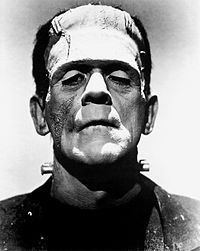
“Frankenstein” Class Action Suit Against YouTube Dies in Court…For Now
– Ryan Francis, Law Student, William Mitchell Law School
 vs.
vs. 
Is he alive? Not really, but the Manhattan Second District Court recently referenced the Frankenstein monster in The Football Ass’n Premiere League Ltd. v. YouTube Inc., No. 07 CIV. 3582 LLS, 2013 WL 2096411 (S.D.N.Y. May 15, 2013). In this case, plaintiffs alleged that
The World Through the Eyes of the Trademark Office
Recently, the Eighth Circuit reaffirmed that a District Court is not bound by the decisions made by the Trademark Office. This holding has often lead to comments about the wisdom of addressing trademark disputes at the Trademark Office in the first instance. However, not all decisions from the Trademark Office are appealed to a District
EA Sports Uses Tim Tebow
– Derek Allen, Attorney –
I’ve previously blogged about a pending lawsuit involving former college athletes (here and here) and whether they should get paid when universities and business partners use their likenesses. Brent Lorentz, a Chambers USA-recognized rising star in the world of litigation, blogged about a similar suit on Monday
Is Product Placement Out of Place? Not Yet
– John Reinan, Senior Director, Media Relations, Fast Horse
Steve Baird recently wrote about the use of real brand names on fictional products in entertainment. Branching off from that thought, I began wondering about the future of product placement in TV, movies and online entertainment (also known as embedded marketing).
Product placement has been around
Louboutin International Trademark Dispute
– Anjali Shankar, Attorney –
Those of us who love fashion and have closets overflowing with more pairs of shoes than we probably need are likely familiar with Louboutin pumps. These sky-high heels have a very distinctive look and design. Louboutin heels have recently been the subject of trademark controversy here in the United States.