— Jessica Gutierrez Alm, Attorney

Simon Tam wasn’t the only one barred by the Lanham Act from reclaiming a historically derogatory term.

Dykes on Bikes is a nonprofit lesbian motorcycle organization.  According to their website, the group’s mission is to “support philanthropic endeavors in the lesbian, gay, bisexual, transgender, and women’s communities, and to reach out to empower a community of diverse women through rides, charity events, Pride events, and education.”  In 2015, Dykes on Bikes tried to register their logo as a service mark for entertainment.  The application was put on hold pending the outcome of Matal v. Tam, as the Supreme Court considered whether Simon Tam could register his band name—The Slants.  In view of the Court’s landmark decision holding the disparagement provision of the Lanham Act unconstitutional viewpoint discrimination, Dykes on Bikes will move forward with its trademark application as well.

It was in 2003 when Dykes on Bikes first sought to register the name of their organization as a service mark for education and entertainment services.  Registration was refused on the basis that the mark was disparaging to lesbians.  The organization appealed to the TTAB, arguing that the word “dyke” had become a positive term and a symbol of pride and empowerment.  Dykes on Bikes won their appeal before the TTAB.  But when the mark was published for opposition, an individual named Michael McDermott filed an opposition claiming the mark was disparaging to men.  Ultimately, McDermott’s opposition was dismissed for lack of standing.  In particular, McDermott failed to show either (1) he possesses a trait or characteristic implicated by the proposed mark; or (2) others share the same belief of harm from the proposed mark.  The TTAB dismissed McDermott’s opposition and the Federal Circuit affirmed.  DIKES ON BIKES was successfully registered in 2007.

Because they had already won the disparagement battle for their first mark, Dykes on Bikes was surprised to face another disparagement refusal for a second mark.  In 2015, the group sought to register their logo as a service mark.  They sought review by the TTAB, and the case was put on hold pending the outcome of Matal v. Tam.  Dykes on Bikes also filed an amicus brief in the Tam case, arguing in favor of Tam’s position.  After the Supreme Court held in Tam that “the disparagement clause violates the Free Speech Clause of the First Amendment,” the DYKES ON BIKES W M C logo was approved for publication.

Dykes on Bikes and The Slants had similar goals.  As Dykes on Bikes described in their amicus brief, both groups “have chosen to reclaim self-referential terms as trademarks for the benefit of the groups those terms refer to.”  They also drew a distinction with respect to a certain NFL team name: “the Washington Redskins have chosen a term that is unrelated to the people who identify as members of the football team and is commonly understood to be a slur which members of the identified group have not reclaimed.  Whatever the constitutionality of the PTO’s treatment of the Redskins mark, the team’s use of that name is immoral and Dykes on Bikes encourages the Washington Redskins to give up their trademarked name as a matter of respect and decency.”

While the Tam decision may have opened the proverbial flood gates of offensive trademark applications, it also allows for these positive trademark uses in reclaiming derogatory terms.

The weekend of October 20-21, 2017, the Minnesota Golden Gophers and North Dakota Fighting Hawks traded wins in one of college hockey’s most competitive series. While watching the NCHC broadcast, an ad for the “Sioux Shop” appeared on screen. The ad explained that the Sioux Shop sells North Dakota fan gear at Ralph Englestad Arena (affectionately referred to by North Dakota fans as “the Ralph”), the 400,000 square foot, first-class hockey palace in Grand Forks where the Gophers and Hawks were facing off. I was surprised by the ad, especially in view of the fact that the University of North Dakota is no longer referred to as the “Sioux.”

Picture credit: Pinterest.

The Sioux Shop ad also reminded me of a recent experience I had when flying Southwest Airlines, in which a gate staff member was wearing a Fighting Sioux lanyard. As many frequent Southwest fliers can attest, Southwest’s employees often wear memorabilia of their favorite sports teams. I asked the staff member where she got the lanyard, as it appeared to be new. She replied that the University is still licensing the mark so as not to abandon it and that she picked it up from a licensed merchandiser. Apparently, you can also buy Fighting Sioux gear on Amazon.

As many hockey fans know, the University recently changed its mascot to the Fighting Hawks, from the Fighting Sioux, after backlash from the NCAA and a statewide ballot initiative approved the change. The “Fighting Sioux” is also one of several arguably-disparaging marks based on Native American culture that have been criticized in recent years. For example, the Fighting Sioux trademark is similar to the R-word trademark, which was challenged and later upheld by the U.S. Supreme Court this summer. With this political and legal background in mind, I thought to myself when watching the Sioux Shop ad, “Didn’t North Dakota change it’s sports mascot to the Hawks, and, if so, why does the fan shop still bear the ‘Sioux’ name? Can NCHC, an NCAA conference, even run an ad for a shop selling merchandise bearing a name similar to one that the NCAA singled out as ‘hostile or abusive’?” Just what is going on here?

It turns out that the Southwest staff member was right: the University still licenses the Fighting Sioux trademark so as to avoid abandonment. The reasons appear to be threefold: First, the University agreed in a 2007 settlement with the NCAA that it would maintain the Fighting Sioux trademark. Second, the school appears to be concerned that if it does not license the trademark and control the flow of Sioux merchandise, someone will flood the market and stymy efforts to phase in the Fighting Hawks mascot and phase out the Fighting Sioux mark. Ironically, then, in order to effectively stop using the Fighting Sioux name, the University must “use” the mark. Third—and perhaps this is unfair cynicism—money.

The Lanham Act provides that a trademark may lose its viability through abandonment when the holder of the mark both discontinues use of the mark and intends not to resume use of the mark. See 15 U.S.C. § 1127. The law states that nonuse for three consecutive years is prima facie evidence of abandonment. See id. Clearly, the University hasn’t run into that issue yet. However, the issue that the University does face is whether it is making a “bona fide use” of the Fighting Sioux mark “in the ordinary course of trade, and not made merely to reserve” its right in the mark. Id. Reductions in the use of a mark may contribute to a finding of both prongs of the abandonment test. So can failure to take action against infringers. Of course, whether a reduction in use and a change in the scope and extent of licensing shows abandonment depends on the facts and circumstances of each case.

The University’s current licensing strategy definitely toes the blue line on bona fide use. It appears that the University is only licensing productions of 9,000 pieces of merchandise at a time and in limited auctions. Such small offerings surely dwarf those available to fans in the years leading up to the mascot switch. On the other hand, the offerings are in the same category: sportswear. The geographic range of the sales is also smaller than before. In addition to the practically-discontinued use of the mark, the University’s licensing also seems disingenuous. One reason for maintaining the mark is to control the supply of Fighting Sioux gear competing with Fighting Hawks gear, and I’m not sure that purpose shows intent to use the Sioux mark (rather than mere reservation of it). I’m also skeptical that using the mark is helping transition efforts; as one source reports, new Fighting Sioux gear has been known to sell out very quickly, and fans continue to cling to the name–not to mention the Ralph, which has over 2,500 Sioux logos plastered throughout the arena in fulfillment of its late eponymous benefactor’s desire to protest a mascot name change.

Whether the University’s current use of the mark can stave off the threat of abandonment, while at the same time render the Fighting Sioux mark obsolete, remains to be seen. For now, North Dakota hockey fans are stuck between two mascots, and neighboring rivals look on in confusion, with no clear end in sight.

Today marks the 25th anniversary of the filing of the petition to cancel the R-Word registrations held by Pro-Football, Inc., the NFL franchise playing near the Nation’s capital.

Indian Country Today has published an interview with Suzan Shown Harjo, lead petitioner in Harjo et al v. Pro-Football, Inc., and organizer of Blackhorse et al v. Pro-Football, Inc.

Thanks to Indian Country Today and Suzan Shown Harjo for sharing this interview. Its documentation of history is so important for anyone who cares where we’ve been as a country and where we’re headed; it is valuable and timeless, powerful and compelling.

I’m so thankful to Suzan for the opportunity to play a small part in this long yet unfinished history, and here is a photo of us together on May 15, 2015, at a conference in Hinckley, Minnesota, during a celebration honoring her lifetime of advocacy for Native peoples:

Suzan’s heretofore and ongoing work is truly remarkable and a testament to who she is, even in the face of ignorant vitriol, and to how many lives she has touched and continues to touch in such a profound, generous, and meaningful way.

As I reflect on the historic petition to cancel we filed together on September 10, 1992, one thing I can’t get out of my mind is the national press conference question I answered from the Washington D.C. press corps, something like “what about the First Amendment?”

As I recall, my response was, something like, the beauty of this cause of action is that the First Amendment is not implicated because removing the federal government’s erroneous approval of the racial slur doesn’t compel the team to change the name, having said that, it is of course our hope that the team does the right thing and pick another name.

Who could have guessed it would take nearly a quarter century to reverse prior court of appeals precedent (McGinley) saying Section 2(a) did not violate Free Speech or the First Amendment, and then to have the Supreme Court agree that refusing federal registration of disparaging matter under Section 2(a) of the Lanham Act is viewpoint discrimination and a violation of Free Speech.

Thankfully much awareness has been raised and good has been done over the past quarter century, while the NFL and Washington franchise double down together on their joint investment to retain exclusive rights in a racial slur.

Hopefully with increased awareness raised and the movement and pressure continuing, we won’t have to wait another quarter century for justice and clearer thinking on this issue by the NFL, FEDEX, and other NFL sponsors, if not Daniel Snyder himself.

As I reflect back a quarter century ago, to the day, it was never about banning the team’s Freedom of Speech, it was about removing the federal government’s approval of a racial slur as a federally-registered trademark, and providing team ownership with a financial incentive to reconsider their choice to ignore the obvious, as Suzan has noted:

“We liked the approach of a pocketbook incentive case that did not force a name-change, but counted on the greed of the team owner to drop the name if exclusive federal trademarks were cancelled.”

“The pocketbook approach put things squarely where pro sports differed from educational sports: money. In most name and symbol changes made in educational sports, we had a way of discussing the issues and solutions, because there almost always were educators and officials who genuinely cared about the well-being of the students. In pro sports, even the health and safety issues seemed focused on liability and not on human beings, and some paid fans seemed physically provocative, while others seemed orchestrated online to attack and defame those of us who were challenging the NFL franchise in orderly legal forums.”

“Another reason I liked the pocketbook approach was that it didn’t impede anyone’s free speech. I was at WBAI-FM  in 1973, when the “seven dirty words” case started down the road to the Supreme Court’s 1978 ruling against free speech. The free speech flagship station of the Pacifica network, WBAI aired a cut from Comedian George Carlin’s “Class Clown” album and a listener complained to the Federal Communications Commission that his young son was wrongly exposed to dirty words. George Carlin’s “Seven Words You Can Never Say on Television” was based on an earlier routine by Comedian Lenny Bruce that was an excuse for one of his many arrests and jailings for using dirty words. The upshot of FCC v. Pacifica Foundation was that the federal government can restrict free speech in certain instances, the opposite of the Court’s 2017 ruling in The Slants case against the PTO, which rendered part of the trademark law unconstitutional as violative of the First Amendment. We never thought we were violating the NFL’s freedom of expression by using the same section of the trademark law.”

Ironically, as team owner Daniel Synder freely and proudly admits, the team’s ability and commitment to continue using the name will never change, even in the face of the mountain of evidence demonstrating its offensiveness and meaning as a racial slur, and even in the face of losing on the merits three times (twice at the TTAB, once at the E.D. Va.), or more.

So much for the Supreme Court’s concern that Section 2(a) actually chills Freedom of Speech, because according to Snyder, even after losing on the merits he has reaffirmed: “We will never change the name of the team,” “It’s that simple. NEVER — you can use caps.”

So, in the end, it is about the money, and the NFL clearly has had sufficient funds to defend the indefensible for a quarter century now, so isn’t it time FEDEX and other NFL sponsors step up and get on the right side of this issue, with their money? Let’s all follow the money.

Here’s to you Suzan, be well, Aho.

Daniel Snyder, NFL owners, FEDEX, and other NFL sponsors, take note, breaking news from courageous Neal M. Brown, Ed.D., Head of School, Green Acres School in Bethesda, Maryland, about twenty miles from FEDEX Field:

“[T]he term ‘Redskin’ is a racial slur. Its use, whether intentional or not, can be deeply insulting and offensive. It is a term that demeans a group of people. Similarly, the team’s logo also can reasonably be viewed as racially demeaning. At best, the image is an ethnic stereotype that promotes cultural misunderstanding; at worst, it is intensely derogatory.”

“As such, having students or staff members on campus wearing clothing with this name and/or this team logo feels profoundly at odds with our community’s mission and values. We pledge in our Diversity Statement to foster both ‘an inclusive and uplifting community’ and ‘a sense of belonging for everyone in the Green Acres community.’ Similarly, our Statement of Inclusion calls upon us to ‘welcome people of any race, national, or ancestral origin,’ among other social identifiers. Further, as our guidelines for ‘appropriate dress’ in the Community Handbook require students to ‘dress in ways that demonstrate respect for others,’ we cannot continue to allow children or staff members—however well intentioned—to wear clothing that disparages a race of people.”

“I ask that you please not send your children to school wearing clothing with either the team name or logo in the year and years to come. I will be speaking with students to share with them my decision and to enlist their understanding and support. Additionally, we invite you to reach out to us with any questions you may have about how to discuss this with your child.”

Again, not so fast, Mr. Snyder, the R-Word is looking awfully scandalous these days, and this issue isn’t going away . . . .

See coverage from USA Today, Washington Post, Washington Times, and Sports Illustrated.

UPDATE from Time: The NFL Needs to Stop Promoting a Racial Slur

Lee Corso (former coach and ESPN football analyst) frequently utters this famous sports media catchphrase on ESPN’s “College GameDay” program: “Not so fast, my friend!

The first three words of that phrase come to mind upon hearing that THRILLED Daniel Snyder (majority owner of the NFL football franchise nearest the Nation’s Capitol) is celebrating Simon Tam’s (and Tam’s talented lawyers’) recent victory at the Supreme Court.

Excluded are the last two words as inapplicable, as I’ve never met Mr. Snyder, so I can’t say he’s my friend, and if even a small fraction of what Rolling Stone says about him is true, friendship seems unlikely, unless of course, he engages the services of an expert to rebrand the franchise (without the racial slur), something I asked for eight years ago.

Yet, “not so fast,” as a week ago, the government filed a brief with the Court of Appeals for the Federal Circuit, asking the Federal Circuit to affirm the TTAB’s refusal to register FUCT based on the scandalous portion of Section 2(a) of the Lanham Act, despite Tam.

The Department of Justice further contends that the Supreme Court’s ruling in Tam does not implicate the First Amendment in terms of scandalous matter, because unlike the stricken disparagement portion of 2(a), the remaining scandalous portion is viewpoint neutral.

To the extent the Justice Department prevails and the current bar on registration of “scandalous” matter survives First Amendment scrutiny with the Federal Circuit’s review in the Brunetti case, this could impact Daniel Snyder’s currently suspended R-Word trademark applications (here, here, and here), and the NFL’s suspended Boston Redskins application.

While the decades-old R-Word registrations challenged in Harjo and Blackhorse appear safe from cancellation given the ruling in Tam, what stops others from opposing registration of any future R-Word applications (or any of the currently suspended applications, if published) as containing scandalous matter in violation of Section 2(a) of the Lanham Act?

If the scandalous bar to registration survives First Amendment scrutiny, opposers (unlike cancellation petitioners) would have the significant benefit of only needing to show (at the time of an opposition decision) that the current R-Word applications have scandalous matter.

It’s a question of the timing of proof necessary, in other words, no time machine would be required to determine how the relevant public perceived the R-Word marks back in the late 1960s when the first R-Word registration issued for the team; those would not be at issue.

It’s also a question of who comprises the relevant public. For disparaging matter, it was Native Americans. For scandalous matter, it would be the general public, although not necessarily a majority, but instead a “substantial composite of the general public.”

The Act’s present prohibition on the registration of scandalous matter reaches matter that is “shocking to the sense of propriety, offensive to the conscience or moral feelings or calling out for condemnation.” Wouldn’t unambiguous racial slurs qualify for this treatment?

Who’s ready to carry the next, but new flame, if needed, to oppose registration of any R-Word applications that publish for opposition, contending that a substantial composite of the general public finds the applied-for marks “shocking” to their sense of propriety and/or “offensive” to their conscience?

Even those who fought hard to undue the disparagement provision of Section 2(a) for Simon Tam, see Daniel Snyder’s team name in a very different light, and let’s also say, not a very sympathetic light. And, the general public today is not the public from 50 years ago.

Finally, given the vast public attention and support this issue has received over the last quarter century, it would be more than interesting to see what kind of a record could be developed on the scandalous ground for registration refusal, today, and not decades ago.

So, not so fast, let’s see what happens to the scandalous portion of Section 2(a) in Brunetti, before allowing Daniel Snyder to celebrate Tam too strongly, my friends.

UPDATE: The NFL’s Boston Redskins trademark application has been removed from suspension, reports Erik Pelton, so, who will oppose if published, and why hasn’t the USPTO issued a new refusal on scandalous grounds yet?

– Jason Voiovich, Virtual Chief Marketing Officer, Vojvdec & Sigma

According to the unanimous ruling by the US Supreme Court handed down last month, failing to allow registration of trademarks such as the “Redskins,” “Fighting Sioux” and “The Slants” violates the free speech clause of the First Amendment to the US Constitution. Writing for the court, Justice Samuel A. Alito Jr. wrote that the ban, “offends a bedrock First Amendment principle: Speech may not be banned on the ground that it expresses ideas that offend.”

According to those of us charged with building a marketing strategy grounded on those trademarks, this has nothing to do with free speech.

Filed under the category of “just because you can jump off a cliff doesn’t mean you should,” just because you are able to register a “disparaging trademark” does not mean it makes any sense to do so. Putting aside the issue that commercial speech is not the same as free speech in the legal sense of the word, marketing strategists hoping to use the ruling to build their brand strategy are misguided.

The marketing argument to employ a disparaging trademark seems to boil down to two key points: Continue Reading Sorry Justice Alito, “The Slants” is Not Okay

The U.S. Patent and Trademark Office register contains a lot of dead weight. In order to obtain a trademark registration and maintain the registration, the owner must use the mark in U.S. interstate commerce (as always, with a few limited exceptions). What constitutes dead weight? Usually marks that are currently registered, but not actually used in commerce. These registrations could be identified in a preliminary clearance search by your attorney, causing you to choose a different name rather than the one you really want. The registration might be cited against your application, forcing you to choose whether you’d like to embark in a Petition for Cancellation of the registration, or just move on to a new name. If you or a client has ever found yourself in one of these positions, the USPTO is considering expanding the available options to remedy the situation and is seeking public comments.

Uncle Sam TTAB Poster

There is a need for a streamlined procedure for cancellation of registrations for claims of non-use or abandonment. With the ease of online filing, the number of trademark registrations has risen significantly, issuing at a rate 4,500 per week.  Beginning in 2015, the USPTO also began issuing to owners courtesy reminders informing them that the maintenance and renewal windows are now open. To be honest, it’s pretty easy to file a trademark application, obtain a registration, and maintain a registration. You can do it all electronically through the USPTO website.

Yet, it is also very easy to do it incorrectly, rendering that Certificate of Registration to be a worthless piece of paper – that’s where we attorneys add value. For example, an attorney can help determine whether a mark is actually used in commerce at the right time. The USPTO doesn’t have the time or resources to investigate whether a mark is in use, so the fact that the USPTO accepted a specimen does not provide any cover. To obtain the registrations, Applicants and registrants need only click a box acknowledging that the mark is in use, and provide a sample (aka, specimen) of how the mark is used in commerce. Even if the USPTO accepts the specimen and issues a Certificate of Registration, that registration could be cancelled if the mark was not used in commerce at the relevant date.

The risk of doing it incorrectly doesn’t stop third-parties from continuing to register marks that have questionable claims of “use in commerce.” There’s a vast array of individuals and entities with deadweight registrations. The first group that comes to mind are the registrations that you know aren’t used just based on looking at the registration. For example, the individual that claims to provide space travel services and owns dozens of registrations for various FUTURE trademarks in connection with a wide variety of goods and services, including space travel services and manufacture of space vehicles. As you might guess, the specimen that was accepted by the USPTO is, at best, questionable:

future - edited


Then there are the “Golden Ticketers.” These are people and entities that seem to have a plan to later sell or license one of their many marks that, again, have questionable claims to use in commerce. These commonly happen when a well-known brand has a new product, or may need to rebrand, for example, the Washington Redskins. There are a number of trademark registrations for a various WASHINGTON ___ marks with dubious claims to use in commerce, like the WASHINGTON ARROWS, AMERICANS, FOUNDERS, NATIVES, PANDAS, MONUMENTS, VETERANS, RED-TAILED HAWKS, and the WASHINGTON FEDERALS. Most are registered in connection with “Providing a website featuring information relating to the sport of football.” And as you can tell from the owner’s website, it is technically in use:

arrows

It provides helpful information regarding the sport of football, including pertinent details like “The team with the most points at the end of the game wins.”

In light of this, the USPTO has good reason to implement a new method of challenging registrations for non-use. While I encourage everyone to read the Notice in full,  here are the highlights:

  • The new procedures are limited solely to claims of abandonment, or non-use for some or all of the goods/services at the time the declaration of use in commerce was filed (application date for a 1a application, or the Statement of Use for a 1b application)
  • The Petitioner must include evidence supporting the claim of abandonment with the Petition
    • Evidence might include a declaration detailing searches for use of the mark
  • The Respondent must include evidence to rebut the claim in its answer
  • If requested and upon a showing of good cause, the TTAB will grant very limited discovery
    • The Respondent can also challenge the Petitioner’s standing and request limited discovery on this issue
  • The proceeding is designed to move fast:
    • Limited or no discovery
    • Abbreviated schedule
    • No oral hearing
    • Only one extension request per party
    • Estimated time from start to finish would be 70 days in the event of default, or 170 days for a contested Petition
  • No counterclaims would be allowed
  • After reviewing the Answer, the Petitioner could choose to convert the proceeding to a full cancellation (the Respondent does not have the option, though)

Overall, the proposed procedure could be a valuable tool, at least in those situations where non-use and abandonment are clear, or the mark has not been used for three years or more. However, where the period of non-use is less than three years, the petitioner would normally need to establish that the respondent had an intent not to resume use of the mark. The limited discovery granted by the TTAB would likely require some testimony on behalf of respondent with respect to intent to resume use. Regardless, if the TTAB implements the new rules, practitioners would have a cheaper, more time effective tool to clear the way for their client’s trademarks.

If you have any comments on the new rules, be sure to provide them ahead of the August 14, 2017 deadline to TTABFRNotices@uspto.gov.


Throughout the past decade, attorneys, judges, plaintiffs, and defendants have invested thousands of hours in the fight over offensive trademarks. Most of the public is aware of the controversy surrounding the Washington Redskins, who continue to be embroiled in litigation that is currently pending with the Federal Court of Appeals for the Fourth Circuit. But even more important is the pending litigation at the Supreme Court, where the Asian-American band The Slants have challenged the constitutionality of the law that prevents the federal government from granting the benefits of federal registration to trademarks that disparage groups of people.

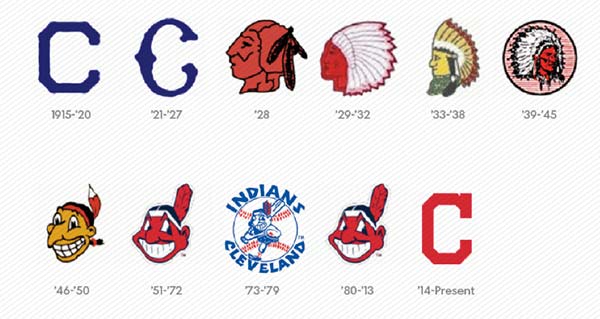
We’ve discussed the history and merits of the case at at length. I won’t get into the details in this post. However, with the Cleveland Indians in town to play the Minnesota Twins, I was reminded that the Cleveland organization seemed to be escaping the glare of the media attention that had been focused on the Redskins and the Slants. Apart from the name of the team itself, Cleveland’s logos throughout only seem to worsen the potential to disparage or offend Native Americans. For reference, the logos and years of use are reproduced below:

Indians Logos

The Supreme Court heard oral arguments in the Slants case (In re Tam) on January 18th. But while we await a decision from the Court, the Cleveland Indians provide us with a reminder that, regardless of what a court may say, the court of public opinion may have the final word. In fact, we have learned over the last two weeks that Major League Baseball’s Commissioner Rob Manfred has been in discussions with the Cleveland organization regarding the “Chief Wahoo” logo since the end of the World Series. The Commissioner has publicly stated that he is pushing the team “to transition away” from the logo. Just last January, the MLB awarded Cleveland the right to host the 2019 All-Star game. With recent events in Charlotte and throughout the U.S., it’s hard not to wonder whether Chief Wahoo’s retirement date may already be set.

We’ll have to wait and see how the Supreme Court rules in In re Tam but, as with the case of the Cleveland Indians, not all trademark battles are won in the court of law.


From my title, you may think I am referring to the battle over the REDSKINS trademark.  However, the In re Tam case beat the REDSKINS team to the high court.  The case involving the REDSKINS mark is currently on hold until the United States Supreme Court decides the In re Tam case.  These cases have been the topic of prior blog posts.  For example, https://www.duetsblog.com/2016/10/articles/articles/supreme-court-benches-dan-snyders-team/ and https://www.duetsblog.com/2016/07/articles/trademarks/no-budding-in-line-washington-redskins/ and https://www.duetsblog.com/2015/12/articles/trademarks/will-uspto-director-michelle-lees-signature-adorn-a-slants-certificate-of-registration/

The Supreme Court heard argument regarding the In re Tam case last month regarding whether the United States Patent and Trademark Office (USPTO) could refuse to register THE SLANTS as a trademark.

The Government explained that the Lanham Act prohibits the registration of any mark that may disparage persons, institutions, beliefs or national symbols.  A denial of registration does not limit the ability to use the mark in commerce or otherwise to engage in expression or debate topics.  According to the Government, the Lanham Act’s disparagement provision places a reasonable limit on access to a government program rather than a restriction on free speech that would violate the First Amendment.

The Supreme Court Justices actively questioned both the Government’s attorney and Mr. Tam’s attorney.  Justice Kennedy raised the issue of copyright protection and that refusing to copyright protect disparaging work would pose a significant First Amendment issue.  However, there are limits such as not being able to copyright new words or short phrases. Justice Ginsburg, however, distinguished the copyright act because you cannot sue for copyright infringement unless registered.  There is no such restriction on trademark infringement.

Justice Breyer explained that the ultimate purpose of a trademark is to identify the source of the product so it is making a statement.  The disparagement provision of the Lanham Act says you can say something nice but not bad about a minority group.

The Government argued that trademarks tell the public from whom the goods or services emanate, but this is not expressive in its own right.  Trademarks have a dual purpose of identifying source and as a miniature advertisement.  Congress should be able to discourage negative advertising by not registering a trademark such as “Coke Stinks.”

Justice Kagan explained that Government programs cannot make distinctions based on viewpoint. She then asked the Government’s attorney isn’t that what the Lanham Act’s non-disparagement provision is doing?  The Government pointed out the restriction was only for the government program of registration.  The Government argued that the restriction on disparagement was reasonable because the Government is publishing the mark.   Mr. Tam could still use THE SLANTS trademark in commerce and have common law rights in the trademark.

Justice Kagan raised the issue of whether a trademark registration was Government speech itself.  The Government publishes the registration on its Web site and sends the trademark registrations to other countries.

Mr. Tam’s attorney disagreed with the Government arguing that the Lanham Act’s provision prohibiting disparagement (and scandalous marks) was unconstitutional under the First Amendment.  Tam’s attorney argued that trademarks constitute both commercial (e.g. the band’s name) and non-commercial (e.g., Proud Asians) speech.

Justice Sotomayor asked Mr. Tam’s attorney isn’t it true that he was asking the Government to endorse his trademark or name in a way that it chooses not to?  The speech is not being burdened, because the mark can still be used and he can still sue others.  Other laws restrict commercial speech such as product disparagement.   Libel and slander laws also restrict speech.  Further, there are restrictions on speech carried over airwaves.

Tam’s attorney conceded that other content distinctions in the Lanham Act such as prohibition against registering marks that are falsely suggestive of a connection that is likely to cause confusion, descriptive, mis-descriptive, functional, a geographical indication of wine or spirits, etc. would survive his First Amendment challenge.  Justice Kagan explained that this then meant that the registration of trademarks was not the same as restricting speech in a public park where free speech could not be so restricted.

In rebuttal, the Government argued that its registration program provides certain benefits that the Government does not have to provide.  Denial of registration only affects the commercial aspect of the trademark by limiting remedies for infringement.   The program does not regulate the non-commercial component, namely use of the trademark.

Trying to read the tea leaves, I am thinking the Supreme Court may liken this speech (e.g., trademark registration) at issue to the speech of Texas license plates at issue in the case (Walker v. Texas Div., Sons of Confederate Veterans, Inc., No. 14-144, 2015 WL 2473375 (U.S. June 18, 2015)) mentioned by Judge Ginsburg during oral argument.  If the Court decides to do so, this could result in a ruling that the Government can place a reasonable restriction on its program.  An owner can use the disparaging trademarks and sue infringers even without registration with the Government.

How do you think this will come out?

Last week the U.S. Supreme Court agreed to hear Mr. Simon Tam’s arguments and review the Court of Appeals for the Federal Circuit’s majority decision striking as unconstitutional Lanham Act Section 2(a)’s bar against the federal registration of disparaging matter, so it will decide the following issue, once and for all:

“Whether the disparagement provision of the Lanham Act, 15 U.S.C. 1052(a), which provides that no trademark shall be refused registration on account of its nature unless, inter alia, it “[c]onsists of . . . matter which may disparage . . . persons, living or dead, institutions, beliefs, or national symbols, or bring them into contempt, or disrepute” is facially invalid under the Free Speech Clause of the First Amendment.”

As you may recall, Tiffany previously wrote how Dan Snyder’s Washington D.C. NFL franchise asked to have its district court loss and appeal jump over the 4th Circuit Court of Appeals to go directly to the Supreme Court, if the Court were to decide to hear the Tam case.

As much stock as the team has put in the constitutional challenge to defend its several R-Word registrations, found offensive and disparaging to Native Americans, I suspect Mr. Snyder and his lawyers don’t relish the idea of sitting on the sidelines while Mr. Tam’s counsel argues the constitutional issue to the Court.

Earlier today the Supreme Court denied the team’s request, so Snyder’s team of lawyers will have to sit out for that important oral argument, although I suspect they’ll be one of many to submit a written amicus brief, as a “friend of the court.”

Why doesn’t Dan Snyder instead focus on being another kind of friend and get on the right side of history? And, doesn’t Mr. Snyder’s refusal to ever consider a name change, even after losing the registrations, actually undermine his Free Speech challenge?

As you know, my view is that Section 2(a) of the Lanham Act should be upheld as constitutional:

Stay tuned for more and let’s hope that Georgetown Law School Professor Rebecca Tushnet’s insights on the constitutionality of Section 2(a) carry the day at the Court.