
There is a time and a place for the use of double negatives. The Rolling Stones made the double negative "I Can’t Get No" lyrics famous in the legendary hit Satisfaction (#2 on Rolling Stone Magazine’s List of the Top Songs of All Time). Pink Floyd made the double negative lyrical phrase "We Don’t Need No" famous in the song Another Brick in The Wall, Part 2. With respect to song titles, what about Diana Ross’ recording of the double negative Ain’t No Mountain High Enough?
Despite these widely popular uses, we are all taught (at an early age, my children have confirmed) not to use no double negatives, never, ever, as they are grammatically incorrect, inappropriate, and most likely to be avoided at all cost in writing and speech. Indeed, to fix the double negative problem, we also are taught that a double negative should be removed and resolve to a single positive. So, we’re told that a double negative carries the same meaning as a single positive.
Does that mean Mick Jagger and Keith Richards really meant to say, "I Can Get Satisfaction"? What about the "We Don’t Need No" lyrics? Did Roger Waters really intend to communicate that "We Need Both Education and Thought Control? Did Diana Ross really mean, "There is a Mountain High Enough"? Maybe, but I don’t think so. Those "positive" versions of the double negative lyrics create entirely different meanings, in my opinion, and if used, they would have put us into a collective slumber.
So, clearly, there is a creative role for double negatives in music, but how about in branding?
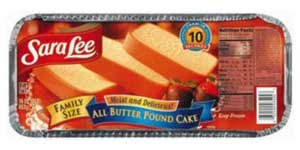
My question was inspired driving into work a couple of weeks ago, as I was passed by a Sara Lee delivery truck prominently displaying a double negative tag line ("Nobody Doesn’t Like Sara Lee"), confirming that the guardians of the Sara Lee brand continue to believe there is a time and place for the use of double negatives in branding.
In fact, Sara Lee owns several federal trademark registrations for the "Nobody Doesn’t Like Sara Lee" tag line covering a wide range of food items, including "rolls, pies, cakes, cheesecake, muffins, ice cream," "flavored mustards, sauces and mayonaises," "cheese," "bread, bagels and buns," "bakery goods," "processed meats," and "frozen prepared meat lasagna entrees."
Perhaps not surprisingly, I couldn’t find any other trademark on the entire USPTO database that included both of the terms "nobody" and "doesn’t." Given how unique and inherently awkward the phrase is, one might wonder whether substituting any term or other brand name for Sara Lee might avoid a likelihood of confusion with the original.Continue Reading Double Negatives in Branding: Nobody Doesn’t = Everybody Does?


