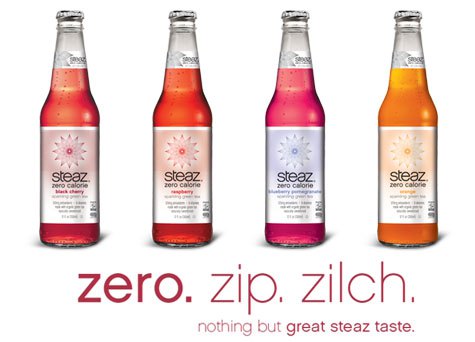
Taking our discussion about Coke Zero a little further than Monday’s discussion, is it any wonder that “zero” stands for nothing, none, nada, when it comes to calories, given icons like this one:

In other words, it doesn’t and it can’t hold trademark significance for calorie-free, no-calorie, or zero-calorie food products and beverages, and spelling out “0” as ZERO can’t alter the equation:

So, in this context, it is pretty clear from the Nutritional Facts, that ZERO means, not only zero or no sugar, but also, zero or no calories, actually meaning zero and no trademark significance, right?

Procter & Gamble (P&G) has filed federal trademark applications to register several well-known (at least among millennials) acronyms used in text messages, including LOL (laughing out load); NBD (no big deal); WTF (what the f***); and FML (f*** my life). The applications identify cleaning products, including liquid soap, dish detergents, surface cleaners, and air fresheners. P&G’s products include brands such as Febreze air freshener, Dawn dish detergent, and Mr. Clean surface cleaner, so perhaps the applied-for marks would be used in association with those existing products. But that’s just a guess, as the applications were filed with an intent-to-use basis, meaning no specimens of use are provided yet.

Earlier this month, the USPTO issued initial Office Action refusals for all four applications, primarily involving minor clarification issues related to the identifications of the cleaning products. However, one of the applications, for FML, received a likelihood-of-confusion refusal, citing previous “FML” registrations, so we’ll see how that pans out. Additionally, two of the applications, LOL and NBD, received requests for information regarding the meaning of the acronyms. (Perhaps the Examining Attorney is not a text-savvy millennial?) Otherwise, it appears that the majority of these four applications will probably be approved for publication eventually, pending resolution of the clarifications and requests for information.

Nevertheless, even if the marks register, the decision to seek registration for these ubiquitous acronyms might seem questionable from a branding perspective, for a couple reasons. First, these acronyms are so commonly used in a variety of contexts, and have such a well-known informational meaning, that it may be difficult for the marks to become strongly recognized by consumers as distinctive source indicators, pointing to P&G and their cleaning products. Second, it is difficult to discern any logical or beneficial association between the well-known meaning of the acronyms and cleaning products. In particular, two of the acronyms have a relatively negative or vulgar meaning (WTF and FML), so it is questionable why the company would want such meanings associated with their products. Perhaps some tenuous play on the acronyms being “dirty” words that would be cleaned up by P&G’s products? Then again, I’m more a legal than marketing type, so perhaps there is a more creative strategy that I’m not thinking of — and again, it’s hard to guess how the marks will be used at the intent-to-use stage.

What do you think about P&G’s decisions to file these trademark applications for their cleaning products, from either a trademark or branding perspective?

PepsiCo recently made waves with its purchase of SodaStream, but the company is now making news in the food business. This time the news is all about Pepsi’s Frito-Lay division, and its mischief making Chester Cheetah and his crunchy, cheesy, Cheetos brand. Pepsi recently sent a cease and desist letter to World Peas, a manufacturer of healthy-ish snack foods and its recent marketing of Peatos brand snacks.


What are Peatos exactly? They’re a crunchy snack food made primarily from peas and lentils, but, Peatos are not intended to be a “health food.” The company describes its mission as making “90% of people eat 10% better, not 10% of people eat 90% better.” The goal appears to be: make a snack that is a little bit better for you without sacrificing flavor. Product quality aside though, is Pepsi correct that the PEATOS mark is confusingly similar to the CHEETOS mark?

Courts consider a variety of factors in evaluating whether someone is infringing another’s trademark: do the marks create similar commercial impressions; are the products at issue competitive, similar, or related; how strong are the marks in terms of meaning and commercial strength; are the goods sold through similar channels of trade (i.e., through the same types of stores); and others. The two factors that tend to play the most prominent role are the similarity of the commercial impressions of the marks and the similarity of the goods.

In the Peatos versus Cheetos dispute, many of the factors would favor Pepsi. The goods are competitive (even if one is a bit healthier), both are sold in the grocery stores, and the CHEETOS mark is an arguably famous and strong mark. But even if every single factor but one were to favor Pepsi’s claim of infringement, it would not be enough if the marks are so dissimilar that no confusion is likely. So what do you think, how similar to Cheetos is Peatos?

The only difference in sound is the initial letter P versus the CH sound. Visually, the marks have a few more differences in letters. As far as I’m aware, neither mark has a defined meaning. The PEATO mark has additional meaning of one its ingredients (Pea).

But what about the overall commercial impression of the marks? What is the impression that Peatos will make in the mind of a consumer? For me, the immediate impression is that the product is a Cheeto made from peas. In fact, I can’t imagine that World Peas came up with the name in any other way other than “What should we call a Cheeto made from peas? Oh! Peatos would be a good pun!”

A likelihood of consumer confusion does not require actual consumer confusion. It also does not require that consumers confuse the products themselves, or that a consumer incorrectly think that Pepsi makes Peatos. A likelihood of confusion exists whenever a consumer might mistakenly believe that there is some type of endorsement, connection, or affiliation between the two parties. Given Pepsi’s recent purchase of SodaStream and the general trend toward healthier consumer choices, is it really that much of a leap to imagine a famous brand of snacks extending into a pea-based version of itself?

Setting aside the similarity in the marks, World Peas is actively drawing a connection between Cheetos and Peatos through use of a tiger and a similar color scheme for its bag and logo. The fact that the actual Peatos products look like Cheetos isn’t likely an issue, but it doesn’t help, especially if Pepsi argues a claim of post-sale confusion.

In addition to all this, World Peas makes explicit Cheetos comparisons on its website. Granted, these comparisons likely qualify for a fair use (although the use of the Cheetos logo may be more than necessary). However, when you know you’ll be poking the tiger, do you really need to pull its tail and poke it in the eye too? If the company truly plans on sticking with the Peatos name, it may have been best to not exacerbate Pepsi’s concerns and use a different colored logo, avoid the tiger on the packaging, and maybe not so aggressively market yourself as a healthier version of Cheetos. While Pepsi may have still come knocking, Pepsi would at least have less ammunition for its claims.

I wouldn’t say this a clear cut case of infringement, but given all these facts, there is at least a colorable claim of infringement . The company must have known it would receive a demand letter regarding the name. Perhaps the plan was to enjoy the free press for its new product and then switch the name, knowing the name change would also be heavily publicized?

Apart of from the potential legal liability, it isn’t a terrible plan, and I’m certainly interested in trying a bag of Peatos. Once I find a bag, I’ll be sure to let you know whether they’re g-r-r-r-r-r-r-r-eat!

We’ve been writing about the COKE ZERO trademark for nearly a decade now, noting in 2014:

“[I]t will be worth watching to see whether the [TTAB] finds that ‘ZERO’ primarily means Coke or just a soft drink having ‘no calories, you know, a drink about nothing . . . .’”

Turns out, in May 2016, Coke obtained a favorable decision from the TTAB, ruling that ZERO is not generic for a soft drink category, instead it is descriptive and Coke has secondary meaning in it.

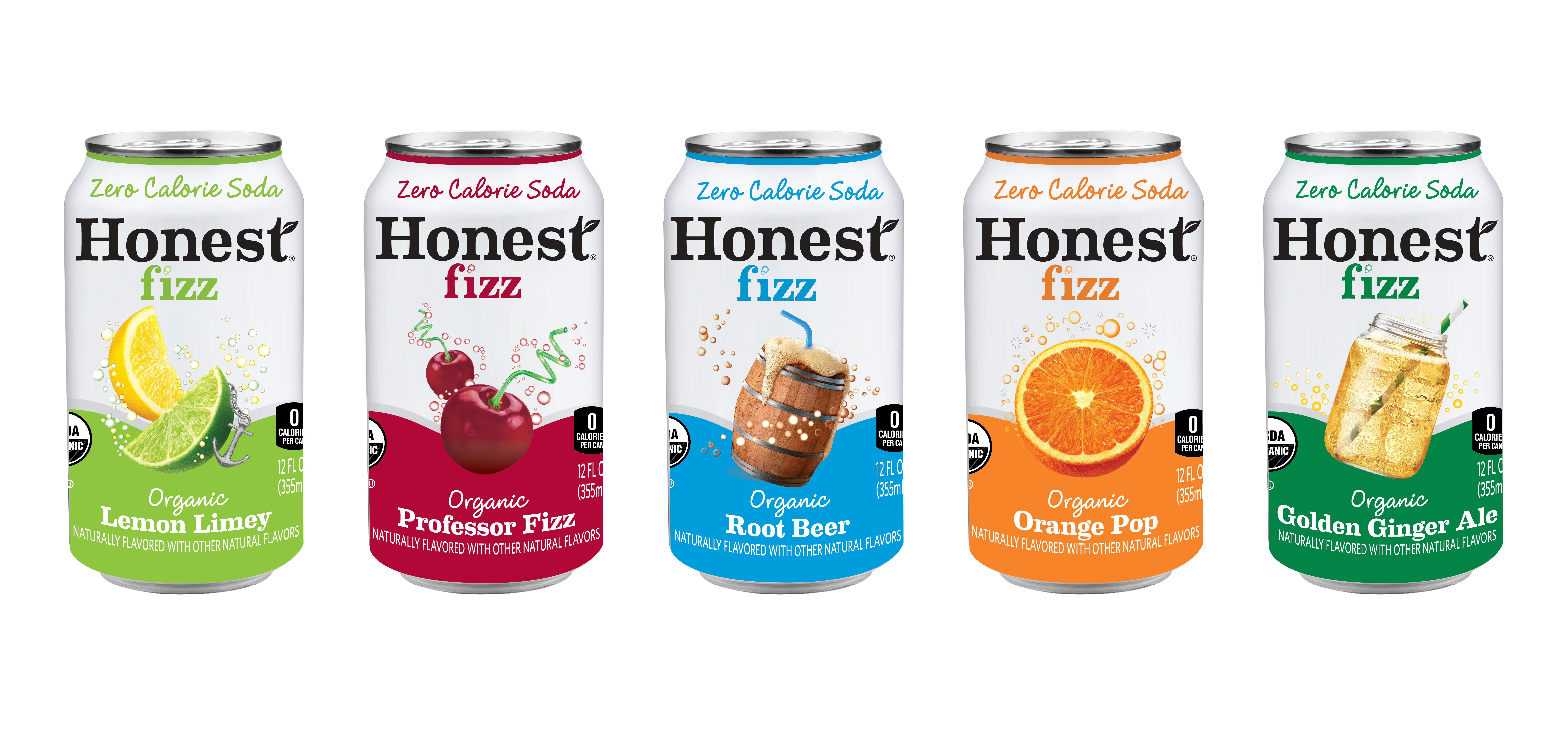
With that victory in hand, we then questioned Coke’s thinking in launching obvious generic use of ZERO, welcoming Coke Zero to the Genericide Watch, given this categorical and non-brand use:

Then, two months ago, the CAFC decided — on appeal — that the TTAB got it wrong, ruling it:

“[F]ailed to consider whether consumers would consider the term ZERO to be generic for a subcategory of the claimed genus of beverages – i.e., the subcategory of the claimed beverages encompassing the specialty beverage categories of drinks with few or no calories or few or no carbohydrates.”

We’re now back to the question we asked in 2014: “[I]s ZERO like LIGHT for beer, STONE OVEN for pizza — basically denoting the name of a product category instead of a source identifier?”

As to the next steps, the CAFC sent the case back to the TTAB, instructing it to “examine whether the term ZERO, when appended to a beverage mark, refers to a key aspect of the genus.”

TM types, is Professor McCarthy right that the CAFC ruling makes it too easy to find genericness?

I’m left wondering, given the floodgates that have opened up to other beverage brands also using ZERO as a generic category term for “no calories” or “no sugar” — is fighting for ZERO worth it?


Will Coke continue to fight for ZERO as a trademark? Or, should it make better soda instead?

How can The Coca-Cola Company even keep the trademark pursuit of ZERO going, when it already appears to have made the choice of making a better soda through its independent unit, Honest?


— Jessica Gutierrez Alm, Attorney

Trademark enforcement, particularly in an age of social media and internet shaming, is tricky business.  Some brands (I’m looking at you, Louis Vuitton) seem to have enough market share to ignore the social backlash from their heavy-handed demand letters.  But companies that lack that kind of brand power could benefit from a bit more finesse in their enforcement efforts.

Aloha Poke Co. is a Chicago-based poke restaurant.  Poke—a traditional Hawaiian dish of raw fish—has spread through the mainland in the form of fast-casual rice bowls topped with colorful veggies and sauces.  Aloha Poke opened its first store in 2016.  The company now boasts 15 locations across the U.S., including one right here in Minneapolis.  Aloha Poke holds two trademark registrations, one of which is a word mark for ALOHA POKE.  Despite the questionable trademark use of a word as ubiquitous as “Aloha,” the Trademark Office registered the mark without a single Office Action.  The Trademark Office only required Aloha Poke to disclaim rights to the word “poke.”

Recently, Aloha Poke sent cease and desist letters to various poke shops across the country having “Aloha” in their names.  “Aloha Poke would prefer to settle this matter amicably and without court intervention,” the letter read.  “We therefore request that you immediately stop all use of ‘Aloha’ and ‘Aloha Poke.’”  That doesn’t sound particularly amicable.

At least some of the restaurants receiving the letter were native Hawaiian-owned.  Tasha Kahele is a native Hawaiian and the owner of what was formerly the Aloha Poke Stop in Anchorage, Alaska.  After receiving Aloha’s letter, she changed her shop’s name to Lei’s Poke Stop.  Aloha Poke’s demands that native Hawaiian people stop using two Hawaiian terms is not sitting well with many.  Many have called Aloha Poke’s efforts a clear case of cultural appropriation.  An online petition demanding that Aloha Poke stop using “Aloha” and “poke” has garnered over 150,000 signatures.  Last week, hundreds of people gathered in protest outside the company’s Chicago headquarters.

In a statement on its Facebook page, Aloha Poke explained its reasons for sending the letters, indicated its respect for the Hawaiian culture, and apologized for “the confusion that this has caused.”

A company is wise to monitor and enforce its trademark rights.  And indeed, Aloha Poke’s potential claims against poke restaurants with similar names do not appear legally frivolous on their face.  But in terms of public image and even cultural awareness, Aloha Poke could have gone about its enforcement in a different way.

The trademark ST. ROCH MARKET is at the heart of a dispute in New Orleans (aka NOLA).  The City of New Orleans is battling in court with the current lessee of the building associated with the trademark.

ROCH MARKET has been associated with a popular market in New Orleans since 1875. Prior to Hurricane Katrina, the market sold fresh seafood. After begin devastated by the hurricane, the City pumped over $3.2 million dollars to transform the place into a food hall with vendors selling seafood, confections, coffee, alcoholic drinks, streetfood, and other food.  Renowned food expert ZAGAT states that it is “An absolute must visit.”  I intend to do so when I visit my friend in NOLA this fall.

Following the renovation, Bayou Secret, LLC leased the building to operate a full service neighborhood restaurant with multiple vendors in a stalls concept.   The company’s sole member Helpful Hound, LLC applied to register the ST. ROCH MARKET mark in April 2017 in connection with food kiosk services and retail vending stand services (Bayou Secret, LLC, and Helpful Hound, LLC and certain individuals associated with the entitityes will collectively be referred to as the “Bayou Secret Parties”).  Because the term ST. ROCH MARKET is descriptive of an actual place, the mark could not be registered on the Principal Register of the United States Patent and Trademark Office.  However, registration for the mark was secured on the Supplemental Register at U.S. Reg. No. 5,293,244 based on the mark’s secondary meaning.

The Bayou Secret Parties launched a similar food hall in Miami in April 2018 and planned to expand into Chicago and Nashville.  Within days of each other in April 2018, the City of NOLA and Bayou Secret Parties filed lawsuits against each other.  The Court consolidated the two cases which involve allegations that Bayou Secret Parties infringed the City of NOLA’s trademark, that the famous trademark was being diluted, among others.

The City of NOLA also filed its own application for the ST. ROCH MARKET in April 2018 in connection with the leasing and management of space for food and drink vendors in a public market at Ser. No. 87/890,988.

In August, the City of NOLA and its management company (NOBC) secured a preliminary injunction that barred the Bayou Secret Parties from using the ST. ROCH MARKET mark for food hall locations other than in NOLA and its newly opened food hall in Miami.

The Bayou Secret Parties brought a motion to dismiss on various grounds.  The City of NOLA defeated the motion with the exception of having its claim for trademark dilution dismissed.  The court found the allegation that the mark “is widely recognized by the general consuming public of the United States” was merely conclusory.

Do you think the EATALY® mark associated with food halls would fare better?  (See U.S. Ser. Nos. 3,065,012; 3,567,939).  It might.  The mark is associated with the well known food halls located near the iconic Flatiron building in New York, downtown Chicago and other locations.

Significantly, famous chef Mario Batali is a partner with the Italian owner of the EATALY mark that was first used in Turin, Italy for a food and wine market before traveling to the United States.

– Mark Prus, Principal, NameFlash

A portmanteau is a linguistic blend of words in which parts of multiple words are combined into a new word. Common language examples include smog, which is a combination of the words smoke and fog, and motel which combines motor and hotel.

Some big companies used the portmanteau technique to develop their names. Microsoft is a portmanteau of microcomputer and software. Groupon combines group and coupon.

However, sometimes companies refuse to admit that their portmanteau name doesn’t work.

Consider this manufacturer of pool maintenance products.

Yes, I get that they slammed “pool” and “life” together to get their name, but no matter how many times you look at this name it is hard to not see “Poo Life” isn’t it? And who wants to live a “poo life” anyway?

Here is another one. Yes, I see what they did here by combining “smart” and “tours.” But step away from the page for a second and look at it…what the heck is a “smar Tour” (or did you mean “smarT ours)?

Portmanteau names can be very good when the combination makes sense, but you have to have some common sense (as in most things in life). Combining words together to make a brand name can work or can look very stupid. Don’t be stupid!

When ideas from different realms converge in a single moment of time, a new blog post is born.

Catcalling” — albeit a rebranded, reimagined, or redefined version of it — recently has been front and center in a political Twitter storm and remains a lightning rod in the non-stop news cycle.

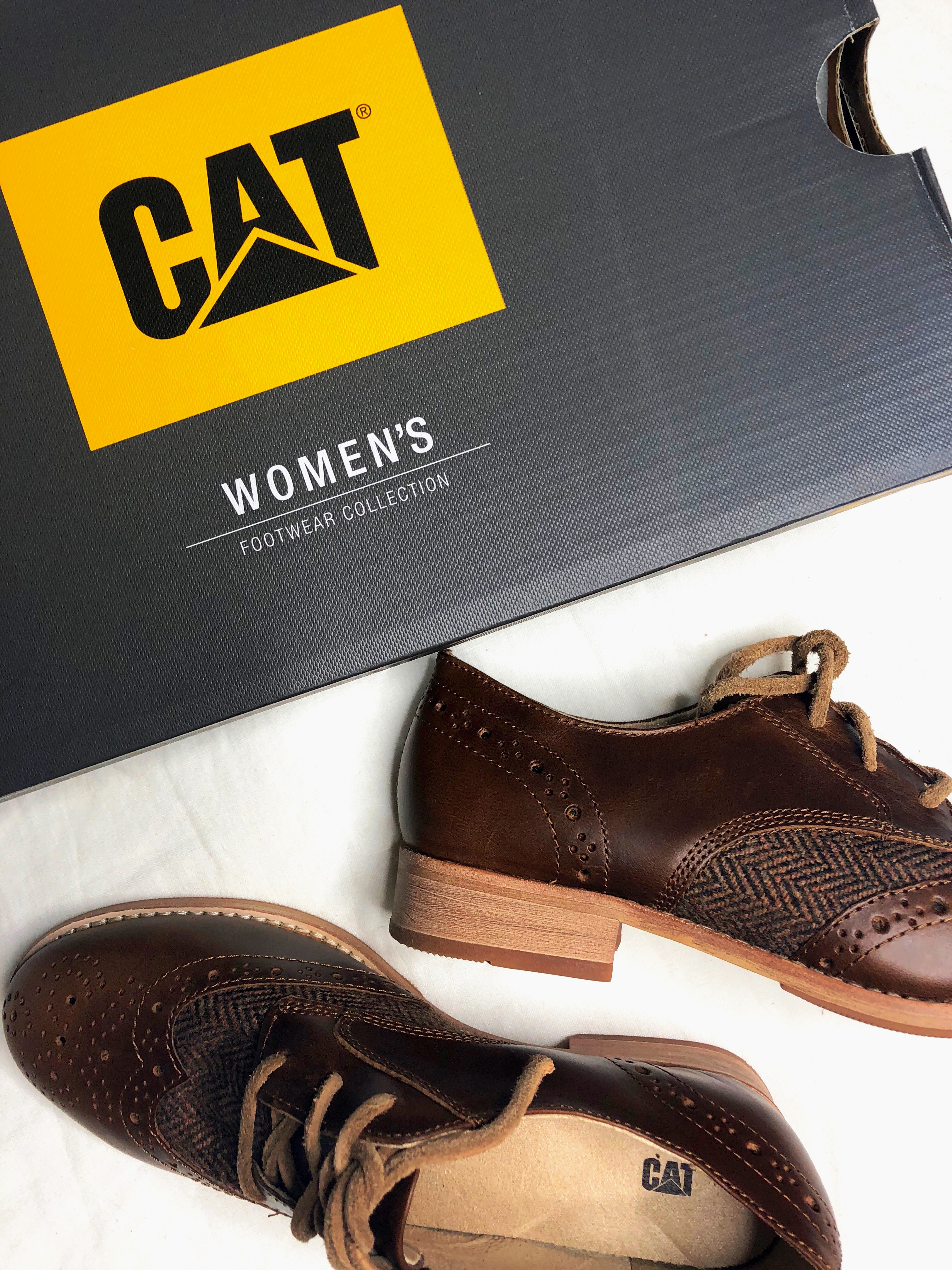
So, imagine my surprise also to see the sturdy Cat construction-oriented brand calling my fashion-forward daughter to select it for her brand new, back-to-school footwear look this coming Fall:


Photo credit: G. Baird

This isn’t our first rodeo with Cat footwear. We previously kicked heels with my son’s steel-toe boot choice, also covering the careful timing of Cat’s truncation from the four-syllable Caterpillar.

While the brand extension from construction and earth-moving equipment to boots makes perfect sense, especially the steel-toe variety, here is the explanation for women’s casual dress shoes:

Photo credit: G. Baird

Marketers, the extension seems unnatural and forced to me, but I’d love to hear from our readers who have a stronger vantage point on whether this brand extension will work long term for Cat.

What called me to create this story for you is the hidden trademark strategy to be unearthed.

“Footwear” is one of those broad descriptions of goods that the USPTO will accept as sufficiently precise. Selecting it facilitates and better positions your brand for line extensions yet to come.

In other words, narrowly selecting “slippers” or “steel-toe boots” over “footwear,” in trademark filings may leave you boxed in when seeking to expand or extend the lines of your present brand.

Not sure when Caterpillar first introduced women’s casual dress shoes under the Cat brand, but it has owned federally-registered rights in the word CAT for “footwear” for more than a decade.

Caterpillar likely began using CAT with steel-toe boots, but given its broader registered rights, I’m guessing it didn’t lose much sleep wondering if it could grow into those broader registered rights.

In fact, this Cat has become quite active enforcing its broader rights at the USPTO’s TTAB, here.

I’ve been thinking about the nature of language lately, ever since I listened to a podcast about various philosophers who devoted their study to language. For example, Ludwig Wittgenstein, one of the most influential philosophers of the twentieth century, is famous for his work on the logic of language. A fundamental premise to his philosophy is that “the limits of my language mean the limits of my world.” In other words, language, although purposed on painting a picture of reality, is fundamentally limited in its ability to describe and do so fully and accurately. For Wittgenstein, this primarily meant that language cannot help us answer pressing metaphysical questions, but the realization has practical importance in branding.

Consider Wittgenstein’s insight in tandem with the desire to promote recall and recognition in a name without causing customers to confuse the name with another source, and you are presented with the challenge underlying all word-based marks: to turn a generally-known and familiar word (or prefix or suffix or otherwise) into a distinctive identifier so that it means something different or more than its generic definition. No small task, especially given language’s inherent descriptive limitations, and this is evidenced by the finite universe of words and combinations to choose from. There is bound to be some overlap in naming. Hence, we regularly witness “trademark twins”–the same or similar words used as marks for different sources of goods and services.

One example of trademark twinning has garnered attention in the press recently, arising from a trademark infringement suit between the Billy Goat Tavern and the Billy Goat Chip Company. The Billy Goat Tavern is a fast-food restaurant in Chicago which gained notoriety when its founder brought his goat to a Cubs game, but was asked to leave (with his goat), casting the “Billy Goat’s Gruff” curse on the Chicago Cubs. Saturday Night Live also parodied the experience of eating there–accurately, I can attest.


Credit: Fox 32

The Billy Goat Chip Company, out of St. Louis, has no affiliation with the Tavern, but the Tavern took issue with the Chip Company’s similar name after the Chip Company’s crisps started showing up in Chicago. Recently, a federal judge rejected the Chip Company’s defense that the Tavern delayed too long in suing the Chip Company, after having notice of the similar name for several years. It is worth noting that although the companies’ names begin with the same two words, their logos set them apart:

But the similarity of the names in the context of food may be more likely to cause confusion than if the names were used in completely different industries. On a continuum of “identical” to “fraternal” (non-identical) twins, it’s hard to pinpoint where the marks fall–and, thus, whether trademark law would require a bit more distinguishing. There is a possibility that consumers would think of the chips, for example, as having some affiliation with the Billy Goat Tavern as a source. This is even more likely when one realizes that the Billy Goat Tavern has never sold fries, only chips with its signature “cheezborger.” Coincidence? I’ve written about stranger coincidences before. Even then, though, how many consumers are that knowledgeable about the Billy Goat Tavern to make the connection? I’m thinking these twins are fraternal.

Numerous other examples of trademark twins abound: Domino’s Pizza and Domino Sugar, Dove Soap and Dove Chocolate, Pom Wonderful and Wonderful Pistachios–just to name a few! Speaking of three, how about some trademark triplets: Apple (iPhone), Apple Records, and Apple Paints. Or quadruplets: Delta Airlines, Delta Dental, Delta Faucet, and Delta Power. These twins, triplets, and quadruplets all borrow similar common words as names, but use them in different industries–making it unlikely that consumers will confuse the companies as one source. Their use in dissimilar markets and in connection with unique logos mitigates the legal danger presented by the intersection of the limits of language, fleetingness of human memory, and protections afforded by trademark law. But industry and logo are just two ways in which their genes differ.

Can you think of additional trademark twins or otherwise? How are they fraternal or identical? What do you think is most important when balancing simplicity, familiarity, notoriety, and legality?

Earlier this year, the Museum of Modern Art in New York City, known as “MoMA,” sued a cafe and art gallery, MoMaCha, also located in New York City, asserting claims of trademark infringement, trademark dilution, and unfair competition. As discussed in my post a couple months ago, although MoMaCha has some well-founded arguments and defenses, the allegations of the complaint are compelling, based on the similarity of the marks and the relatedness of the parties’ goods/services that are offered in the same city. MoMA’s motion for a preliminary injunction, filed in the Southern District of New York, is still pending. The case is The Museum of Modern Art v. MoMaCha IP LLC et al., No. 18-cv-03364-LLS (S.D.N.Y.)

Despite the threat of MoMA’s claims and motion for preliminary injunction, MoMaCha has announced plans to expand to three additional locations in New York City. This type of significant expansion — growing from one to four locations — is a bold move in light of MoMA’s claims, even if MoMaCha is feeling confident in the merits of its arguments and defenses. In particular, damages for trademark infringement under 15 U.S.C. 1117(a) can consist of all the defendant’s profits from its sales of goods/services under the infringing mark, which can add up quickly. Adding three more locations could mean a quadrupling of such potential damages, depending on their profit streams. Furthermore, damages can be tripled under Section 1117(a) based on the circumstances of the case. Therefore, a pending infringement claim can warrant a conservative approach to a defendant’s business expansion — or even limiting the use of the claimed infringing mark — until the dispute is resolved, to mitigate the risk of damages.

Nevertheless, it is possible that MoMaCha might be following this conservative approach. Despite their announcement several months ago to expand to three locations, and coverage of that expansion in the media including articles linked above, after a quick Google search I’m not seeing that any new locations have actually opened, but any New Yorkers out there, let me know if you’ve seen more MoMaCha’s opening up. Stay tuned for updates.