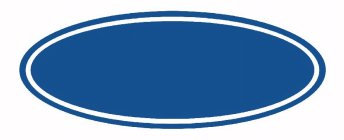
More On The Fordless Blue Oval

What do you think, is Overstock.com selling bling with the Fordless blue oval logo?

Enamel Turquoise with Blue Ovals Bangle Bracelet

As you may recall from my post back in September, Ford Motor Company is attempting to register the below shown non-verbal logo as a trademark for a variety of goods in Int'l Class 12:

Mark Image

And, as you may recall from Dan's I See Blue Ovals post back in August, there are far more than a handful of blue oval logos out there besides this one:


The pending Fordless blue oval intent-to-use trademark application recently was examined by the U.S. Patent and Trademark Office (PTO), and on October 23, 2009, the PTO found no substantive bases for refusal, but instead it issued an initial refusal noting only a couple of purely procedural or technical deficiencies, concerning the wording in the lengthy description of goods and the need for Ford to submit a claim of ownership to some related registrations (here, here, and here).

So, once these minor details are satisfied the above non-verbal Fordless logo will be published for opposition, and assuming no Amendment to Allege Use is filed prior to the approval for publication and assuming no third party files a Notice of Opposition, then a Notice of Allowance will issue, which will start the clock for Ford to put in evidence of use through a Statement of Use.

What remains to be seen (until Ford submits a specimen of use) is whether Ford really will use the above blue oval design without the Ford name brand superimposed, as shown in the drawing submitted to the PTO. If Ford ends up submitting evidence of use with the Ford brand name superimposed on the blue oval logo, then it appears unavoidable that Ford will have additional refusals issued, for the reasons previously articulated.

But, if Ford actually puts in use of the Fordless blue oval logo -- as shown in the drawing without the Ford brand name superimposed -- does the PTO's recent failure to challenge inherent distinctiveness mean that no evidence of acquired distinctiveness or secondary meaning will be required for registration?

If so, given the prevalence and popularity of blue oval logos, how can the Fordless blue oval be considered unique enough to be inherently distinctive?

Stay tuned for more on this as we learn more.

Request Info

See our or enter your information below to send us a quick message and we'll reply in one business day or less.

Your privacy is ensured. We will never sell, disclose, or trade contact information.

An Increasingly Intense Ellipsis? dot, doT, dOT, DOT!

Mark Image

As you may recall, last month, we had some fun trying to solve the mystery of a non-traditional and non-verbal trademark owned by Amazon.com, here.

This time the non-traditional and non-verbal mystery mark shown above is described in trademark filings as consisting of "four circles that increase in size from left to right." I call it an "increasingly intense ellipsis." What would you call it, if you had to give it a name?

More importantly, have you seen it before? Do you recognize it? Are you surprised to know it is registered and protected as a trademark? Do you know what goods and services are associated with it? Do you know who owns it?

OK, need more information?

You don't need the products bearing this "increasingly intense ellipsis" mark or the services associated with it to shop online at Amazon.com or any other online retailer. Did that help?

No? Here's another hint: It is used in close association with this service mark: Tap & Go.

Still not enough? Alright, enough suspense?

The visual answer and more discussion is below the jump.

 Boots to trial contactless payment 0

Yes, MasterCard is the owner of this "increasingly intense ellipsis" (my words) mark, for financial services in Int'l Class 36, and smart cards in Int'l Class 9. The non-traditional mark is used in close association with MasterCard's PayPass and Tap & Go marks at the physical -- not virtual -- point of retail sale.

Now, given that a trademark and service mark must (1) identify goods or services, (2) distinguish them from those of others, and (3) indicate the source of the goods or services, do you agree that the "increasingly intense ellipsis" performs each of these critical trademark functions?

If so, does it do so standing alone, without the closely associated MasterCard housemark or PayPass secondary mark?

Isn't this the kind of mark where "look-for advertising" would help consumers know this actually is a trademark instead of simply non-distinctive ornamentation?

Blue Oval, But Look Mom, No Words!

What does this image signify to you?

Mark Image

For full credit, please answer the question before peeking back at Dan's popular post called "I See Blue Ovals."

I suspect that Ford Motor Company would be happy if your response is: Mark Image

On July 29, 2009, Ford filed a federal intent-to-use trademark application for the blue oval background design without the word Ford, describing the wordless claimed design mark as "concentric ovals, the outermost oval being a thin blue oval followed by a slightly thicker white oval inside the first blue oval, inside the aforementioned white oval is a completely filled in blue oval" for various motor vehicles and various automotive parts and components.

Curious that Ford didn't file the wordless blue oval design as a trademark already in use, given how long it has been in use with Ford superimposed on the design, and given Section 1202.11 of the Patent and Trademark Office's "Trademark Manual of Examining Procedure" (TMEP), which sets forth the applicable test for registration under these circumstances:

“A background design which is always used in connection with word marks must create a commercial impression on buyers separate and apart from the word marks for the design to be protectible as a separate mark. In deciding whether the design background of a word mark may be separately registered, the essential question is whether or not the background material is or is not inherently distinctive.... If the background portion is inherently distinctive, no proof of secondary meaning need be introduced; if not, such proof is essential.”

"Common geometric shapes, when used as vehicles for the display of word marks, are not regarded as indicators of origin absent evidence of distinctiveness of the design alone."

"Additionally, . . .  color can never be inherently distinctive."

Will Ford be able to prove the wordless blue oval background design is inherently distinctive under this standard? If not, proof of acquired distinctiveness or secondary meaning will be essential for success. Will Ford be able to establish secondary meaning in the blue oval design as a stand alone mark even though it apparently hasn't been used alone yet?

We'll keep a close eye on this one and let you know how the Ford application progresses. 

While we're on the subject of whether a background design creates a commercial impression on buyers separate and apart from the matter omitted for registration purposes, can you name the source of this background design?

Mark ImageFYI, this claimed mark appears poised to be approved by the Trademark Office and published for opposition as a stand-alone mark, even though it doesn't appear to be literally, physically, or actually standing alone, i.e., without the prancing horse design or brand name

Single Letter Chewing Gum Brands: A Lasting Flavor or Just B S?

Cadbury Adams, a Cadbury Schweppes Company


My recent family road trip through the heartland had me spending more time than usual pumping gas and shopping in convenience stores, so a few chewing gum brands "gone single letter" caught my eye. As you may recall, I already have reported on Single Letter Envy in Hotel Branding. Well, it appears that the quest for single or one-letter brands is not limited to the hospitality industry (let alone others I'm sure to write about in the future), but has "stretched" to the confectionery industry too.

Turns out, both single letter gum brands that caught my eye are owned by the same company, Cadbury-Adams, part of "Cadbury plc – a leading global confectionery business with the number one or number two position in over 20 of the world's 50 largest confectionery markets."  

Yes, Cadbury Adams has migrated from its long-lasting Bubblicious brand name (having equal style for each letter) to a differently styled beginning B in Bubblicious, and most recently, to the letter B, standing alone, front and center on packaging; fully-truncated to B, as shown above. So, in our ever-abbreviated and truncated branding world, where G now means Gatorade (among other things, as a previously blogged about here), B now apparently means Bubblicious, and S now means Stride (another Cadbury Adams chewing gum brand). Might care be in order to avoid having these two brands appear side by side on store shelves -- at least in the order appearing above -- to avoid some unintended combined meaning of the brands? Perhaps one of the "sticky" consequences of single letter brands is the temptation others may have to spell alternate and unfavorable words and acronyms with them.

As you might imagine, confronting these single letter brands raises a number of questions in need of some answers. For example, are single or one-letter brands for chewing and bubble gum, just the latest flavor trend, or are they here to stay? Why are they currently so appealing, at least to Cadbury Adams? Are there other single letter gum brands in the marketplace, or just B S? Lastly, what are some of the legal ramifications of branding single letters for confectioners?

I'll leave the first two questions for others to chew on -- especially marketers, but I'll take a crack at the second two.

Do Other Single Letter Chewing Gum Brands Exist, or is it Just B S?

Well, apparently it's not just B S, even for Cadbury Adams, who has actually registered a stylized letter "C" for chewing gum, apparently to reinforce the first letter in the long-lasting Chiclets brand, here and here. Having said that, the specimens on record at the Trademark Office don't appear to scream "C" -- at least to me. Unlike the B and S brands, where these single letters appear front and center, standing alone, the stylized "C" trademark appears quite intertwined with the design elements of the packaging, making it difficult to discern the claimed "C" as a separate trademark.

In case you were wondering, Cadbury's major competitor Wrigley's (now part of Mars) currently appears more interested in putting single number brands (namely, the single numeral 5) front and center instead of single letter brands, although it apparently has flirted with more subtle use of a stylized W on the surface of certain gum sticks (consisting of "one or more 'W' designs substantially as shown in the drawing" below on the left):

Mark Image

Honestly, I always wondered what those "tire tracks" were on Juicy Fruit gum sticks.

Anyway, soon we may see how broadly Wrigley's views its scope of rights in "W" since the Walgreens' stylized W mark (shown above on the right) is set to publish for opposition next month, and within the long list of intended goods and services is "breath freshener . . . gum" and "smoking cessation . . . chewing gum". So, stay tuned here for more on this point.

Yet, others seem to prefer the combination of a single numeral and a single letter: N-2 and N-4. Indeed, if V-8 vegetable juice ever considers a brand extension into chewing gum (how likely is that?), it will have to contend with the already-registered V6 brand.

Wrigley's also owns a stylized "O" trademark used in connection with its Orbit brand gum, so, Oprah might have to think twice about launching a chewing gum brand sporting her brand of O anytime soon.

Legal Ramifications of Single Letter Brands?

There are a few legal take-aways for single letter brands worth mentioning here:

  1. Don't assume you can truncate an existing brand down to a single letter without conducting the necessary trademark due diligence;
  2. Designing a highly stylized first letter in a brand name (that is styled differently from the remaining letters in the name) may permit the owner to obtain a separate federal trademark registration covering the highly stylized single letter by itself (as Cadbury Adams did with the stylized B in Bubblicious some five years ago), even though -- at the time -- it is only used as the first letter in the brand name (as was the case for Bubblicious);
  3. Utilizing the strategy in (2) above may help facilitate and protect the possibility of later pursuing a migration of the single letter from the brand name (as Cadbury Adams did with B Bursts years after filing for B), and then to a stand alone, front and center, fully-truncated single letter brand, as depicted above;
  4. Taking a more gradual approach toward truncation and migration might help reduce risk of a conflict, especially in a crowded field, assuming it is pursued along with the design and registration strategy in (2) above; and 
  5. The scope of rights in a single letter brand will be impacted by third party uses of the same letter: The more crowded the field, the narrower the scope.

So, to illustrate the due diligence concern stated above in (1), if Trident decides to truncate itself to T, it may have to contend with this T and that T (stylized). And, if Gatorade Gum returns to the scene, it may have to consider G & Design, G-1, at least, before assuming it automatically may truncate to G for chewing gum.

With respect to scope of rights, apparently, Cadbury Adam's Bubblicious beat Bubble Yum, Big League Chew, and Bazooka in truncating to B, but Cadbury Adam's B, nevertheless, coexists with B-FRESH, and may soon coexist with Grupo Bimbo's B logo too.

It remains to be seen how many more single letter chewing and bubble gum brands "pop up" and whether any confectioners "expanding" in this direction will "blow it" by migrating or truncating their brands to single letters without doing -- in advance -- the necessary due diligence. Of course, the timing of the due diligence may unwrap the difference between a successful "no-face-sticking bubble gum" brand from one that leaves a rather sticky mess on your face when it finally bursts.

Before closing, and back to the title of this post for a moment, for anyone wondering whether the use of B S in the title of this post might be a tad too racy, first of all, it is an acronym with many possible meanings, so you're responsible for the one you decide to apply, but perhaps more importantly, I have confirmed that the Trademark Office readily registers marks consisting of or comprising B.S., so long as it is not spelled out in full as a "profane" or "scandalous" term (as Red Bull apparently attempted to do, here): (1) BS is federally-registered for jewelry and leather goods, (2) I.T. WITHOUT THE B.S. is federally-registered for maintenance and repair of computer networks, (3) BS EVER & Design is federally-registered for steel-wire, (4) BS (stylized) is federally registered for certification services, (5) NO B.S. is federally-registered for a marketing newsletter, (6) B S & Design is federally-registered for a swimming pool drain cover, (7) BS & Design is federally-registered for insurance services,  (8) B:S is federally-registered for footwear, (9) NO B.S. was federally-registered for telephone calling card services, (10) B.S. METER was federally-registered for a toy talking telephone, (11) CAN THE B.S. was federally-registered for printed message cards, and (12) a mark consisting of "a stitched letter 'B' on the left back pocket and a stitched letter 'S' on the right back pocket of a garmet" was approved by the Trademark Office.

Just so you know, even a mark having the words "NO B.S. MORTGAGE, LLC," and depicting a "bull with blue eyes and a gold nose ring holding a roll of white toilet paper and sitting on a white toilet," was not refused registration under Section 2(a) of the Lanham Act, despite that provision's prohibition on the registration of marks that consist of or comprise scandalous and immoral matter.

Non-Verbal Logos That Can Stand Alone, And One That Can't

Even young children understand the power of brands and trademark symbols before they can read.

Years ago, when my children were at the ripe young age of wondering (and maybe caring) what my job was, I'd try to explain the kinds of things a trademark attorney might do. Of course, I didn't tell them some view trademark types as "the most basic figure." 

It took a while to find a message that stuck with them. What finally got through was when I posed a hypothetical question, asking whether they liked eating at the Golden Arches, and what they would think if they couldn't get a Happy Meal there because it wasn't McDonalds after all, but some other restaurant using the Golden Arches too. They were outraged this could ever happen.

So, the Golden Arches can probably stand alone.  

Here is another non-verbal logo that can truly stand alone:

Nike Swoosh logo

Yes, it functions as an exceedingly strong and probably famous brand and trademark with no further explanation or word mark to support it (and to not undermine my point, I’ll refrain from uttering the four letter brand name firmly linked to it in our minds).

What do you think about this one?


(As you may recall, Dan previously posted on a different topic related to this logo here).

I’d respectfully suggest that when the hang-tag attached to the luggage item bearing this logo is closely supported by a lot of words like SWISSGEAR, WENGER, and FROM THE MAKER OF THE GENUINE SWISS ARMY KNIFE, the logo is having a tough time standing alone and probably needs a trademark support group.

By the way, anyone notice the resemblance to the flag of Switzerland?

How about the International or American Red Cross?

Last thought, for now, concerning non-verbal logos, really:

Don't brand owners need to "name" their non-verbal logos, especially those that "stand alone," otherwise how can anyone spread the word, so to speak?

For example, Nike seems to have figured this out, owning federal trademark registrations for the word SWOOSH (in connection with footwear and clothing items), separate and apart from what is known as the "Swoosh" Logo. 

McDonalds similarly owns a federal registration for the words THE GOLDEN ARCHES for restaurant services.

I'm not sure there is a suitable, brief and unique name for the Wenger logo shown above, perhaps that is part of the reason for the "FROM THE MAKER OF THE GENUINE SWISS ARMY KNIFE" tag line?

Wenger describes their non-verbal logo in recent trademark filings this way: "The mark consists of a chrome colored cross on a red square with rounded edges, outlined by a chrome colored square with rounded edges."

I think this just proved my point.