— Jessica Gutierrez Alm, Attorney

The term Comic Con has become synonymous with a certain culture.  In recent years, comic book conventions (and comic book culture), have become increasingly popular.  Annual comic book conventions are held in major cities across the U.S. and the world.  Many of these conventions are titled—officially or unofficially—“[City] Comic Con.”  One recent jury decision, however, may cause some (official) rebranding.

In 2014, the San Diego Comic Convention (San Diego CC) sued organizers of the Salt Lake Comic Convention (Salt Lake CC) for trademark infringement.  San Diego alleged that Salt Lake willfully infringed its registered COMIC-CON and COMIC CON INTERNATIONAL marks.

Salt Lake CC defended primarily on the ground that “comic con” is a generic term for comic book conventions.  The convention organizers cited to the names of various cities’ comic conventions to show the term is used generically—Motor City Comic Con, New York Comic Con, Denver Comic Con, and Emerald City Comic Con, among others.  Salt Lake CC also pointed to the usage of “comic con” in media to generically refer to a type of convention.
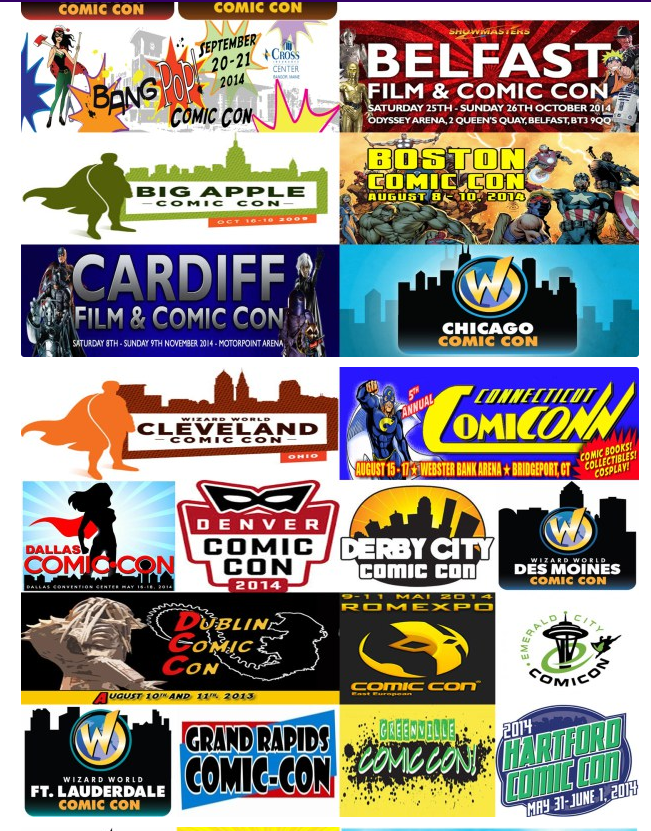
A sampling of the various Comic Cons pointed to by Salt Lake CC as evidence of generic use.

Throughout the case, Salt Lake CC worked to rally fans behind the view that “comic con” belongs to the public.  Eventually, Salt Lake CC’s tweets, Facebook posts, and press releases about the case prompted the federal judge to issue a gag order.  The order temporarily prevented Salt Lake CC from commenting on the case, and restricted their ability to republish public court documents.  The order was appealed to the Ninth Circuit and ultimately vacated on First Amendment grounds.

At trial, San Diego CC presented its Comic Con to the jury as a brand.  Through surveys and other evidence, San Diego CC convinced the jury that Comic Con is not a generic term for a type of event.  Instead, San Diego argued, it operates as a source designator for the San Diego convention.

The Jury found that Salt Lake CC’s use of “Comic Con” infringes on San Diego’s registered marks.  The infringement, however, was not willful according to the jury.  Thus, despite San Diego’s request of $12 million in damages, they were awarded only $20,000 for corrective advertising.  Post-trial motions will likely be filed, and the case may be appealed to the Ninth Circuit.  But at least for the time being, it seems Comic Con is (officially) off limits to event organizers without a license.  However, I suspect (unofficial) uses of the term will continue.

-Martha Engel, Attorney

To me, one of the most exciting aspects of intellectual property law is when patent law and trademark law intersect in product or packaging design.  Last week, I had the honor of speaking to a graduate product design class at the University of Minnesota’s School of Design, where I discussed the valuable strategy of having a novel design that can translate into forming trademark rights in a distinctive look and feel of the product that allows consumers to instantly associate the look of the product with a brand.

One of the best Instagram accounts for seeing copycat design is @Diet_Prada, and they recently posted quite a gem.  (H/T to my sister for alerting me to this one.)

On the left-hand side is packaging for cosmetics sold by Pat McGrath Labs, a high-end cosmetic brand from one of the most influential makeup artists in the world.  Pat McGrath’s iconic packaging – putting the $100-ish products in shiny sealed foil pouches filled with sequins – has gained significant attention and notoriety in the fashion world.  There are even blog posts about what to do with the sequins.

On the right-hand side is packaging for some ornaments with $20 mini perfumes by Victoria’s Secret for this season.  Does it look familiar?


“They took a pouch, and put some sequins in it, and packaged some beauty products in it.  So what?”  Well, I think think the copying goes even beyond that.  The choice of the color palette.  The positioning of the label on the package.  Accidental?  Perhaps but seems unlikely.

So how can a company protect its thoughtfully designed packaging from being ripped off?  First, try to seek design patent protection or even utility patent protection, if there’s some functional aspect to the packaging and not purely ornamental.   Then craft an appropriate marketing / PR strategy draw consumer attention to the packaging so that you could argue that consumers associate that packaging with your company.   Also, pay attention to your agreements with your packaging suppliers and, if you are asking them to do something unique and to your particular specifications, ensure that there’s language in the agreements to protect you in the event your supplier makes similar packaging for others.

A few weeks ago, a Mexican restaurant in Fort Collins, Colorado, named “Dam Good Tacos,” agreed to change its name based on a settlement in a trademark dispute with another Mexican restaurant, Torchy’s Tacos.

Torchy’s Tacos owns a federal trademark registration for the mark “DAMN GOOD TACOS” (Reg. No. 4835497) for restaurant services. After learning of the Dam Good Tacos restaurant, Torchy’s filed a complaint in federal court, asserting trademark infringement based on the nearly identical use of its mark, for related restaurant services.

The re-branded name of Dam Good Tacos is now DGT, an acronym for its previous name. Some Coloradans are unhappy with the name change, and Torchy’s is facing some significant backlash on social media for initiating this trademark dispute.

For example, one social media user states that she “kinda hates” Torchy’s for suing DGT, and another stated “shame on Tochy’s” regarding its “frivolous lawsuit,” which makes them “look foolish.”

However, the lawsuit is hardly frivolous. The parties’ marks and restaurant services are nearly identical, and Tochy’s appears to have priority, in addition to all the legal presumptions that come with its federal registration. Also, the parties’ businesses are in the same market, with a Tochy’s Tacos location just a couple miles away from DGT. And before suing, Tochy’s offered DGT financial assistance with a name change, but DGT refused.

Nevertheless, the social media backlash is a reminder that, no matter how strong the case for infringement, trademark “bullying” is a prevalent topic, and it’s important to be cognizant of the potential for negative PR in any enforcement efforts, particularly when there is a significant disparity in the size and resources of the parties, and/or when either party is popular or well-known in a particular market.

There have been several recent examples in this context, where large well-known companies initiated enforcement efforts against smaller parties, but have done so in creative, friendly, and humorous ways, which not only avoided criticism, but also benefited all parties involved, with a supportive public reaction and widespread media coverage.

Two of my favorite, recent examples of this, are the Netflix “Stranger Things” demand letter (we blogged about it here), and Bud Light’s Dilly Dilly demand scroll — which was read aloud by a medieval character at the alleged infringer’s brewery (see our blog post here). Rather than face any backlash or claims of bullying, the reactions to these enforcement efforts were positive, with both companies receiving significant praise, such as “funny,” “cool,” and “super classy.”  That’s quite a feat, as those words are quite rarely applicable to legal demand letters.

What do you think about Torchy’s approach here? Do you have any favorite examples of successful enforcement efforts from a public-relations perspective?

-Mark Prus, Principal, NameFlash Name Development

A lot of entrepreneurs launch businesses behind a name they developed on their own. I get the fact that the name of the startup is intensely personal for the founders. Also money is tight in a startup and spending money to develop a name and do trademark research on it seems like a “nice to have” versus a “must do.”

But when you think about it, the company/product/service name is the first point of contact for a potential consumer and what could be more important than that?

I won’t suggest that founders abandon any hope of developing the name on their own. I will suggest that at a minimum founders need to get a “second opinion” on the names they develop.

Why is this important? Founders tend to have a very narrow view of the world that revolves around their particular product or service. Most entrepreneurs suffer from the “curse of knowledge” where they know a lot about their topic area and blindly assume that everyone else has a high level of understanding about their product or service.

My favorite example of this is Xobni (pronounced “zob-nee”). The company was founded in 2006 and made software for mobile and email applications. It raised millions of dollars from venture capitalists and was acquired by Yahoo in 2013. After incorporating some of its features into Yahoo Mail, Xobni was shut down. While Xobni disappeared, it remained famous as a prime example of the “curse of insider knowledge.” In other words, the founders developed the name and lived with it on a daily basis, but failed to take into account the fact that most consumers could not relate to the name in any way. The founders of Xobni loved the name because it was inbox spelled backwards. They also assumed that people would fall in love with the name in the same way that they did.

If you are interested in the science behind the “curse of knowledge” you will find more details in my book The Science of Branding which is available on Amazon.com.

There is another reason why founders should get a second opinion on their branding and that is because Google makes you stupid. OK, technically Google doesn’t make you stupid, but it does shield you from diversity. And a lack of diversity in branding will limit the appeal of your product or service.

This phenomenon is described in the book The Filter Bubble: How the New Personalized Web Is Changing What We Read and How We Think.” The internet was developed as a means for humans to gain a broader view of the world. However, the use of AI by companies such as Google and Facebook is doing exactly the opposite. Because Google and Facebook are driven by advertising revenue, they intentionally provide you with a narrow view of the world because they think that will enhance their revenues. In most cases, people will enjoy their web browsing experience if they are presented with web pages that agree with their view of the world. Over time, you are exposed to highly filtered results that tend to sound familiar because your viewing horizon is limited by your web browsing experience. You will see fewer contrary points of view because Google serves up a world that aligns with your browsing history.

That is precisely why a “second branding opinion” is necessary. When I conduct a name development project I always ensure that I have a diverse panel of freelancers working on a project. I might have an artist, a scientist, a musician, a professional name developer, a pharmacist, and a NY Times best-selling author working on a project. Sometimes the best names come from the most unexpected places!

Entrepreneurs should expand their horizons for branding and at a minimum make sure they get a second opinion on the names for their company/product/service!

Ron, you’re so vain, you probably think this post is about you, don’t you, don’t you — actually, it is, or, let’s say, more about your recent in-actions — still, I hope you enjoy this cute little melody.

By the way, before fully discussing how you walk into a party or onto a yacht, do I detect a hint of apricot in the color of your stylish Likelihood of Confusion garb, might there be a matching scarf?

The week before last, walking through the Minneapolis skyway system, while reading our good friend Ron Coleman’s explanation of “why I let my trademark registration lapse,” I kid you not, a second and more physical spectacle emerged right before my eyes when crossing over 5th Street:

Ron, do I need to connect the dots for you on the striking parallels of the mysterious energy that you generated when you gave away the thing you (once) loved? Like the total eclipse of the sun?

Yes Ron, love you like my own brother, but if you were Dave, I’d help him back on the tracks, and remind him of what less than 12 cents a day buys, for those incontestable and powerful standard-character federally-registered rights over a second ten-year term. Remember, sword and shield.

The decisive inaction in allowing the lapse, reminds me of the forgotten and invisible value of deterrence. And, while I’m on board with much of the irreverent tone you can display from time to time, are you now suggesting that other brand owners turn their circle ®s upside down too?

I won’t put words in your mouth, but are you advocating for unilateral registration disarmament? Even if not, I’m left wondering, are the children or watchful brand owners likely to be confused?

After all, chalking up the original ten year old decision to federally-register your blog’s namesake as a senseless and unnecessary goof, today, because you haven’t (yet) found an occasion to enforce it, requires the omnipresent convergence of 20/20 hindsight and a flawless crystal ball for the future, all in one moment. Again, deterrence my friend, it’s beautiful and invisible.

And, as to the question of vanity, far be it for me to question yours, but isn’t tossing your circle ® in the trash, a little like saying to the world, “look mom, no hands,” after learning to ride a bike, and then daring unwise children, to knock you off? Pun and double-meaning, fully intended.

Now Ron, I know you relish a formidable challenge, like when you went (not to Saratoga), but to Washington, D.C., and your client (not horse), naturally won, the trademark case of the year. But, before leaving the question of vanity though, just wondering, after reading the favorable Tam decision, tell me, did you have one eye in the mirror, as you watched yourself gavotte?

Still Ron, don’t you think the modest investment of less than 12 cents a day is worth putting the USPTO in the position to, and give it, the statutory charge to do your enforcement bidding for you? Don’t you? Even if someone, as you seem to invite, tries something? Don’t you, don’t you?

And here’s an underworld spy question for you Ron, is there no room for the Easy Button, in your commercial litigator’s toolbox, just in case you need it, let’s say, down the road in a few?

Ron, please don’t look at me that way! When you have your hat strategically dipped below one eye, I’m left with the feeling you think I’m either still quite naïve, or full of it, nothing in between.

By the way, have you actually verified that your Likelihood of Confusion® registration never formed a bar to others at the USPTO? There are tools for that, courtesy of Towergate Software.

What we do know for certain is, it will no more, if it ever did. And, if you ever want to avoid the need for a formal opposition at some distant point in the future, if the USPTO doesn’t agree with your assessment that someone had their sights on messing with you, without your ®, you can kiss the Letter of Protest tool goodbye, as this little guy — ™ — doesn’t cut it.

Please let’s be honest Ron, it’s always easier to hang on to something and hold it in your hands than discard it and try to get it back later. I realize you’re feeling confidence in letting it go in this moment, but what if the facts or your mind change down the road?

Dumpster diving is a messy proposition. What the USPTO granted yesterday doesn’t always come as easy, if at all, tomorrow or the next day. As we all know, the USPTO is not impervious to changing its mind on how it views certain things, especially when it comes to judging the line between trademark suggestiveness and descriptiveness.

Who am I to judge your calculation of value? But let’s not forget, Ron we’ve all seen your fancy Likelihood of Confusion branded apparel. By the way, will we see those fancy threads in Seattle? Or, are they about to become a collectors item on eBay?

Let me just say, had you presented your apricot hat in hand in Orlando, and passed it around the room, I’m thinking you’d have collected more than the price of another ten year term, given the enormous and generous contributions you’ve made to our guild over the last few decades.

Ron, don’t get me wrong, I fully realize that you’re where you should be all the time, and I completely admire your sensitivity to the evil constructs of vanity, but I fear that the little voice whispering in your ear has spilled some clouds in your coffee on this one. What about the children who may be watching? Aren’t you concerned about the implication of what you seem to be saying, simply just TM it instead?

Ron, having said all that, I hope we can still be friends, as I have no doubt, there a plenty of others still dreaming that they’d be your partner:

Last, but not least, Ron, will you need reminding that yet another price of purging your vanity is that you’ll need to remove all those fancy trademark registration symbols from your blog?

Attorneys in general, and trademark attorneys in particular, have a reputation for heavy handedness. The traditional weapon of choice for these legal pugilist has been, and continues to be, ye olde cease and desist letter. A long, unnecessarily wordy letter sprinkled with “without authorization”‘s and “reserves all rights and remedies”‘s and other thinly veiled and not-so-thinly veiled threats of legal action. There are times when the traditional cease and desist letter is acceptable – Nay! – all but necessitated! But attorneys with an eye on their client’s business goals understand that there is no such thing as a one-size-fits-all enforcement communication. Indeed, the trademark tomes are jammed to the brim with tales of trademark owners whose actions have earned them the alleged label of a “trademark bully.”

But Bud Light’s recent dispute with a local Minneapolis brewery was just the opposite. Instead of creating a public relations nightmare, fanning the flames of “Big Beer” versus “Craft Beer,” Bud Light turned a trademark dispute into an advertising boon! The issue involved Bud Light’s newly adopted advertising tagline DILLY DILLY, which appeared in a Bud Light commercial earlier this year. Modist brewery chose to name its new Mosaic Double IPA “DILLY DILLY.” At the moment, the beer is still posted on the Modist Brewing website. The companies reached a friendly agreement and Bud Light even offered Modist two free tickets to the Super Bowl (which, coincidentally, will be in Minneapolis). And then, like a foam cherry on top, Bud Light hired an actor to visit the Modist taproom and “deliver” a cease and desist message from a scroll in medieval tongue. Modist plans to exhaust its current supply and then, if the beer is brewed again, use a different name. Even if the beer comes back as a new name, Modist will still have Ye Olde Scroll, which Modist has hung in its taproom.

In this instance, everyone seems to win. Bud Light received favorable press coverage throughout the country on the issue and put all other breweries on notice of its claimed rights in DILLY DILLY tagline. Modist received some great free publicity, two months ahead of the biggest sports party in the United States. I have to assume there will be more than just a handful of beer drinkers coming for Super Bowl festivities, wanting to go to the Dilly Dilly brewery and get a picture with Ye Olde Scroll.

Scrolls won’t be the next big thing in trademark enforcement. However, this is another example of how creative legal approaches can not only resolve a problem more efficiently, but end up creating other benefits for your business or clients. And with the number of breweries and beers expanding at an exponential rate the last few years, the industry will need to continue to find creative solutions to these problems. It’s great to see even the big players in the industry recognize this need.

The Equinox Hotel Management, Inc. (“Equinox Hotels”) sued the Manhattan upscale gym giant, Equinox Holdings Inc. (“Equinox Gyms”), asking a federal judge in California to block the gym from expanding into hotels. Equinox Hotels do not want the upscale gym giant to take over the small company’s identity. Equinox Hotels fears that its brand recognition will quickly evaporate as consumers are bombarded with ads for the Equinox Gyms.

By way of background, Equinox Hotels is an independent San Francisco-based hospitality company that revitalizes hotel properties. It was founded in 1994. Equinox Hotels used its mark in connection with various hospitality services, including its hotel management and consulting services. The company portfolio of projects includes: (1) the Crowne Plaza Arlington; in Texas; (2) Jabal Omar Development Company Project in Saudi Arabia; (3) Walnut Creek Marriott & Athletic Club in Walnut Creek, California; (4) Hyatt Regency Sacramento in California; (5) The Davenport Hotel in Spokane, Washington; and (6) Laguna Cliffs Marriott Resort & Spa in Dana Point, California.

Equinox is a “fitness giant” that operates 94 EQUINOX branded luxury health clubs nationwide. Equinox Gyms abound especially in its hometown NYC. I recall my first trip to New York and seeing all of the signs with EQUINOX. I quickly learned that the New Yorkers escape from the hectic city into these upscale gyms.

The Equinox Gyms formulated plans to expand from the fitness industry into hospitality, including hotels. Two years ago, Equinox Gyms initially announced its hotel plans.

In its motion for an injunction, Equinox Hotels described its battle as a little David taking on a Goliath gym giant. The Equinox Gyms giant will soon be answering.

The hearing on the preliminary injunction will be held on January 16, 2018. Stay tuned.

–James Mahoney, Razor’s Edge Communications

Admit it, when you saw the headline, many of you finished the jingle featured in Farmers Insurance TV commercials.

Farmers has a great campaign going. Geico has a good campaign going. Both are entertaining. First, Farmers:

Their “Hall of Claims” series, developed by RPA, showcases weird situations that Farmers has paid claims on. RPA’s latest iteration on the “University of Farmers” campaign is terrific. It has a catchy jingle and a catchy tagline, “We know a thing or two because we’ve seen a thing or two.”

Right off the bat, every ad is unmistakably Farmers, from the opening shot of the set to the friendly, matter-of-fact delivery of spokesman J.K. Simmons. A consistent and long-term campaign, it always offers fresh interest.

Geico’s ads, developed by the Martin Agency, take a different tack. You don’t know whose ad it is until the payoff line hits partway through, like “Casual Friday at Buckingham Palace? Surprising. What’s not surprising? How much money [particular customer] saved by switching to Geico.”

The Farmers “Hall of Claims” ads are stronger than Geico’s “Surprising” series for a couple of reasons:

First, Geico’s creative doesn’t relate specifically to insurance the way that Farmers’ does. That doesn’t necessarily mean that it’s a weak campaign, but it does mean that they need to hammer harder and more often to establish the connection.

Second, there’s no immediately discernable Geico style since the scenarios are wildly different from one another. That raises the odds that, except for the more intriguing scenarios, someone will skip or otherwise tune them out with nary a thought of Geico. It’s also a factor that other companies are running campaigns that use the same “surprise” approach. That makes the competition for mindshare that much harder when there’s no obvious or intuitive link to the advertiser.

Our personal favorite Geico ad is Casual Friday at Buckingham Palace. As we fast-forward through commercial breaks, we’ll actually stop at that one to see it again. Funny stuff, well written and brilliantly acted.

Now compare that to any Farmers ad of the weird things they’ve insured. The difference is that one is entertainment sponsored by Geico, the other is indelible proof points, unforgettably Farmers, presented in an entertaining fashion.

That’s the difference between a great campaign and a good one. I like them both.

The City of Portland is known as a hub for craft beer, and its local government couldn’t be prouder. The Travel Portland website proudly proclaims that Portland is “home to more breweries than any other city on earth.” Yet the city’s relationship with the local craft beer scene is not so bubbly at the moment, as trademark dispute between the city and local Old Town Brewing has gone public.

The dispute revolves around Old Town Brewing’s logo and a large lighted sign owned by the city, both shown below.


This isn’t the first time the city hasn’t gotten into a dispute with a brewery over the sign. The city previously objected to Pabst’s use of a logo derived from the sign back in 2015.  Our 2015 article contains a good back story as to the city’s purchase of the sign as well as the city’s claimed trademark rights in the sign (and for our regular readers, the investigation into Portland’s unicorn burial ground is ongoing). However, for our purposes, a TLDR history will suffice. The sign is known as the “White Stag” sign and was built in 1940. The text has changed numerous times along with the ownership. The City of Portland purchased the sign in 2010 and has since begun licensing reproductions of the sign to third-parties.

Most recently, Portland sought to license production of the sign to AB InBev, the parent company to Budweiser and a whole host of other big and small names in the alcohol business. Jeff Alworth at the Beervana Blog has a great write up regarding the dispute that is worth a read. As you might expect, the small, local craft brewery is not pleased with Portland’s attempt to permit a direct competitor to use a similar logo. The fact that the competitor is Budweiser certainly can’t help.

Luckily for Old Town, they recognized the benefits of obtaining a registration for their design logo at the U.S. Trademark Office. Even better, the registration is now more than 5 years old and can no longer be challenged on a number of grounds, like confusion with a senior user’s mark.

The City of Portland also recognized the importance of registrations and applied to register the image of the sign for a wide variety of goods and services, including alcoholic products. The Trademark Office has refused registration based on a likelihood of confusion with Old Town’s prior registration.

The situation is a twist on the more common David versus Goliath of Big Beer versus Craft Beer, and not simply because the City of Portland is involved. In fact, the city is claiming that David, aka, Old Town Brewing, is the bad guy. The City is arguing that “it is Old Town Brewing that is trying to prevent the City from using its own logo.”

The city isn’t entirely off base. It’s true that the City isn’t telling Old Town to stop using the logo. But the City’s argument makes a lot of assumptions that may not hold water (or other beverages, for that matter).

The city seems to assume that because the City bought the sign, they own the right to use the component images of that sign for any and all purposes. That’s wrong. For a lot of reasons. Owning a sign doesn’t create trademark rights, use does. And if Old Town began using a portion of that sign as a trademark before any other third-party, then Old Town is the senior user. Also, even if the City owns some trademark rights, the law is clear that a trademark does not provide a right in gross. Trademark rights are defined by the goods or services sold under the mark, with protection against goods and services that are sufficiently related to owner’s goods or services.

Also, the City’s white hat isn’t so white. I’m not even sure it’s a hat. Old Town isn’t the bad guy here. The brewery isn’t telling the City not to use the logo derived from the sign design.  I’m not a politician or a mayor, but I can’t think of any reason why a city needs to be able to use its logo to sell beer. If Minneapolis were doing this, I’d kindly ask that they fix the potholes or finish construction on the bridges over 35W first.

At the moment, it seems that public opinion seems to be in Old Town’s favor, at least based on the limited (and biased) sampling of Old Town’s Facebook Page.  From the legal standpoint, it seems that Old Town has an upper hand, but from all public statements it seems that Portland is committed to moving forward with its own applications and a license. But is a deal with Budweiser important enough to risk the bad press and the alienation of the craft beer industry? The City has until March 15 to appeal the Trademark Office’s last Office Action. By then, we’ll at least know whether Portland wants to continue the fight. In the meantime, I’ll be looking to see how far Old Town distributes its products. Their SHANGHAI’D IPA sounds delicious, not to mention, it has an excellent name.


Growing up with a farm in the family, I learned early on that Nothing Runs Like Deere®.  As people tend to do, we named all of the tractors –  after Masters of the Universe characters, of course.  There was a front-loader type tractor of a brand I don’t recall named Skelator, another old tractor named Cringer, and a John Deere that we called He-Man.

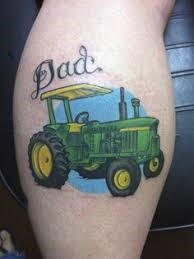
John Deere, like other iconic brands, holds an elevated status among farmers and inspires a certain tribal loyalty – the kind that reminds me of Seth Godin’s quote about Harley Davidson: “Nobody gets a Suzuki tattoo.”  Well, people get John Deere tattoos:

John Deere Tattoo John Deere Tattoo John Deere Tattoo John Deere Tattoo

A couple things you’ll notice is that these tattoos prominently feature actual tractors, not just the famous John Deere deer logo, and they are in color: John Deere’s iconic green and yellow.

It should be no surprise that these are colors John Deere values and protects.  Colors can function as trademarks, just like brand names or logos, but only if they acquire distinctiveness.  Color, planted as seeds on products, packaging, in logos, and in “look-for” advertising, grows into a trademark over time as the public begins to associate the color with a source of products or services and recognize it as a mark . Once that association is made, the color becomes part of the story of the brand, and the brand owners have significant power through it.

Last month, John Deere showed just how much power it has in its color marks when it won a hard-fought court battle against FIMCO, maker of these sadly named, “Ag Spray Equipment” agricultural sprayers (the name is not surprisingly not registered as a trademark):

Ag Spray Equipment

Here is one being pulled by a John Deere tractor.  Confusing?  Would you assume the tractor and the equipment come from the same source?  What about a defense that farmers want their equipment to match the color of their tractor, because it is aesthetically pleasing?  Is it fair to give John Deere a monopoly right on a color combination?

Ag Spray Equipment and John Deere

Perhaps even more importantly than the immediate legal victory, in the 107-page decision the district court also called John Deere’s green and yellow color combination “famous,” a meaningful label for trademarks from which John Deere may potentially harvest even greater long-term value.  Under the Lanham Act, the owners of famous marks can enjoin subsequent users of similar marks that are likely to dilute distinctiveness of the famous mark “regardless  … of actual or likely confusion, of competition, or of actual economic injury.”  Powerful stuff indeed.

So, hey, John Deere, if you ever need a new slogan, how about “These Colors Don’t Run?”

P.S. On second thought, for a tractor, “not running” might be the wrong message ;)