Earlier this year, I posted about a dispute between candy company Mars Inc. and a small business based in Wisconsin, selling handmade fine chocolates under the mark CocoVaa.

In March, Mars Inc. filed a federal trademark infringement complaint in the Eastern District of Virginia, asserting that its registered CocoaVia® mark (Reg. No. 4179465), for a dietary supplement powder, was being infringed by the use of the mark CocoVaa for handmade fine chocolates. Mars Inc. sued both the company CocoVaa LCC, based in Madison, Wisconsin, as well as the company’s owner, Syovata Edari.

According to Mars Inc.’s website, the CocoaVia® supplement has naturally occurring “cocoa flavanols” that promote “healthy blood flow from head to toe,” which is important for  “cardiovascular health.” The supplement is available in either capsule form, or in flavored powdered stick packs that can be mixed into drinks, such as milk or smoothies.

Ms. Edari launched a strong public stand against Mars Inc., calling this a case of “trademark bullying” in interviews in local and national media outlets. Ms. Edari noted that her fine chocolates are “distinctly different” than Mars Inc.’s dietary supplement powders, that they have different packaging, and that they appear in “different consumer spheres,” such that consumers would be unlikely to think there’s a connection between the two brands.

In June, Ms. Edari received some good news when Mars Inc.’s complaint was dismissed for lack of personal jurisdiction,  because Ms. Edari and her company do not sell any products in Virginia (where the lawsuit was filed), nor do they have sufficient contacts there related to this dispute.

However, Ms. Edari wasn’t done with this battle just yet.  She anticipated that Mars Inc. may file another trademark infringement complaint in Wisconsin, where her business, CocoVaa LLC, is based.  Therefore, Ms. Edari made a preemptive strike, by filing her own complaint in federal court in Wisconsin, and seeking a declaratory judgment of non-infringement. Just a couple weeks ago, the parties reached a settlement and filed a one-sentence stipulation for dismissal, without any information as to the terms of settlement. However, Ms. Edari stated in a recent interview that her business will continue to operate under the “CocoVaa” name, which is a big win.

Notably, in recent media coverage, both parties refused to comment about details of the settlement, which suggests a confidentiality clause. Just guessing, but based on Ms. Edari’s previous outspoken media campaign and interviews about the dispute, as discussed in my previous post, perhaps the confidentiality clause was required by Mars, Inc., which is more common when settlement terms are favorable to the opposing party.

Thus it appears that Ms. Edari’s declaratory judgment action had a successful outcome, and that this was a favorable settlement for Ms. Edari and her business. As they say, sometimes the best defense is a good offense. What do you think?

 

While browsing my daily trademark news and digesting some recent chocolate-related trademark litigation, to be discussed below, I happened upon some interesting discussions and histories of slogans for candy, including in particular, the MARS® chocolate bar.

Back in 1960, Mars Inc. debuted its slogan for the MARS® chocolate bar: “A Mars a Day, Helps You Work, Rest, and Play.” I guess it’s not my favorite slogan–a bit clunky, and perhaps it borders too closely on a questionable health-benefit claim.  (I prefer Crispety, Crunchety, Peanut-Buttery, Butterfinger, maybe because it’s a tongue-twister, but probably because it’s my favorite candy.)

Anyway, the MARS® slogan held strong for decades. The vintage MARS® commercials available on YouTube are quite a treat, although they probably would not test as well in our present day health-conscious advertising environment. The ads highlight the benefits of MORE sugar and MORE glucose added in a larger bar (“the biggest ever!”), with visual depictions of dumping pounds of sugar in a candy mix. Linked here are some enjoyable TV ads from the 1960s and 1980s. There have also been some brief reappearances of the slogan in more recent advertising.

More recently, Mars Inc. launched a health-focused venture with its Mars Symbioscience business and product line, which includes the powdered dietary supplement CocoaVia® (Reg. No. 4179465). Mars claims that its cocoa extract supplement, with naturally occurring “cocoa flavanols,”  promotes “healthy blood flow from head to toe,” which is important for “cardiovascular health.” The supplement is available in either capsule form, or in flavored powdered stick packs that can be mixed into drinks, such as milk or smoothies.

Back to trademark news. A couple weeks ago, Mars Inc. filed a federal trademark infringement complaint in Virginia, asserting that its registered CocoaVia® mark, for its dietary supplement powder, is being infringed by the use of the mark CocoVaa, a brand of handmade fine chocolates. Mars Inc. sued both the company CocoVaa LCC, based in Madison, Wisconsin, as well as the company’s owner, Syovata Edari. In the past week, Ms. Edari has launched a strong public stand against Mars Inc., calling this a case of “trademark bullying” in a flurry of  interviews in local and national (and even some foreign) media outlets.

Although the names are similar, Ms. Edari notes that her fine chocolates are “distinctly different” than Mars Inc.’s dietary supplement powders, that they have different packaging, and that they appear in “different consumer spheres,” such that consumers would be unlikely to think there’s a connection between the two brands. A spokeswoman for Mars Inc. responded that “we work hard to create and build our brands, and so we protect our trademark rights,” but declined to comment further on the pending lawsuit.

What do you think? Stay tuned for updates.


Trademark bullying allegations are in the news again.

Not only is Forever 21 calling Adidas a trademark bully for asserting rights in the three stripe design mark, it is asking a federal court to say it has not done anything wrong and award it fees:

“Tired of operating with a cloud over its head with regard to its right to design and sell clothing items bearing ornamental/decorative stripes, and unwilling to stop doing something it has every right to do and pay a bully to leave it alone, Forever 21 has decided that enough is enough. Forever 21 is not infringing any Adidas trademark and has not breached any agreements with Adidas. This matter is ripe for a declaratory judgment.”

This is not their first rodeo together, see here and here. It isn’t our first rodeo discussing Adidas either, see here, here, here, and here.

For more on the subject of trademark bullying, please consider attending another Strafford live webinar a week from today, March 14 at noon CST, details here.

First three who comment earn a free ticket to attend, we hope you join us.

UPDATE: Looks like there is going to be a fight about where the trademark fight actually goes forward, as KOIN6 reports, here.

Wawa-logo

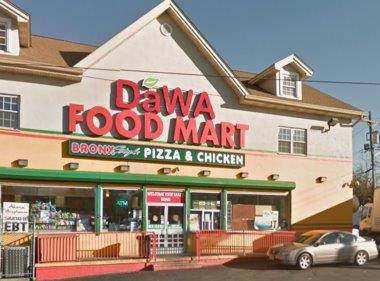
Earlier this month, Wawa, an East Coast convenience store chain, demonstrated it is not gaga over a single location food mart (copy of complaint linked here), called Dawa:

DawaFoodMart

As Dawa has vowed to defend its name, will this case come down to a battle over the meanings of the marks? Do consumers really know and understand the intended meanings?

It’s interesting to see how Wawa positions the meaning of its mark with the flying goose over the first “a” in Wawa, saying this on it’s website:

“Wawa” is a Native American word for the Canada Goose that was found in the Delaware Valley over 100 years ago. Our original Dairy farm was built on land located in a rural section of Pennsylvania called Wawa. That’s why we use the goose on Wawa’s corporate logo.

It’s not a bad idea for Wawa to emphasize the Native American meaning for a Canada Goose when its headquarters are located in Wawa, Pennsylvania. Can you say, geographically descriptive?

Dawa counters with an explanation of its very different meaning in the owner’s native Korean language: Welcome. But, the green leaf above the first “a” in Dawa doesn’t seem to reinforce that particular “welcome” message.

In any event, it’s probably fair to say that Dawa hasn’t welcomed Wawa’s lawsuit with open arms, and unsurprisingly it does appear to have Techdirt on its side, but this time, without the specific label and overreaching charge of trademark bullying.

As a trademark type, what I’m most interested in is not the likelihood of confusion question, but rather Wawa’s claim of fame to support its federal dilution violation, which would require no showing of likely confusion.

In support of its federal dilution claim, Wawa points to a 1997 federal trademark dilution decision (Wawa v. Haaf), in which HaHa was found to dilute the distinctiveness of the Wawa mark, and that’s no joke.

It will be interesting to see whether Wawa presses that federal dilution claim because much has happened in federal trademark law since the 1995 federal dilution statute was enacted and the 1997 Wawa/Haha decision.

For example, a number of the early successful fame findings and dilution awards in the mid to late 90s were made in the context of what would now be considered a cybersquatting claim, not a bona fide dilution claim, but the federal anticybersquatting law didn’t exist yet (that came in 1999), so those in the know appreciate that dilution may have been stretched by the courts during that time frame to fill a needed gap — as a result, there are more than a few surprising fame findings in the 1995-1999 time frame that might be suspect and of questionable precedent.

Perhaps even more importantly though, the Wawa/Haha dilution case is one of the justifications for modifying the federal dilution statute in 2006 to eliminate brands only having regional and/or niche fame from such protection, since Wawa was present in only six states at the time of the injunction in 1997.

Here’s a question, do you think the Wawa brand satisfies the now decade old requirement in the federal dilution law that Wawa is “widely recognized by the general consuming public of the United States“?

Here’s another, WWWWD (What Would Wawa Do) if Gaga suddenly decided to get into the convenience store business?

UPDATE: See the Shanice Harris article at PennRecord, here.

A specialty coffee roastery in San Francisco, Supersonic Coffee, has decided to rebrand to the name AKA Coffee, as reported yesterday.  The impetus for the rebrand was an opposition at the Trademark Trial and Appeal Board (TTAB) by the national fast-food chain Sonic, against Supersonic Coffee’s trademark application for the word mark SUPERSONIC.  This trademark application (Serial No. 86382164) sought registration of the mark SUPERSONIC for various coffee-related goods, such as “beverages made of coffee; beverages with a coffee base; coffee … roasted coffee beans,” etc.

Sonic filed its Notice of Opposition at the TTAB last year against Supersonic’s trademark application, alleging that registration should be refused under Trademark Act Section 2(d) based on a likelihood of confusion with Sonic’s registered marks, including: SUPERSONIC® for hamburgers and burritos; and various SONIC® word and design marks for drive-in restaurant services, hamburgers, onion rings, french fried potatoes, hot dogs, candy, and soft drinks.

The Notice of Opposition also asserted a likelihood of confusion with Sonic’s marks SONIC WAVE® for drinking water; SONIC SPLASH® for flavored waters and soft drinks; SONIC SUNRISE® for orange based fruit juice; SONIC CHILLERS® for candied ice milk confections; and SONIC BOOM® for energy drinks.

Sonic also alleged that its registered marks are famous, and that registration of the SUPERSONIC mark should be refused under Trademark Act Section 43(c) because the use of that mark would be likely to dilute Sonic’s famous marks.

Supersonic Coffee never filed an answer to the Notice of Opposition.  Therefore, in January of this year, the TTAB entered a default judgment against Supersonic Coffee and refused registration of the applied-for SUPERSONIC mark.

Now, Supersonic Coffee made the decision to rebrand to a new name:  AKA Coffee.  The press release by the formerly-named Supersonic Coffee, announcing the rebranding, seemed to suggest that it was bullied into the name change, characterizing its situation as a:

David vs. Goliath fight between a small business and a multi-billion-dollar company, where a small upstart is forced to close or change names … this time it’s happening in the specialty coffee industry.

On the other hand, Supersonic never filed an Answer to the opposition, and its own press release also explains that Supersonic hired “one of the top IP firms in the country” (which appears to be Kilpatrick Townsend & Stockton LLP, based on the attorney information in the trademark application and in the TTAB records for the opposition).

Rather than a case of bullying, perhaps this is a case where the startup applicant simply realized that it had unintentionally selected a mark that infringed on some major registered brands, and that it was unlikely to succeed in an expensive TTAB opposition proceeding.  Moreover, perhaps this case of “bullying” resulted in some mutually-beneficial rebranding to a more appealing and creative mark (at least in my opinion).  As the press release explains:

The AKA name is playful, personal, and embraces the moments when we enjoy a cup of coffee, whether it is a quick break or a meditative pause. Call it what you will, to us it is AKA Coffee.

The AKA Coffee website also explains:

Enjoying coffee is a personal affair, from the beans you brew to the cup you choose. Whether a quick break or a meditative pause, we’d like to make those moments more delicious. Call it what you will, to us it’s AKA Coffee.

Although the new AKA Coffee website is not yet operational, a preview of the rebranded AKA Coffee designs, products, and merchandise may be viewed in this news posting.  In my view, the rebranded AKA Coffee name and designs are more memorable and creative than the previous “Supersonic” name, which was based on the ambiguous tagline: “We are Supersonic. We’re on a mission to make awesome coffee that breaks barriers.”

I think the AKA Coffee rebranding is a big improvement.  What do you think?  Which brand do you like better?

-Wes Anderson, Attorney

I recently came across this new piece of merchandise available for sale online:

Screen Shot 2016-10-05 at 6.28.49 AM

Look familiar? Those familiar with the restaurant chain Arby’s likely think so.

The shirt is a product of the parody Twitter account @nihilist_arbys, created by a former writer for The Daily Show. With occasional references to current events, Nihilist Arby’s darkly comedic tweets are chock-full of cynical missives on life and humanity, and they often close with “Eat Arby’s.”

With over 230,000 followers, the account’s creator, Brendan Kelly, has certainly struck a nerve. As reported by Adweek, the account may “prove to be instructive for millennial-minded [advertising] practitioners, and the tweets collectively paint a picture of how Kelly created a social-media sensation.” At one point last year, the account even obtained better engagement numbers than the actual Arby’s social media account.

But Twitter accounts are one thing, as the site is chock-full of fake accounts and parodies of overreaching brand engagement. But what about actual, physical merchandise? Does that also escape trademark infringement liability under the guise of parody?

The Fourth Circuit dealt with this question in Louis Vuitton Malletier, S.A. v. Haute Diggity Dog, LLC, in which a pet products manufacturer using the mark CHEWY VUITTON successfully overcame a claim of trademark infringement based on a parody defense. According to the Fourth Circuit, parody is defined as “as simple form of entertainment conveyed by juxtaposing an irreverent representation of a trademark with the idealized image created by the mark’s owner.” To constitute a permissible parody, the Court said the allegedly infringing mark used must convey two messages – that it is both the original and it is not the original mark:

“A parody must convey two simultaneous — and contradictory — messages: that it is the original, but also that it is not the original and is instead a parody. This second message must not only differentiate the alleged parody from the original but must also communicate some articulable element of satire, ridicule, joking, or amusement. Thus, [a] parody relies upon a difference from the original mark, presumably a humorous difference, in order to produce its desired effect.” (internal quotations and citations omitted)

We can see these elements take form with Nihilist Arby’s merchandise, that is, the “hat” logo and font are almost immediately recognizable as referring to Arby’s. But in order to constitute a permissible parody, there must also be differentiation to “immediately convey” a joking and amusing message. As the only difference is the wording (i.e., “NOTHING” instead of “ARBY’S”) this may be up for debate.

The distinction might not quite be “immediate,” as to actually understand the parody at work, consumers may need to be familiar with the parody Twitter account as well. So while there may be some room for an infringement claim, I’ve previously suggested it’s often more beneficial to avoid the negative PR that may come along with actions perceived as “trademark bullying.”

We’ll see if the merchandise remains for sale, or if the restaurant chain decides to take any adverse action. In the meantime: Enjoy Arby’s.

AnatomyofTMWarning

We wrote about the above trademark warning ad a few years back, and the claimed trademark owner likely recognizing vulnerability as to validity:

The idea generally is, let’s show and create a record that we are educating the public about our trademark rights and hopefully deterring misuses that otherwise might find their way into the public eye and influence the relevant public’s understanding of a term or symbol as being generic and part of the public domain, free for anyone to use, even competitors.

Now, the validity of Car-Freshner Corporation’s federal non-traditional trademark registrations for the shape, configuration, and silhouette of a tree design, are seriously being questioned.

Sun Cedar, a non-profit based in Lawrence, Kansas, with the able pro-bono assistance of Marty Schwimmer of the Leason Ellis firm, has filed an answer and counterclaim in federal district court in the Northern District of New York, denying Car-Freshner Corporation’s allegations of trademark infringement, dilution, and unfair competition, and seeking cancellation of U.S. Reg. Nos:

on functionality grounds, and the ‘016, ‘233,  ‘888, and ‘854 registrations on abandonment grounds.

You can read more about this trademark dispute here at Techdirt — calling it another example of trademark bullying.

Here is an image of the Sun Cedar product that is alleged to infringe and dilute Car-Freshner Corporation’s federally-registered trademarks in the so-called Little Trees design:

SunCedarTree

A few questions come to mind.  Would you have put your non-traditional trademark rights at risk for the above alleged infringement?

Will the registrations be exposed to have ticking time bombs inside them?

If so, will Marty declare timber! as they fall and then gather up the debris to stack like cord-wood?

Or, will there be a mixed result, and if not chopped down altogether, might the registrations simply be chopped down to size.

Endless possibilities abound, so stay tuned, this is sure to be an interesting one.

When we hear the word “overbreadth” in close connection with the word “trademark,” the often discussed “trademark bullying” topic will frequently come to mind.

Yet, discussions about “trademark overbreadth” are not limited to exaggerated and unrealistic trademark claims by a trademark owner.

We previously have discussed how one might deal with prior registrations that contain overbroad descriptions of goods or services, utilizing Section 18 challenges to compel certain narrowing.

Trademark overbreadth also can have real meaning in connection with the representation of the chosen mark an applicant might select in attempting to federally register at the USPTO.

An applied-for mark, in standard character format, is the broadest possible method of protection: “Registration of a mark in the standard character format will provide broad rights, namely use in any manner of presentation.” (emphasis added)

Broad isn’t always best, especially when a new comer and Applicant is hoping to coexist with prior federally-registered rights that already enjoy the many benefits of that very broad standard character protection at the USPTO:

“[T]he TTAB decides likelihood of confusion “on paper” at the USPTO as opposed to how a federal district court finds likelihood of confusion in “the real world” with the specific marks in use in their full and complete marketplace context:

  • If a mark (in either an application or a registration) is presented in standard characters, the owner of the mark is not limited to any particular depiction of the mark. Cunningham v. Laser Golf Corp., 222 F.3d 943, 950, 55 USPQ2d 1842, 1847 (Fed. Cir. 2000); In re Cox Enters., 82 USPQ2d 1040, 1044 (TTAB 2007).
  • The rights associated with a mark in standard characters reside in the wording (or other literal element, e.g., letters, numerals, punctuation) and not in any particular display. In re White Rock Distilleries Inc., 92 USPQ2d 1282, 1284 (TTAB 2009).
  • A registrant is entitled to all depictions of a standard character mark regardless of the font style, size, or color, and not merely “reasonable manners” of depicting such mark. SeeIn re Viterra Inc., 671 F.3d 1358, 1364-65, 101 USPQ2d 1905, 1910 (Fed. Cir. 2012); Citigroup Inc. v. Capital City Bank Group, Inc., 637 F.3d 1344, 1353, 98 USPQ2d 1253, 1259 (Fed. Cir. 2011).
  • Therefore, an applicant cannot, by presenting its mark in special form, avoid likelihood of confusion with a mark that is registered in standard characters because the registered mark presumably could be used in the same manner of display. See, e.g., In re RSI Sys., LLC, 88 USPQ2d 1445, 1448 (TTAB 2008); In re Melville Corp., 18 USPQ2d 1386, 1388 (TTAB 1991); In re Pollio Dairy Prods. Corp., 8 USPQ2d 2012, 2015 (TTAB 1988).
  • Likewise, the fact that an applied-for mark is presented in standard character form would not, by itself, be sufficient to distinguish it from a similar mark in special form. See, e.g., In re Mighty Leaf Tea, 601 F.3d 1342, 1348, 94 USPQ2d 1257, 1260 (Fed. Cir. 2010); Sunnen Prods. Co. v. Sunex Int’l, Inc., 1 USPQ2d 1744, 1747 (TTAB 1987); In re Hester Indus., Inc., 231 USPQ 881, 882 n.6 (TTAB 1986).

“With this well-settled precedent governing most TTAB cases, it should become more and more clear that proving likelihood of confusion at the TTAB to prevent another from being able to register a standard character mark doesn’t necessarily mean that infringement should be assumed or that it can even be established in federal district court, based on the actual market conditions of the specific trademark uses of the parties.”

The reverse is true as well. Just because an Applicant might be successful in avoiding a finding of trademark infringement based on its particular stylized use, doesn’t mean the Applicant’s federal registration application — in standard character form — is sufficiently tailored and narrow enough to avoid a finding of a likelihood of confusion at the TTAB, especially when the new comer and Applicant is confronted by prior standard character trademark or service mark registrations.

So, there is certainly an advantage to being the first to obtain standard character protection at the USPTO, and there is no guarantee a new comer Applicant is entitled to one.

Applicants should think carefully about whether the broad standard character format puts them in the best position to defend against a likelihood of confusion claim at the TTAB.

James Lukaszewski, ABC, Fellow IABC, APR, Fellow PRSA, PRSA BEPS Emeritus

Just for a minute, pretend you’re five years old, your mom is sharing a very charming, perhaps often repeated piece of motherly advice:

“Sticks and stones can break your bones, but words will never hurt you.”

OK, OK. You can come back now. The truth is, that after age five, this charming advice becomes a lie and remains a lie for the rest of your life. Some words and behaviors can actually terrorize.

When you stop and think about it, sticks and stones may indeed break your bones, but the odds are, unless you have some serious disease, you will survive, you will heal.

Here are words and actions that never heal: Terror Words and Behaviors. Continue Reading Language Lessons for Leaders, Lawyers, and Managers: Lesson #1: Your Mother Was Wrong About One Thing

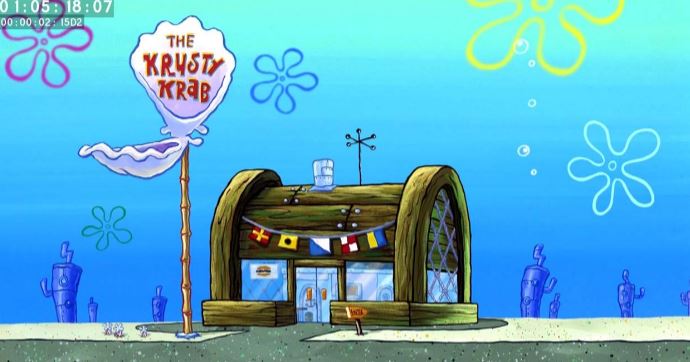
Calling all Spongebob fans: there is a company in Texas that wants to create a real life Krusty Krab restaurant. For those not “in the know,” Spongebob Squarepants is a Nickeloden cartoon featuring underwater sea characters. The main character, Spongebob, works at a fast food restaurant named The Krusty Krab, which is prominently involved in story lines in the show. The Texas company, IJR Capital Investments, is planning to open two “Krusty Krab” restaurants, presumably modeled after the cartoon version shown below. Adult fans will love it! Children will love it! Everyone will love it! Well, except for Viacom, the owner of the intellectual property rights in the Spongebob franchise.

Krusty Krab - Image

The dispute began when IJR filed an application to register the mark THE KRUSTY KRAB in connection with “restaurant services” with the Trademark Office. The Trademark Office approved the mark for publication, no third-parties opposed, and a Notice of Allowance issued. IJR did not claim any use of the mark and it appears that they have not yet opened any restaurants.

At some point, someone in Viacom learned about the application and on November 23, 2015, sent a letter to IJR. The letter is short but written in a friendly tone, offering a “reasonable phase-out period” to IJR. In response, IJR questioned whether Viacom had any rights in the mark KRUSTY KRAB and “declined to cease use.” It appears the discussions ended there, with Viacom deciding to sue IJR, filing a complaint with the U.S. District Court for the Southern District of Texas on Jan. 29, 2016.

This is not the first time a third-party has attempted to create a restaurant based upon a television series or movie. We previously discussed one attempt to create a Ricky Bobby Sports Saloon (also in Texas). That restaurant is now known as Pole Position following a lawsuit from Sony Pictures.

Will the situation be different with the Krusty Krab? In its response letter, counsel for IJR argued that “consumers are likely to have a high degree of care when purchasing IJR’s goods and services” and that IJR was “unaware of any actual consumer confusion.” Neither of these arguments are likely to hold up in court as fast food services involve impulse purchases of cheap products, meaning that customers don’t do much research or due diligence when making their purchases. Also, the target customer will likely be children, making the potential for confusion even greater. The lack of actual confusion also means nothing when there has been no opportunity for confusion to arise. This is the case here, because IJR has not yet used its applied-for mark in commerce.

IJR suggested in an interview that it was being bullied by Viacom, stating that “Big guys always want to do what they can to the little guy.” It is true that there are numerous examples of big companies overreaching and attempting to enforce overbroad rights in their trademarks against small companies or individuals. However this doesn’t seem to be that situation. The big company isn’t always the bad guy just because they’re “big.”

Spongebob Squarepants has been on the air since 1999. The franchise is very popular and has had immense success, with toys, feature films, comic books, and other products.  In 2009, the franchise was valued at $8 billion. Given the widespread consumer recognition, IJR was well aware of Viacom’s rights. At best, IJR is a big fan of the cartoon and thought it would be fun to operate a real life Krusty Krab. At worst,  IJR picked the name for the express purpose of capitalizing on the goodwill associated with the Spongebob Squarepants franchise.

The ever-optimistic Spongebob would likely say that “there’s always a chance,” but I think it’s unlikely Texans we’ll be eating at a Krusty Krab any time soon. If that’s too big of a letdown for you to handle (and you’ve got the money and time for an international flight), there’s apparently a real life Krusty Krab in Palestine you can visit.