Let’s be very clear, today is April Fools’ Day, but this is not an April Fools’ Joke.

It’s not every day Seth Godin volunteers a guest post, but Thursday was that day.

Friday we published Stop Bullying the Entrepreneurs, 33 comments and counting.

This isn’t the first time Seth has spoken out against trademark bullying, he’s on record before noting: “When a brand becomes a bully, it loses something vital.

And: “If you want to keep the taco place down the street from infringing on your business, don’t hire lawyers to hate on their slogan. Make better tacos instead.”

On Friday Seth went to public bat for kindred spirit and entrepreneur Jen Lehner:
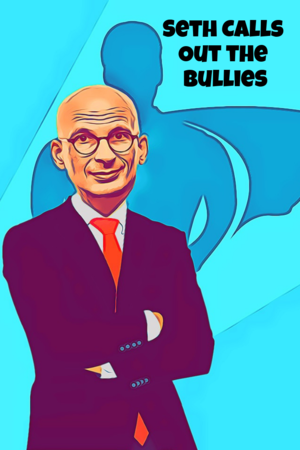
Seth called out Entrepreneur Magazine for going after the name and mark for Jen’s podcast, “The Front Row Entrepreneur” — described by Jen this way: “The Front Row Entrepreneur gives you a front row seat to all of the most exciting people and happenings in online marketing and entrepreneurship.”

To Seth’s point, it’s difficult to create a podcast designed for an entire class of people known as entrepreneurs and not have the ability to include “entrepreneur” in the name, because it is: “One of the only words available to describe a person who builds an enterprise bigger than herself, often using outside resources.”

Actually, that’s a fair point, given the special meaning of the word — no other word that I could find with a thesaurus really captures the same and complete essence of the word “entrepreneur,” not “administrator, contractor, executive, manager, producer, backer, businessperson, founder, industrialist, organizer, promoter,” etc.

In fact, the Examining Attorney who approved Jen’s application to register THE FRONT ROW ENTREPRENEUR as a mark for podcasts, recognized the special meaning of the word, noting it to be descriptive of Jen’s podcasts: “A person who organizes, operates, and assumes the risk for a business venture.”

So, the USPTO told Jen to disclaim exclusive rights in the term ENTREPRENEUR in THE FRONT ROW ENTREPRENEUR mark for podcasts, and she did, but to satisfy Entrepreneur Magazine she also apparently needed to withdraw her registration application and, in terms of future use, contort the more efficient name into the more wordy mouthful: THE FRONT ROW PODCAST FOR ENTREPRENEURS.

So, what does ENTREPRENEUR mean anyway? Clearly much more than a particular magazine or other offerings of that magazine. Might it even designate a category or perhaps a subgroup of magazines — those about and for an entrepreneur?

If Entrepreneur Magazine is not careful, one of these days, it might find itself in a position tangling with an enforcement target willing to go the distance, finding out the hard way, if ENTREPRENEUR has become generic (part of the public domain).
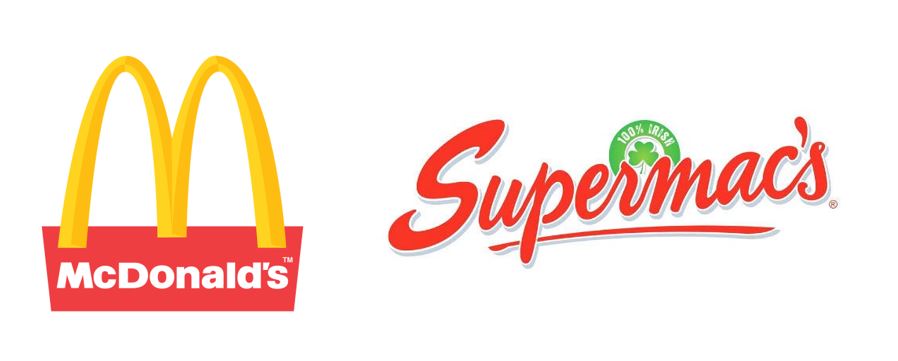
From time to time, I post squirrelly thoughts. Today, I wonder: Should a large company with famous, distinct trademarks sometimes hold back from aggressively enforcing those trademarks, even when doing so might at first appear to be a useful competitive strategy? I’m sure many executives at McDonald’s–the worldwide fast-food chain that it is so ubiquitous The Economist uses the prices of the Big Mac to measure purchasing power parity throughout the world–are questioning some past enforcement decisions.

If you haven’t heard, the European Union Intellectual Property Office (EUIPO) issued a decision cancelling McDonald’s “Big Mac” trademark registration within the European Union. Although the decision was based on certain procedural and evidentiary issues, it resulted from a proceeding brought by McDonald’s European competitor “Supermac’s,” an Irish fast-food burger chain opened in 1978, in response to McDonald’s aggressive enforcement tactics.

Supermac’s offers a similar cornucopia of comfort food items, including chicken nuggets, french fries, and the “Mighty Mac,” which is:

A succulent double burger complete with two 100% Irish beef patties, melted cheese, crispy lettuce, diced onion with ketchup and burger sauce served in a toasted sesame seed bun.

Sound familiar? Here’s how McDonald’s describes the Big Mac:

Mouthwatering perfection starts with two 100% pure beef patties and Big Mac sauce sandwiched between a sesame seed bun. It’s topped off with pickles, crisp lettuce, onions and American cheese for a 100% beef burger with a taste like no other. It contains no artificial flavors, preservatives or added colors from artificial sources. Our pickle contains an artificial preservative, so skip it if you like.

Perhaps for these reasons, McDonald’s vigorously opposed Supermac’s trademark registrations a few years ago, arguing that the similarity between the names “McDonald’s” and “Supermac’s” (the Mc/Mac usage) would cause confusion among consumers.

Which one is the Big Mac, and which is the Mighty Mac? (hint: in order)

In 2017, Supermac’s retaliated against McDonald’s enforcement activities, seeking cancellation of McDonald’s own flagship marks. Central to Supermac’s narrative is McDonald’s “trademark bullying”–a topic we’ve discussed generally on DuetsBlog numerous times. Specifically, Supermac’s argued that McDonald’s purposefully engaged in anticompetitive conduct, including “registering brand names . . . which are simply stored away in a war chest to use against future competitors.”

It is not readily apparent that EUIPO ruled against McDonald’s on grounds related to bullying or overly-aggressive enforcement because, ostensibly, the ruling is based on McDonald’s failure to prove genuine use of “Big Mac” as a burger or restaurant name–which seems hard to believe given, among other things, The Economist’s Big Mac Index. However, Supermac’s is calling this a victory for small businesses, and a win in “a David versus Goliath battle against trademark bullying by a powerful multinational.” As a result of EUIPO’s ruling, companies may now freely use “Big Mac” throughout the entire EU. McDonald’s has said it intends to appeal the ruling.

EUIPO’s ruling seems absurd, but it makes me wonder if McDonald’s could have avoided this ruling, and the trademark bully label, by taking a less aggressive stance in enforcing its trademarks. Instead of seeking to prevent registration of the Supermac’s and other marks in a transparently-competitive posture, McDonald’s could have decided to target its enforcement on certain products and names (e.g., Mighty Mac), or simply compete on the basis of quality and price. McDonald’s could have also considered creative ways to discourage Supermac’s from using similar marks, employing humorous methods akin to Bud Light sending a medieval jester to deliver a cease and desist message on a scroll to Modist Brewing. Increasingly, brands need to seek a balance between uncovering and prosecuting all possible misuses and not enforcing rights at all. This latest EUIPO may, at its heart, be a lesson in more selective enforcement.

Update: This article was referenced, and Kyle was quoted, by the Washington Post on February 11, 2019.

Before we think predictions for 2019, let’s consider the vast ground we’ve covered in 2018:

Wow, I’m exhausted, and these highlights are only a small fraction of what we delivered in 2018.

You may recall, earlier this year, I predicted more informational and failure to function decisions.

As our friend John Welch reported, there were more than a few (here, here, here, here, and here).

Stay tuned, on March 13, in New York City, I’ll be diving deeply into the failure to function topic, among others, at Practicing Law Institute’s Advanced Trademark Law 2019: Current Issues.

In terms of my big trademark prediction for 2019, it will be revealed whether the scandalous bar to federal registration is invalidated, whether or not the Supreme Court agrees to hear Brunetti.

So, what is your big trademark prediction for 2019?

It all started here, nearly ten years ago now, with our inaugural DuetsBlog post called Dr. No and the Parade of Horribles. We used a Seth Godin post called Looking for Yes as our launchpad.

The rest is history. Seth revealed himself a fan of the blog on our 4th birthday, what a surprise. He generously has engaged with us since then, weighing in on topics ranging from branding to trademark bullying to Velcro’s fear of trademark genericide, with so much more in between.

Recently, Seth generously agreed to answer the 12 questions below. What should we ask next?

Continue Reading Seth Godin Answers 12 DuetsBlog Questions

It’s fall, and you know what that means: football season! For many, this means a return to the couch each weekend to spectate America’s most-watched sport. But the popularity of doing so appears to be in decline. This shift isn’t only affecting the NFL, but also college football as well, as ticket sales continue to plummet. Increasingly among my own family and friends, it seems as if everyone is more interested in playing their fantasy leagues than watching reality unfold before them. Which is why, one would think, that leagues and other football organizations would want to promote discussion about football, rather than hinder it.

Credit: Geek.com

But football organizations are cracking down on, rather than encouraging, use of familiar football names and phrases. Some have questioned, for example, the NFL’s bully-like tactics in aggressively protecting the “Superbowl” name. The annual “big game” is so well-known and such a major event that it’s almost impossible not to use its actual name. Yet, the NFL persists, enforcing more than just its famous name, drawing the ire of commentators each year.

Such tactics appear to have inspired a recent filing by the Heisman Trophy Trust against “HeismanWatch.com,” for trademark and copyright infringement. The Heisman Trophy Trust, the complaint says, is the owner of a slew of federal trademark and service mark registrations related to the Heisman Trophy, “one of the most distinguished, prestigious, and recognized awards in all of sports, and perhaps the most famous of all individual awards in football.” The award is given to the most outstanding collegiate football player, usually a quarterback or running back, each year. You might recognize the trophy by its distinctive “stiff-arm” maneuver captured in bronze:

Credit: The Ringer

Defendant HeismanWatch.com is a website that offers information, analysis, and podcasts about the Heisman trophy award. It is known for its “one-of-a-kind regression model that processes simulated Heisman votes,” to predict in advance who will win the Heisman each year. It reportedly correctly predicted the most recent winner, Baker Mayfield.

The Heisman Trophy Trust, apparently, does not appreciate HeismanWatch.com’s analysis and attention. It alleges that the website is deliberately attempting to free ride on the fame and notoriety of the Heisman Trophy marks, and it says that consumers are likely to believe there is a connection between the website and the actual trophy organization. Of course, the fact that HeismanWatch.com exists at all belies any such connection; the Trophy selection is secretive, but the website helps fans read the field and guess who will win next.

Time will tell whether the Heisman Trophy Trust can prevail against a news reporting and commentary organization like HeismanWatch.com, but it’s not unprecedented. The Academy Awards sued “OscarWatch.com” over a decade ago, prompting the website to change its name to “Awards Daily.” One cannot help but think that HeismanWatch.com has an incredibly strong nominative use defense, though. Under nominative use doctrine, another person can use the trademark of another if:

  1. the thing identified by the trademark (here, a trophy) cannot be readily identified any other way;
  2. the mark is used only as much as is necessary for that identification; and
  3. the use does not suggest sponsorship or endorsement.

The nominative use defense protects free speech and against the need to use “absurd turns of phrase” to avoid liability.

Credit: Wikipedia

It’s difficult to imagine a viable substitute to the name “Heisman,” given the trophy’s actual name–and namesake. What alternatives are there to HeismanWatch.com that do not include the surname? One commentator  offered an idea:

BestOffensivePlayerWithAGreatPRCampaignOnAVerySuccessfulTeamWatch.com.

Of course, this is absurd. And generic alternatives would fail to adequately describe what the website does (e.g., OutstandingCollegiateFootballPlayerWatch.com). One also doesn’t have to look much farther than a simple Google search to find that the media regularly uses “Heisman Watch” as a phrase to discuss anticipation about the next awardee. Even ESPN has a section called “Heisman Watch.” This kind of ubiquity shows the obvious necessity of using the surname. The common use of the phrase also suggests there is a very low likelihood that collegiate football fans are confusing the website–or any other reporting source–with the actual trophy organization. These are hallmarks of fair use.

But setting aside the legal defenses, one has to wonder if organizations such as the Heisman Trophy Trust, NCAA, and NFL ought to relax a little, and encourage the kind of use presented by sites like HeismanWatch.com. These fan centers generate excitement about, and interest in, football. That’s something football desperately needs more of lately.

Over the years, we’ve written much about trademark bullying. When the mantle fits, and when it doesn’t. When a brand has a realistic view of its rights, and when the claimed scope is bloated.

We’ve never before written about “Ruby Tuesday,” neither the Rolling Stones’ song nor the struggling restaurant chain, until now — and both at the same time, so thank you Techdirt.

As reported by Munchies, MusicFeeds, and Timothy Geigner of Techdirt, the Ruby Tuesday restaurant chain is threatening trademark litigation against an Australian band, Ruby Tuesdays.

In a twist of double irony, Techdirt hangs the pejorative “trademark bully” name on Ruby Tuesday, for copying the Rolling Stones’ song title and then bullying an Australian band from using it too.

While the reported facts are incomplete and insufficient for judging the merits, one of the lines from the restaurant chain’s demand letter caught my eye, as it appears to impute bad faith:

“[T]he knowing adoption of a mark intending to play off a well-established mark is among the most egregious of trademark violations, warranting courts to apply the harshest of consequences.”

If you’re humming to the lyrics “yesterday don’t matter if it’s gone,” please still consider reviewing an early blog post gem about imputing bad faith, When Intent Matters in Trademark Matters:

“One of the unfortunate aspects of trademark practice is the permission that exists in the law to challenge the motives and intentions of people.”

“[T]his permission is frequently abused . . . when the strength of a case doesn’t seem like enough without injecting an unhealthy dose of emotion into the matter.”

“Even the pejorative “trademark bully” label . . . garners public sympathy while imputing evil intentions to the trademark owner aiming to enforce its rights.”

“Less emotion and more objective facts should drive decisions on the question of likely confusion. If a case screams bad faith based on the objective facts, fine, make the case, but recognize this is likely a rare case.”

“Imputing motives and intentions to people is a messy, dangerous, and emotional business, trademark types should honor the law’s permission to to explore proof of bad faith intent, but not abuse it.”

In other words, initial demand letters shouldn’t attack motives, instead objective, unlawful actions.

And, those tempted to hang the pejorative trademark bully mantle before knowing the facts and law should pause and recognize that hanging the name and mantle also attacks motives.

Having said that, brands, when you really do overreach there are consequences.

Keep in mind, you might just find the infamous trademark bully mantle hanging around your neck, whether the actual merits of the facts and law warrant it or not.

Ain’t life unkind?

Goodbye, Ruby Tuesday, in more ways than one . . . .

We’re always looking forward, but every once in a while we look in the rear-view mirror and become amazed at how far we’ve come since our humble beginnings a short nine years ago.

Well, it’s almost time to celebrate another birthday here at DuetsBlog, and if we make it to March 5th, Duey will be ecstatic, thanks so much again to our many devoted readers and guest bloggers.

On Thursday March 8th, we’ll be doing more than cutting and sharing slices of our 9th Birthday Cake (promise it will be fresh, not four days old), we’ll be educating and entertaining our guests.

Beginning at 4 PM, in our newly reimagined cool office space, we’ll host a few hours of trademark and brand protection education, entertainment, food, drink, celebration, and conversation.

For the educational portion of the evening, we have assembled two dynamic panel discussions with valuable insights and guidance from a pair of national branding and design experts and leading trademark counsel for some very notable brands with global footprints.

Yours Truly, will moderate this panel of accomplished luminaries:

  • Shaelyn Crutchley, Former Senior Director, Head of Design – N. American Beverages, Pepsico
  • Aaron Keller, Co-Author: The Physics of Brand; Co-Founder Capsule Design
  • Rosalie O’Brien, Senior Associate General Counsel, University of Minnesota

Our focus will be on the development of a creative, coherent, and compelling brand protection strategy. In addition, we’ll look back together on Super Bowl LII through our collective brand protection eyes, discuss so-called trademark bullying, and the latest on trademark fair use.

Brad Walz, Winthrop Shareholder and Adjunct Professor, University of St. Thomas School of Law Trademark Clinic, will moderate a panel discussion joined by some of our esteemed alumni:

This panel will focus on the implementation and execution of creative trademark and brand protection strategies. Attendees will learn about the effective and efficient use of trademark watch services, brand registries, website complaint programs, USPTO Letters of Protest, cease and desist correspondence, TTAB and UDRP proceedings, and also, when federal district court may be necessary to achieve goals.

Space is limited for this special event, but we have set aside a few seats for readers who may not have received invitations, so please let me know if you’re interested in joining us.

For the past several years, DuetsBlog has covered fashion house Louis Vuitton’s outlandish trademark “bullying” against law schools, dog toys, photographers, and movie studios. Most recently, we discussed the brand’s latest high-profile lawsuit against rival luxury canvas tote maker (sarcasm), My Other Bag, for trademark infringement and dilution.

To the casual observer, one might not be able to distinguish My Other Bag’s signature tote (which on one side says “My Other Bag,” and on the other has a cartoon picture of a bag) from that of Louis Vuitton’s “Speedy Satchel.” Case in point:

Too bad for Louis Vuitton the test for parody is largely based on the casual observer–or, at least those with “a modicum of intelligence.” Even they can tell that My Other Bag’s product was a joke, the District Court held.

My Other Bag Seeks Reimbursement for Louis Vuitton’s Obviously-flawed Lawsuit

After successfully defending itself against Louis Vuitton’s claims, My Other Bag filed a motion for attorneys’ fees incurred in responding to Louis Vuitton’s highly questionable suit, citing the Supreme Court’s recent decision in Octane Fitness v. Icon Health & Fitness, 134 S. Ct. 1749, 1758 (2014). The Lanham Act provides for attorneys’ fees in “exceptional cases,” and it is hard to see how this case might not be one of them, where the parody was–in the words of the District Court–“obvious.” Octane Fitness interpreted “exceptional” under the Patent Act’s identical language to depend on the circumstances and strength of a party’s litigating position (as compared to the typical case).

On January 8, 2018, the District Court–to the surprise of many–denied My Other Bag’s motion, sidestepping whether Octane Fitness applies to the Lanham Act and holding that fees were not appropriate for “several reasons.” Louis Vuitton Malletier, S.A. v. My Other Bag, Inc., No. 14-CV-3419 (JMF), 2018 WL 317850 (S.D.N.Y. Jan. 8, 2018). They include:

  1. Although the District Court and the Second Circuit “did not find this case to be a particularly close call, it cannot say that Louis Vuitton’s arguments were so objectively unreasonable (as either a legal or factual matter) that no party ‘could see an opening . . . through which the argument[s] could be squeezed,'” primarily because dilution by blurring and infringement are fact-intensive and based on “subtle” multi-factor analyses.
  2. That a use is parody does not necessarily resolve a dilution or infringement claim, such as when a trademark is used as as designation of source, “and Louis Vuitton advanced colorable (albeit unsuccessful) arguments that [My Other Bag’s] totes designated Louis Vuitton as their source.” The District Court also ironically pointed to a “flawed and distinguishable” case that Louis Vuitton has previously won as evidence that its position was not objectively unreasonable.
  3. The fact that Louis Vuitton did not show loss of sales or diminution of status is irrelevant because dilution is actionable regardless of actual or likely confusion (citing 15 U.S.C. § 1125(c)(1)).
  4. Louis Vuitton did not litigate the case “in an exceptionally vexatious and coercive manner,” but rather using merely “acceptable, if aggressive, litigation tactics” that were in some instances “regrettable,” but not exceptionally bad.
  5. “Louis Vuitton’s aggressive efforts to protect its trademarks have, on occasion, veered toward the unseemly.” The David-and-Goliath match-up was also concerning. However, Louis Vuitton had good reason to aggressively seek enforcement of its marks because if it didn’t, it could risk losing its rights. Moreover, Louis Vuitton has a history of winning many of its cases.

The District Court’s Precedent Will Likely Lead to More Undeserved Settlements in Parody Defense Cases

It is difficult to agree with the District Court’s conclusion on fees in this case, especially in view of the fact that Louis Vuitton is branded as “one of the biggest trademark bullies around.” There is something to be said for diligent protection of trademark rights, but it’s one thing to go after a counterfeiter and quite another to cause a non-competing humorist to expend over $800,000 in its defense. That both the District Court and the Second Circuit actually called Louis Vuitton out for its failure to take a joke shows that the company’s litigating position was exceptionally laughable.

More importantly, the ruling lays out an impossibly-high standard in effect; if this case is not exceptional, it is hard to believe any other case with the same procedural history would be. What constitutes exceptionally “vexatious and coercive” behavior if not the bringing of an unreasonable lawsuit? Ultimately, the District Court’s precedent, if adopted by other courts, will likely lead to more undeserved settlements. The jokesters become the butt of their own jokes, and the humorless thread one more feather to their “unseemly” caps.

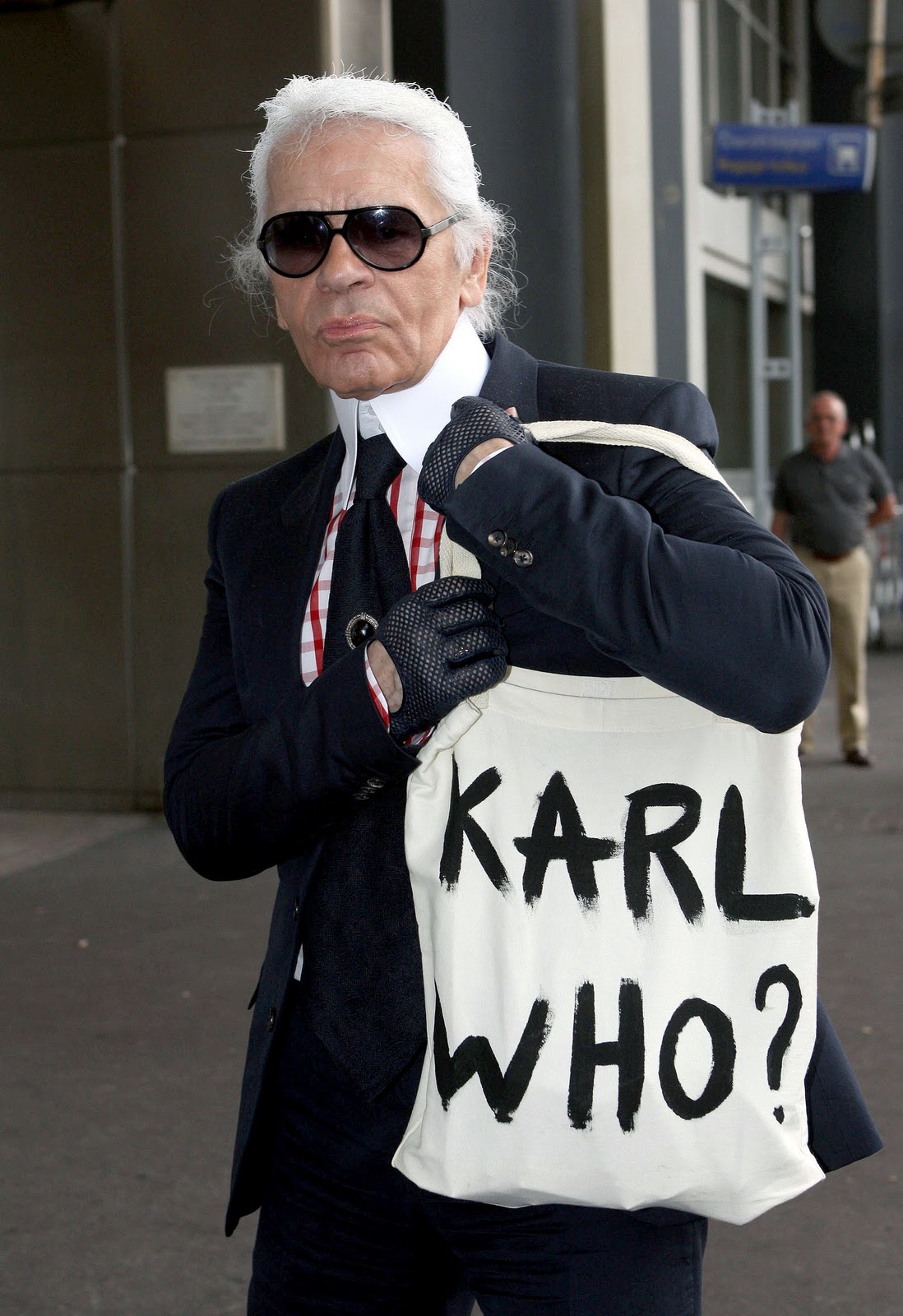
Thankfully others in the fashion industry, such as Chanel’s Karl Lagerfeld, show some semblance of fun–particularly as to tote bags. But given that the one he’s sporting below was made by Naco Paris in response to winning a trademark suit brought by Chanel, maybe not so much.

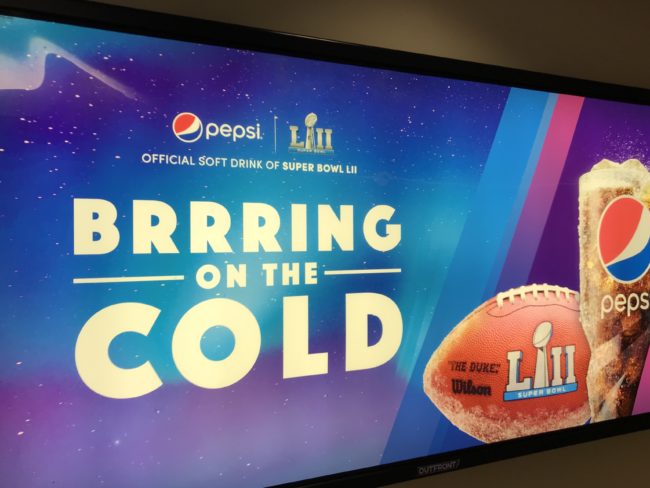
We continue to have Super Bowl LII on our minds here in the Twin Cities. It’s hard to avoid thinking about the upcoming “Big Game” with ads like these blanketing our skyway maze:

Turns out, everyone wants to have a little piece of the action in this upcoming event, even without the formality and cost associated with sponsorship, some call it ambush marketing:

Ambush marketing is not necessarily unlawful. It’s tricky, but I’m guessing the above ad may have cleared a legal review. No obvious conflicts with federally-registered rights, it appears.

Having said that, does this little guy change your view on things? Look familiar? It appears to be the same Wilson NFL Pee Wee Touchdown football without the name brands shown:

I’m thinking the JB Hudson ad employed a little airbrush strategy, or at least some strategic and highly precise palm expansion and placement in hiding the Wilson and NFL logos.

Actually, if so, it’s a good move, but will it be enough — especially given this website link — to avoid the aggressive NFL Super Bowl sponsorship police?

Who owns rights in TOUCHDOWN for footballs, if anyone? Anyone?

Neither Wilson nor the NFL appear to own federally-registered rights in TOUCHDOWN for footballs, but do common law rights exist?

If so, who owns them, the NFL or the maker of the NFL’s official game footballs, Wilson?

Moreover, did legal review consider non-verbal marks? What about the stitching design bordering the football laces? Non-traditional trademark? Functional? If not functional, fair use?

So much to think about as we anxiously await the Big Game in our own chilly backyard . . . .

Over the weekend, the Star Tribune continued the growing drum beat of understandable excitement for Super Bowl LII, as it steadily approaches U.S. Bank Stadium in Minneapolis.

The article also plays the typical NFL-enabling drum beat of caution against local businesses that might see fit to fairly and truthfully reference the Super Bowl in some commercial manner:

“From the NFL’s viewpoint, if businesses use the terms or other trademarks, it could appear like it is an official part of the Super Bowl or its related events, said Dolores DiBella, one of the lead intellectual property attorneys for the NFL.”

Perhaps the NFL would like to live in a world where no business can use the words “Super Bowl” without paying a fee; that isn’t the world we live in, especially given the growing judicial drum beat and emphasis on Free Speech and the First Amendment in the trademark/copyright worlds.

Nowhere in the article is there any acknowledgement that the NFL has long been accused of behaving as a trademark bully and overreaching with its valuable intellectual property rights.

The legal test for trademark infringement (likelihood of confusion) is not shown when a use “could appear like it is an official part of the Super Bowl or its related events,” the mere possibility is simply not enough, the likelihood of confusion must be probable.

Nowhere in the article is there any mention of trademark fair use; classic or nominative fair use. Nowhere is there any mention of Free Speech or the First Amendment. Even, this kind.

And, for those wondering whether the Super Bowl trademark might be famous and deserving of dilution protection, let’s not forget, the future of trademark dilution law is in question.

So, while it is true that not uttering the words “Super Bowl” will help a business play it safe and avoid all the fire and fury of the NFL, for those who are properly advised and have insurance coverage for advertising injury, that would be a very big game worth watching (or playing) too.