–Ben Kwan, Attorney

About a year ago, funny little Smart Fortwo vehicles started popping up all over my neighborhood.  I wondered whether there was some sort of European invasion taking place in Minneapolis.  Whatever was happening, I just couldn’t see myself getting into one of those little blue and white roller skates.

A Car2go Smart Fortwo vehicle, now ubiquitous in cities like Minneapolis, Austin, and Washington, D.C.

A year later, I can’t seem to resist hunting one down, hopping in and getting where I need to go.  We’ve been a one car household since about 2011 and it worked great until our car ended up parked in a suburban lot four days a week after my partner took a new job.  What was I to do, especially after work when I wanted to bop around town but didn’t want to take two busses and a train to get where I wanted to go?

That’s where Car2go has been a marvelous addition to my life and the lives of myriad others here in Minneapolis (and around the world).  Car2go, a carsharing service and Daimler AG subsidiary, has deployed some 10,000 Smart Fortwo vehicles in cities around the world, including Minneapolis. Other U.S. cities with Car2go include Austin, Washington, D.C., Denver, Portland, and Seattle.

Using Car2go draws a lot of funny looks from others sometimes, but I chalk it up to pure curiosity.  In other words, I don’t think my personal brand is at stake, and I’d even be willing to post a selfie (though not while driving).

People do often ask how it works – it’s a bit of a mystery and perhaps that’s where the brand managers behind Car2go could do a little bit better with their messaging.  I’m always intrigued that people are surprised to learn, from me, that Car2go is a one-way, point-to-point service.  In other words, you can find one parked outside your office, drive it to any other point in the city, and then just leave it at your destination.  No need to return it anywhere.

Car2go charges by the minute, with discounts for hourly and daily uses in some instances.  The best part?  The rates include the rental, gas, insurance, parking (yes, no need to plug a meter, just leave the car there), and maintenance.  You sign up for a modest fee (I think I paid $25), the company runs a driving record check, and within a few days you get a membership card.  The card provides access to the cars – and you can find and reserve the cars from a smartphone.  It’s really simple.

The service hasn’t been a hit everywhere.  This spring, Car2go announced that it was withdrawing from the UK, in part because of “the UK’s strong culture and tradition of private vehicle ownership…”  I hope  that statement isn’t a foreshadowing of things to come on this side of the pond, where private car ownership seems to be just as important.  Indeed, whether Car2go is a hit here in Minneapolis is likely yet to be determined.  I sure hope it is.  According to a Reuters report on the company’s withdrawal from the UK, a Car2go company spokesman told the news organization that the service needed to achieve five to eight daily bookings to make it sustainable in the UK.  In my relatively quiet neighborhood, I’ve seen a Car2go I parked on my street sit idle for a day.

Car2go isn’t without its trademark challenges, too.  Service in France has been suspended indefinitely since 2012 because of another carsharing service in that marketplace called Car’ Go.  Service is still suspended in Lyon and other French cities two years later.

I have high hopes for the Car2go brand — because for the foreseeable future, it’s going to be the one thing that keep me from having to pay hundreds of dollars a month to buy or lease, insure, maintain, and fuel a second car in the household.

– Mark Prus, Principal, NameFlash

There is a new drug for overactive bladder with the brand name Myrbetriq. I don’t know about you, but my first thought upon hearing the brand name was “HUH?” What is a Myrbetriq? How do I pronounce it? Surprisingly, the FAQ section on their website does not have a “how to pronounce Myrbetriq” button but the physician website does, and it is pronounced “meer-BEH-trick.”

I’ve named Rx drugs before and I can tell you that the landscape is not a simple one due to numerous FDA regulations about implying benefits in the name, as well as potential trademark issues. However, I have never resorted to choosing random letters out of a hat…which is the only explanation I can come up with for why Astellas Pharma US, Inc. chose this name. Clearly the person who chose this name was not aware of the science behind complex and/or difficult-to-pronounce names.

Science is solidly in the camp of simple brand names. A study at the University of Michigan looked at fluency, familiarity and risk perception in names. Specifically, in one study, the researchers asked participants to rate the potential harm of food additives with easy-to-pronounce or difficult-to-pronounce names. Consumers consistently rated names that were difficult to pronounce as being more risky than those additives with names that were easy to pronounce. In another study, the researchers asked people to assess amusement park rides with easy-to-pronounce or difficult-to-pronounce names as to whether the ride would be adventurous and exciting or too risky and likely to make them sick. Consistent with the food additive study, difficult-to-pronounce names led to more people thinking the ride was too risky and likely to make them sick. The researchers concluded that “people perceive disfluently processed stimuli as riskier than fluently processed stimuli.” In other words, if it is difficult to pronounce then it must be risky.

Given this conclusion, the makers of Myrbetriq should have branded their drug with a friendlier, easy-to-pronounce name since some consumers may be reluctant to try a drug with such a difficult-to-pronounce name!

For those of you interested in the patent component of “the useful Arts,” the Supreme Court recently issued its decision in Alice Corp. v. CLS Bank Int’l.  The decision was much anticipated because of the impact it was expected to have on so-called “business method” patents.  Business method patents have, since their inception, walked a fine line between unpatentable abstract ideas and protectable subject matter.  In recent history, they have found themselves increasingly on the wrong side of that line.

I’ll assume that most of you reading this are more interested in the branding and trademark side of intellectual property.  Accordingly, a short explanation on the “abstract idea” limitation to patents may be in order.  As Justice Thomas explains in Alice:

“Laws of nature, natural phenomena, and abstract ideas are not patentable….  We have described the concern that drives this exclusionary principle as one of pre-emption….  Monopolization of those tools through the grant of a patent might tend to impede innovation more than it would tend to promote it, thereby thwarting the primary object of patent laws….

At the same time, we tread carefully in construing this exclusionary principle lest it swallow all of patent law….  At some level, all inventions embody, use, reflect, rest upon, or apply laws of nature, natural phenomena, or abstract ideas.  Thus, an invention is not rendered ineligible for patent simply because it involves an abstract concept….  Applications of such concepts to a new and useful end, we have said, remain eligible for patent.”

To say that is a fuzzy gray line would be an understatement, and patent owners and alleged infringers have long struggled with drawing it.  This was particularly true in the context of software patents, where patent applicants started to make heavy use of computer-implemented means-plus-function claims and would do little more than disclose and claim a general-purpose computer programmed to undertake particular algorithms or iterative processes.  Because algorithms are iterative processes, they typically fall within the “abstract idea” category, and because computers can essentially be programmed to do anything, the use of computer-implemented means-plus-function claims start to work as de facto patents on the algorithms or processes themselves.  Over the past several years, the Supreme Court has started to reclaim some of this ground.  This case represents the most-recent effort in that regard.

The ultimate impact of Alice remains to be seen, although there are certainly plenty of opinions out there.  Many believe this will help eliminate bad software patents, which will pave the way for greater innovation and competition.  Others could argue that the absence of clear protection for certain method patents will disincentivize people to invent.  Personally, I believe there are some very low quality patents out there, and Alice will provide an additional welcome tool to get rid of them.

My father-daughter time was wonderful in London when the news hit about the USPTO ordering cancellation of the six “Washington Redskins” trademarks as disparaging to Native Americans.

Thanks for your patience in waiting for my perspective on the subject — you know I’m thrilled if you know me well, if you know of my involvement in the first successful challenge, or if you’ve read any of my writing here on the topic:

Because so much has been written already on the decision over the past two days, instead of me summarizing or explaining the decision here in detail, I’d suggest you take a look at John Welch’s or Susan Neuberger Weller’s solid coverage of the decision.

What I will say quite happily is that the decision is tight, focused, well-reasoned, and built to withstand the team’s promised appeal.

What I can’t explain is why the team continues to deny what has become so obvious to so many people: The R-Word must go.

Let’s start the countdown now, and don’t forget my prediction from November 2009:

“Some day, I don’t know when, justice will prevail, and some talented branding guru will make a tidy sum re-naming and re-branding this offensive NFL franchise name that could have and should have been re-named long ago.”

So, justice has prevailed (again), and now we’re hopefully getting closer to the second part of my prediction, the re-naming part . . . .

There has been quite a bit of interest in how this trademark dispute started. If you’re interested in the origin of this trademark challege and how it was inspired, here is a New York Times piece from last Fall, and even more recently, here is a piece from the Wall Street Journal:

Next target? How about the registered trademark comprising the visual equivalent of the R-Word?

I once spent 20 minutes trying to figure out whether I was installing a metal insert for an NYMÖ lamp upside down, or rightside up. I’m still not sure I ever installed it correctly, but it’s still working. So there. But a new IKEA översittare is getting a lot of attention on the internet, and it seems to be just as confusing. What is the översittare? It’s not Swedish for standing desk, sliding table, or uncomfortable couch. No, översittare is Swedish for bullies (at least according to Google Translate).

IKEA is following in the footsteps of Chick-Fil-AStarbucks, Skee Ball, New York, Nutella, and others in joining the not-so-inner circle of companies accused of bullying small businesses and individuals with “false” claims of trademark infringement. You see, for eight years “Jules” (a pseudonym) has operated a website called IKEA Hackers. Apparently people have been taking their IKEA products and modifying (or “hacking”) them to create other surprising, useful, or interesting pieces of furniture or artwork. Some are pretty impressive, some are surprisingly useful, and some… exist. Jules has been gathering and indexing these how-to instruction videos/lists at her www.ikeahackers.net website for nearly eight years without complaint from IKEA. At some point in the recent years, she also began including advertisements on the site to help compensate her for her time and costs. And then came the cease and desist letter (also, here).

While the Wall Street Journal and the Washington Post take a balanced approach, the most cited reports come from bloggers who aren’t quite so, well, “balanced.” Two main articles feature the headlines “Ikea bullies Ikeahackers with bogus trademark claim” and “It Took 8 Years for IKEA To Get Around To Being A-Holes to IKEAhackers.” In one of the writer’s eyes, “Ikea’s C&D is, as a matter of law, steaming bulls–t.” And if you think those are strong words, you should read some of the comments. With such strong opinions, IKEAHackers must be a pretty clear-cut case of bullying. Plus, shouldn’t IKEA be happy that so many people are interested in (and purchasing) their products?

That got me thinking: is it really a steaming pile of Bull? So I visited the website and noticed the large IKEA HACKERS logo, in the same IKEA yellow and blue colors, at the top of the page. I also noticed the following image :

You may recognize our little friend. You know, the IKEA man from all the assembly manuals. That link leads to an official IKEA Hackers Amazon Store (I knew that cart looked familiar), where IKEA Hackers sells “new, used, and even better” “IKEA items.”

Based on the foregoing, I ran through a checklist of common defense to trademark infringement claims:

1) Descriptive fair use: This is the “Classic Fair Use” test. If the mark has a descriptive meaning, the owner of the trademark can’t prevent others from using the mark in its primary descriptive sense. For example, even though Zatarain’s owns a trademark for FISH-FRI, they cannot prevent others from describing their “fish fry” product as “fish fry.” IKEA is not a descriptive term, so this defense does not apply.

2) Nominative Fair Use: This defense allows parties to refer to a trademark as a noun when necessary. As in, “We sell used Lexus® cars.” It is not a clear doctrine, but the use by IKEAHackers appears to go well beyond what would be a nominative fair use. The website uses IKEA HACKERS as the website name and as a mark, it does not just refer to IKEA® furniture in the nominative sense.

3) Free speech: Courts have sometimes employed the Rogers v. Grimaldi test to determine whether use of a trademark is not an infringement. It applies only to expressive works (art, books, movies, etc.). IKEA Hackers is not (at least only) an expressive work and likely would not be eligible for such protection.

None of these three defenses appear to be applicable, but that doesn’t mean that the IKEA Hackers’ use is infringing. As far as I can tell, the actual demand letter and the subsequent negotiations/agreement have not been made public. Because of this, it is difficult to determine the exact claims and demeanor involved. What is clear though is that Jules is using IKEA Hackers as a mark at least for the website, and for an online retail store that sells identical goods (although, used goods).

The website isn’t a clear infringement, but it also isn’t “steaming bulls–t” as a matter of law. IKEA had reasonable justifications to send its cease and desist letter, regardless of whether social media and bloggers agree.  We should all be weary of companies overreaching with their trademark rights – this just doesn’t appear to be one of those situations.


– Derek Allen, Attorney –

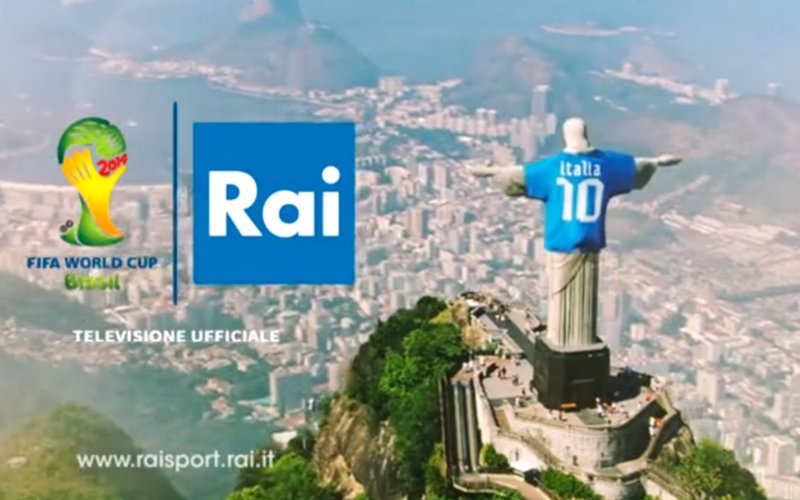
The World Cup is in full bloom and like anything that involves lots of money and national pride, it’s going to generate its share of lawsuits (or threatened lawsuits). My favorite so far finds the Archdiocese of Rio de Janeiro threatening a copyright suit against Italian broadcaster Rai Italia for daring to put an Italy jersey on Rio’s famous Christ the Redeemer statue in one of its commercials.

According to the president of the Vatican’s sports organization, the archdiocese has a right to be mad because “we live in a world that has put God on the bench” and this commercial is a part of that problem. Um, what? Apparently becoming president of the Vatican’s sports organization doesn’t require much soccer knowledge because it seems pretty clear to me that Christ the Redeemer isn’t riding the pine for Italy in this commercial. He’s sporting the classic number 10 jersey, which any soccer fan knows is usually reserved for the premier playmaker on any team.  Historical greats to wear the number include Wayne Rooney, Eusebio, Roberto Baggio, Johann Cruyff, Diego Maradona, Michel Platini, and Pele.  Perhaps the best American player ever, Landon Donovan, also wore number 10 for our national team.

So far from putting God on the bench, it looks like Rai Italia put him in the starting lineup for Italy (perhaps taking over the playmaker role from the ageless Andrea Pirlo?).  On top of that, judging by his use of the airplane goal celebration, it looks like the Redeemer put one in the back of the net for the Azzurri.

Now, I obviously don’t know anything about Brazilian copyright law, but I’m fully prepared to say that my expert analysis of the situation means that the archdiocese has no case against Rai Italia.  And based on the lack of a lawsuit being filed, I’m also going to assume that the archdiocese came to the same conclusion.

Brent Carlson-Lee 

When you hear the phrase “taste the rainbow,” you’ll likely think of Skittles as it is the tagline for the candy’s long-running campaign (since 1994). The Creative Criminals website has compiled over 40 ads.

So, when I saw this package of mini peppers at the grocery store it caught my eye.


First of all, I immediately noticed the use of Skittles’ registered trademark (although this is Class 31). Secondly, does the color of a pepper really affect its taste? So I created a little experiment. I was able to perceive a small difference in taste, perhaps only because I wanted to validate the abilities my refined palate much as a sommelier identifies the terroir of a fine wine.

Interestingly, Skittles lovers debate whether there is actually a “rainbow of flavors “ or if all Skittles colors taste the same. While the debate lingers on, you can try for yourself.

Shopping with my daughter this past weekend on the Avenue des Champs-Élysées in Paris, on the way to the Arc de triomphe, we spotted this shop selling  “I ♥ Paris” merchandise:

What do you make of this one, Tim, does it look familiar?

I’m thinking Mike Masnick of Techdirt, given his trademark bullying perspective on the subject, would be happy to see the Milton Glaser designed logo considered an informational genre, and part of the public domain.

A pair of French lawyers have noted that “the ability of the ‘I ♥’ sign to fulfill the essential function of guaranteeing a trademark’s origin is a question that remains to be answered.”

Could the same question be raised here in the United States, New York?

I definitely had a memorable Father’s Day today, traveling with my daughter from Paris to London, here is a photo of a gift bag and gold medal chocolate memento:

Nice touch Eurostar!

Courvoisier looks genuine, so I’m saving that one for later, of course.

In case you’re wondering the cigar was not real — milk chocolate like the medal — the largest word on it is CUBA, but apparently it is Made in Italy by Venchi. So, Brent, it is not quite as extreme as your experience with pepperoni, but close.

I’m not sure of the origin of the chocolate medal product, there are no markings, but one hint: “Made in a factory that handles nuts.”

Well that helps narrow the search down doesn’t it, or maybe not?

In the last few lines of To Kill A Mockingbird, Scout tells Atticus that “he was real nice.”  Atticus responds, “[m]ost people are, Scout, when you finally see them.”  I wonder if Harper Lee can now say that about the people involved with her hometown museum. 

You may recall my prior posts (here and here) related to author Harper Lee’s battle with her hometown museum the Monroe County Heritage Museum over use of “TO KILL A MOCKINGBIRD” and “HARPER LEE” in connection with clothing and gift items.  


Earlier this month, Harper Lee dismissed her lawsuit against the museum wherein she had claimed that the museum was wrongfully using her name and the title of her beloved novel.  In May, she had accused the museum of trying to back out of a settlement that had purportedly been reached earlier this year and sought to have the case reinstated.

Neither side has disclosed the terms of the settlement (which is not unusual).  From looking at the register, it appears that Ms. Harper obtained the right to register the mark TO KILL A MOCKINGBIRD for “clothing for men, women and children, namely T-shirts, hats, jackets.”  On June 1, 2014, the museum withdrew its opposition to her application to register the mark.  I am guessing that the museum may have been granted a license of some kind to use the mark in connection with the settlement. Anyone traveling near the Monroe County Heritage Museum in Alabama should stop by the gift shop and let us know.