The European Union recently decided that people have a right to be forgotten. The “right to be forgotten” provides Internet users in Europe the advantage to demand the erasure, removal or deletion of sensitive personal information in Google’s online search queries. Is this protection of a person’s privacy or online censorship? Since the ruling, Google has received 40,000 removal requests.

A mechanism for removing false statements seems appropriate, but the EU’s ruling goes too far. In the U.S., most websites that allow individuals to post personal comments refuse to remove them unless ordered by a court. Lawsuits generally take about a year to complete. By that time, the damage caused by the statement has occurred. Fighting false statements on the Internet can difficult for businesses and individuals.

A sense of humor and a little lack of respect:  that’s what you need to make a legend survive.

Karl Lagerfeld on his “winning formula”

Sometimes there is a news story that neatly weaves a bunch of DuetsBlog posts together like a Bottega Veneta shoe fabric design.  Sometimes that story comes from hard-hitting news authority TMZ, founded by attorney and former People’s Court analyst Harvey “I’m a lawyer” Levin.

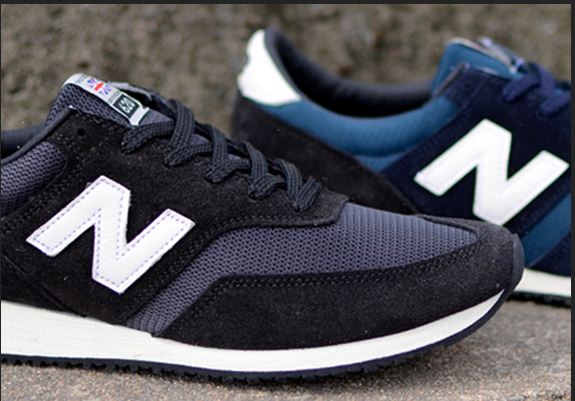
Last week, fashion icon Karl Lagerfeld was sued by American athletic shoe company New Balance for copying its legendary athletic shoes, like the classic 574 model and the 620 model.

For those of you who follow me on Twitter, you may have seen me suggest last week that, absent other indicia demonstrating Lagerfeld as the source, the shoes could have been from athletic shoe rival K-Swiss.

Even back in the 1980s, New Balance implemented what I consider to be a smart and advisable two-pronged IP strategy for product design:  applying for design patent protection and later seeking trademark protection through a non-traditional product configuration application where the design has become source indicative, often due to an innovative marketing strategy emphasizing design in developing brand recognition.  New Balance was granted D258,772 for the classic design in 1981.

Although the design patent has since expired (design patents only have a term of 14 years), New Balance still has protection over the overall look and feel of its shoes because of its product configuration trademark registrations below, US Reg. Nos. 1,308,133 and 1,344,589.

Unfortunately for New Balance, the expiration of the patent prevents them from seeking damages based on patent infringement, and we have seen how lucrative that has been for design patent savvy companies like Apple.  Even so, New Balance’s trademark complaint was interesting for a couple of reasons.  The trademark infringement standard is a likelihood of confusion analysis, which considers a number of factors, including the similarity of the marks, the similarities of the goods, and the similarities of trade channels.  First, despite seemingly being just a running shoe, the complaint includes evidence of coverage in high fashion magazines like Vogue.  It also includes evidence of celebrities who have been seen wearing the New Balance shoes – suggesting that the shoe is not just for athletic purpose but also high fashion.  Finally, it also discusses New Balance’s and Karl’s history of collaborations with other brands.  The complaint mentions New Balance collaborated with J. Crew, which were featured in Vogue and GQ.  It also mentions Kaiser Karl‘s propensity for design collaborations with companies such as Coca-Cola.  He also has a history of designing for companies like H&M.  These facts are used to suggest a likelihood of confusion between Lagerfeld’s sneaker and the New Balance shoe design and that it may have a dilutive effect in the marketplace.

While Lagerfeld hasn’t answered the complaint yet, one wonders if he will attempt to use a defense of parody for the shoe spoof.  I’ve blogged on parody a couple times, with respect to Moschino and a growing trend of t-shirts spoofing luxury brands.  But could Czar Karl seek a parody defense here?  Likely not.  Despite his formula for success including humor and a little lack of respect hinting at a propensity for indulging in parody, New Balance probably isn’t seeing any humor here.  As we have discussed, a parody must do two contradictory things simultaneously:  it must evoke the original and at the same time convey that it is not original by communicating some element of satire, joke or amusement.  I like to think that I have a great sense of humor (well at least most of the DuetsBlog bloggers around will laugh at my admittedly poor jokes maybe just to be polite), I’m not seeing the humor here, unlike Moschino and some of the t-shirts mentioned in my prior blog posts.  I imagine Pope Karl has an excellent dry sense of humor, which I enjoy, but I’m still not seeing it.  Are you?

While the complaint only deals with the shoe designs described above, Lagerfeld is also selling the shoe below.  Does it remind you of any other shoes?


And as long as we’re talking about icons like Karl, and I’m writing from Minneapolis near the cleansing waters of Lake Minnetonka, and I just watched the finals of the French Open, and I’m kind of hungry for pancakes…I’m going to leave this here for your Wednesday amusement.    Pardon the French, but Prince is the $#!%.

Lately we’ve been discussing more and more the difference between the right to register a trademark and the right to use a trademark. In many trademark disputes the perfect forum for an amicable resolution is the Trademark Trial and Appeal Board (TTAB) of the USPTO.

The TTAB can be a cost effective forum for parties to achieve settlements and coexistence agreements addressing both the right to register and the right to use, even though — if the case proceeded to decision there, the TTAB could not determine the right to use, only the right to register. The parties are, of course, free to resolve all possible issues through agreement, and most of the time they do so while their opposition or cancellation action is pending at the TTAB.

Having said that, since the limited jurisdiction of the TTAB does not provide for the possibility of injunctions, lost profit awards, damage awards, attorneys fees, or any other monetary relief, some trademark disputes are best suited for federal district court where all these remedies are possible. But, sometimes the federal court option is chosen over the TTAB to increase pressure for a settlement even when the likelihood of obtaining injunctive or monetary relief is not good.

Last Friday, less than two months after filing an opposition with the TTABPlasti Dip International decided that federal district court was the more appropriate forum to object to Rust-Oleum’s recent Flexidip mark in Plasti Dip International, Inc. v. Rust-Oleum Brands Company.


Does this look like a damages case or an exceptional one where attorneys fees might be appropriate? I have my doubts. And, it seems to me, another good example of a case where the plaintiff has a better chance of proving likelihood of confusion at the TTAB than in federal court.

While more remedies are possible in federal court, more will be considered to deserve them, and more will be expected to receive them.

By way of example, in reaching a conclusion about the alleged likelihood of confusion between PLASTI DIP and FLEXIDIP, both for rubberized plastic coating products, the TTAB would ignore the different visual impressions of the marks and the different house marks on the packaging (Performix v. Rust-Oleum), but the federal district court will pay close attention to all these differences, differences as to style and coloration, and the trade dress differences too.

Perhaps this explains, in part, why the Eighth Circuit Court of Appeals doesn’t feel bound by a TTAB likelihood of confusion finding. And, perhaps that explains why a party, located in the Eighth Circuit — like Plasti Dip — might not waste too much time before the TTAB if stopping another’s use is of paramount importance to the business.

Any predictions from our learned readers on how this one turns out?

Does it matter to you that Plasti Dip did not oppose another’s registration of DURADIP for similar coating products?

Does it matter to you that Plasti Dip had to settle for the Supplemental Register when it tried to register its similar RUBBER DIP mark for similar coating products?

Combing through the USPTO’s recently approved non-verbal trademark registrations revealed this little gem with Francis Ford Coppola’s name on the label (but not claimed as part of the mark):

Here is the USPTO drawing on the left, showing the claimed mark without any words or colors:

So, besides claiming a broader scope of rights in a non-verbal product container that isn’t limited by any words, I’m thinking that by excluding the label from the claimed mark, and focusing on the shape of the bottle, Mr. Coppola’s project also could avoid a registration conflict with another Gia wine brand that is federally-registered and appears to have priority over the Coppola product by a year and a half — this one on the right is an Italian Pinot Grigio:

Remember my last post discussing the difference between likelihood of confusion as to the question of federal registration at the USPTO and likelihood of confusion as to whether or not use can and should be enjoined for purposes of trademark infringement?

Do you suppose that Mr. Coppola’s team of lawyers know the difference?

Does this example not provide a visual case for illustrating the difference between the right to register and the right to use?

I’m not saying there isn’t infringement here, there might be, you’d have to see how the evidence played out, but you don’t need to see any more than the prior registration for GIA wine to know that there is no room for another GIA mark for wine on the Principal Trademark Register at the USPTO.

But, what if the applied-for mark were FRANCIS FORD COPPOLA GIA for wine, is there room on the shelf for that one at the USPTO?

Whether driven by new laws or technology, companies and individuals always push the limits of the law during the industry’s formative years. Obvious examples like Napster come to mind, as well as the more dated example of the VCR. Out in Washington and Colorado, the new booming business of legal marijuana is no different.

According to some reports, the legal marijuana industry could be worth up to $10 billion in 5 years.  The State of Colorado reportedly took in $3.5 million in marijuana related taxes and fees in January alone.  The industry presents a number of opportunities for new businesses and branding, as one of our colleagues previously discussed last year. With the possibility of these levels of profits, it should come as no surprise that a few companies have jumped in head first without fully considered the legal ramifications of the products they’re putting on the shelves.

Just this week, the Hershey Company filed a lawsuit against a Washington marijuana dispensary alleging trademark infringement and dilution of the company’s rights in the name and packaging for its Reese’s Peanut Butter Cups and Mr. Goodbar candy products. The company was selling “Reefer’s Peanut Butter Cups,” a marijuana edible intended to taste like a chocolate and peanut butter candy.

Is Hershey overreaching? “Peanut butter cups” appear to be a generic term. I’ve certainly seen numerous local candy shops (and larger Hershey rivals like Palmer candy) selling directly competitive “peanut butter cup” items. And yes, Reefer is somewhat similar to Reese’s, but they seem to present arguably distinct commercial impressions. A quick search seemed to reveal these instincts, as each of Hershey’s registrations disclaims PEANUT BUTTER CUPS apart from the mark as shown. The same thing for Hershey’s competitors, who also own federal trademark registrations for marks containing the phrase PEANUT BUTTER CUPS.

Looks like our Washingtonian friends might be in the clear! Of course, a picture is worth a thousand words (or less, depending on how wordy your complaint is…):

 With the added context, what do you think?

And what about Mr. Dankbar?


While it is unlikely that any individual would mistake a Mr. Dankbar for a Mr. Goodbar, it still creates the possibility of dilution, tarnishment, and a possibility as to mistake of sponsorship or endorsement. While it may seem absurd at the moment to think that Hershey might sponsor or be connected in some way to a marijuana-based confection, it isn’t unprecedented. After all, both Starbucks and Godiva sell their own branded liqueurs.  Brands that began as alcoholic beverages, such as Bailey’s, have also branched into consumer grocery products, too. It isn’t too hard to imagine companies crossing the line into legal marijuana products as well in the foreseeable future. In fact, other companies have been making similar challenges to use of candy, cereal, and other food products as flavors for e-cigarette tobacco products.

While there is certainly the possibility that Hershey’s might, in some situations, be overreaching with its trademark rights. Had the dispensary only used PEANUT BUTTER CUPS, or even just the name REEFER PEANUT BUTTER CUPS, this situation would be a lot closer. However, with the similarity of the packaging, the dispensary will face an uphill battle to mount any kind of defense. One thing is for certain, there will likely be many more trademark skirmishes to come as the marijuana industry takes shape.


Every so often there is a moment when trademark types, marketing types and brand owners need to pay close attention to where the law could be headed. Today, I’m sounding the alarm.

If the U.S. Supreme Court decides to follow the advice it recently sought and received from the U.S. Solicitor General (SG) of the Department of Justice, those of us who care deeply about the enforcement and protection of brands and trademarks could be facing a real paradigm shift.

Contrary to what Intellectual Property Brief has reported, the U.S. Supreme Court has not yet decided to review the Eighth Circuit Court of Appeals decision in B &B Hardware, Inc. v. Hargis Industries, Inc. Instead, back in January, it invited the SG to express the views of the United States on whether it should hear the case. Those views were filed and expressed in the form of an amicus brief on May 23, 2014.

The SG’s amicus brief encourages the Supreme Court to review the case, and it seems likely the Court will do so. If so, let’s hope the Court is flooded with thoughtful amicus briefs to help it get this important issue right. At a minimum, INTA should weigh in as a friend of the court.

SCOTUSblog identifies the two issues to be:

“(1) Whether the Trademark Trial and Appeal Board’s finding of a likelihood of confusion precludes respondent from relitigating that issue in infringement litigation, in which likelihood of confusion is an element; and (2) whether, if issue preclusion does not apply, the district court was obliged to defer to the Board’s finding of a likelihood of confusion absent strong evidence to rebut it.”

Basically, the Court is being asked to decide the impact (if any), of a prior win or loss (on the issue of likelihood of confusion) at the TTAB, on a later federal district court trademark infringement case involving the same marks and parties.

Unfortunately, in addressing the substance of the issues, the SG’s amicus brief borrows liberally from the dissenting judge’s perspective in the Eighth Circuit decision, such that likelihood of confusion decided by the TTAB to determine registrability apparently is believed to be the same issue as likelihood of confusion decided by a federal court for purposes of infringement. They aren’t and they shouldn’t be, for reasons I’ll elaborate on in my next post on this topic.

In the meantime, it seems to me, both the SG and dissenting Judge Colloton fail to appreciate the very limited jurisdiction of the TTAB. For those of us who regularly practice before the TTAB, we know that the TTAB is not shy about reminding parties before it of this limited jurisdiction and that cases before the TTAB should not be litigated as if more is at issue than simply the right to register a trademark.

The TTAB’s Manual of Procedure sets forth this very limited jurisdiction quite clearly in TBMP Section 102.01:

“The Trademark Trial and Appeal Board is an administrative tribunal of the United States Patent and Trademark Office. The Board is empowered to determine only the right to register. The Board is not authorized to determine the right to use, nor may it decide broader questions of infringement or unfair competition. Similarly, the Board, being an administrative tribunal, has no authority to declare any portion of the Act of 1946, or any other act of Congress, unconstitutional.”

Indeed, back in 2007 when the TTAB introduced the new rules of practice, it reinforced the above, making very clear:

“Initial disclosure obligations should be easier to meet in Board cases than in civil actions. One reason is that the Board’s jurisdiction is limited to determining the right of a party to obtain, or retain, a registration. Moreover, the extent of available claims and defenses that may be advanced is not nearly as broad as in the district courts. In addition, the Board recognizes the impact of other issues relatively unique to Board proceedings. For example, a high percentage of applications involved in oppositions are not based on use of the applied-for mark in commerce but, rather, on intent to use, on a foreign registration or on an international registration. Further, certain precepts that govern analysis of issues raised by claims or defenses in typical Board cases effectively limit the Board’s focus. For example, in a [likelihood of confusion] case under Section 2(d) of the Trademark Act, 15 U.S.C. 1052(d), the Board focuses only on goods or services recited in identifications, and on the mark as registered or applied-for, irrespective of many actual marketplace issues.”

Baby trademark lawyers have been taught for decades that the right to register a trademark is separate and distinct from the right to use a trademark. Every day we clear marks for brand owners understanding the critical difference between these important rights.

It is not uncommon for a brand owner to be refused registration of a trademark based on another’s prior registration for a similar mark, but that doesn’t necessarily mean the brand owner’s use of the mark is infringing, or that it should be enjoined, or that monetary awards are appropriate for the continued use of the mark.

More on this to follow, but for the purposes of today, I’m not convinced that the TTAB’s likelihood of confusion decision about registrability ever should preclude a federal district court from deciding for itself the question of likely confusion for infringement purposes.

How do you come down on this issue?

Warning:  This post may contain an unnecessary amount of nerd humor.  Reader discretion is advised.

I am not ashamed to admit that I am a bit of a nerd.  I enjoy standardized tests, celebrate Pi Day, geek out over a perfectly crafted Excel spreadsheet, and appreciate nerd humor (Q:  What do you get if you divide the circumference of a jack-o-lantern by its diameter?  A: Pumpkin pi).  I <3 π.

Although greek letters are generally associated with fraternity brothers and sorority sisters, people like me who have taken a heavy math and engineering course load tend to have some different college memories related to Ω, φ, ρ, μ, Σ, and notably the irrational π.

In college, our student groups would sell nerdy t-shirts listing the top 10 reasons why you should date an engineer, like this and this.  Being a nerd has become seemingly cooler in popular culture, thanks to shows like The Big Bang Theory, and the popularity of geeky t-shirts has also increased.  Now online retailers hawk various nerdy t-shirts like:


Recently online retailer Zazzle, which offers many custom printed clothing items including the π shirt above, received a cease-and-desist letter regarding their π t-shirts. 

It turns out that the United States Patent and Trademark Office recently allowed a registration for the following mark for “athletic apparel, namely, shirts, pants, jackets, footwear, hats and caps, athletic uniforms” to an individual named Paul Ingrisano, described in some reports as an artist and other reports as a pirate:


Mark Image

Ingrisano also is the applicant for the mark I <3 for similar apparel goods, which made me recall my prior post about the <3 emoticon on apparel goods. 

Ingrisano’s attorney’s cease-and-desist letter (which you can find at the bottom of Wired’s article here) first erroneously claims “copyright infringement,” while asserting only Ingrisano’s trademark rights in the mark.  The letter claims that Zazzle has “been using the mathematical symbol ‘pi’, referred to herein as the PI trademark, in association with the marketing or sale” of its products, and that Mr. Ingrisano owns all rights in the PI trademark, claiming first use back to 2010.  Clearly, however, the registered mark is something more than the “mathematical symbol ‘pi” – there’s that pesky period there too – so it’s different right?  However, under trademark rules, “punctuation, such as quotation marks, hyphens, periods, commas, and exclamation marks generally does not significantly alter the commercial impression of the mark.”  TMEP 807.14(c).  But does that mean he has rights in the π without the period, I doubt it.  I would be willing to wager that the “mathematical symbol ‘pi'” has been used on t-shirts prior to Mr. Ingrisano’s alleged first use of 2010.   Despite many plausible and rational responses to such a seemingly misguided letter, Zazzle is said in some of these reports to have given up their lunch money – they supposedly took down much of the π-related merchandise at least initially.

Trademark bullying has been defined as “the practice of a trademark holder using litigation tactics in an attempt to enforce trademark rights beyond a reasonable interpretation of the scope of the rights granted to the trademark holder.”  So do you think these nerds are being bullied into giving up their π shirts?

And, if you don’t want to weigh in on nerds being bullied, share your favorite nerdy shirt in the comments below.

Debbie Laskey, MBA

When we think about the qualities that characterize a leader, we often create a list that includes charisma, vision, and strength. But it’s also important to consider the qualities that a leader instills in his or her followers, such as, loyalty, motivation, and dedication.

For an individual to be an effective leader, he or she must be extraordinary at the core of his or her spirit – capable of overcoming extreme odds, capable of seeing much more than a quick fix to a fleeting crisis and, above all else, capable of inspiring followers to join together to achieve a common goal or aspire to become better individuals. Sandra Day O’Connor, the first female member of the US Supreme Court, represents the epitome of this most extraordinary type of leader.

Sandra Day O’Connor was born in 1930 in El Paso, Texas. She attended Stanford University, where she earned a BA Degree in economics followed by a law degree. She also served on the Stanford Law Review. In December 1952, she married John Jay O’Connor, and they had three sons. She was married for 55 years until John’s death in 2009.

In spite of Sandra Day O’Connor’s accomplishments during law school, no law firm in California would hire her due to her gender. One law firm offered her a job as a legal secretary – which she refused. Instead, she dedicated herself to public service and accepted a position as Deputy County Attorney of San Mateo County in California. She also worked in Germany as a civilian attorney and practiced law in Arizona. In 1969, she was appointed to the Arizona State Senate and re-elected twice. In 1975, she was elected judge of the Maricopa County Superior Court in Arizona until 1979, when she was appointed to the Arizona Court of Appeals by Governor Bruce Babbitt. During her time in the Arizona state government, she served in all three of its branches.

Ronald Reagan made a pledge during his 1980 presidential campaign that, if elected, he would appoint the first woman to the Supreme Court, and on July 7, 1981, he nominated Sandra Day O’Connor as an Associate Justice. Pro-life and religious groups opposed the nomination because they feared she was pro-abortion, but on September 21, 1981, Sandra Day O’Connor was confirmed by the US Senate with a vote of 99-0.

During her tenure as a Justice, O’Connor was known to review cases on an individual basis, which placed her in the center of the court and drew both criticism and praise. She retired from the court in January 2006, and in August 2009, was awarded the Presidential Medal of Freedom, the highest civilian honor of the United States, by President Barack Obama.

What makes Sandra Day O’Connor a great leader? While she was not a CEO or president of a Fortune 500 company, she demonstrated leadership traits on a daily basis. She set goals and accomplished them. She taught, and she learned. She created a team and led. She accepted public criticism and gave credit. She listened and spoke. She inspired and was inspiring. The truth is, there are not many of us who would hold our heads high if we had been in O’Connor’s shoes when she could not find a job as a lawyer. Instead of shouting about the unfairness of the situation, she looked for another option, an option that would yield great results once she proved herself in public service.

So, the question should not be, what makes Sandra Day O’Connor a great leader. Instead, we should ask ourselves, how can we apply her leadership qualities and successes to our businesses and everyday lives?

While this post was originally written a couple of years ago, I have reprised it as a result of an exciting experience. On March 4, 2014, I was thrilled to attend a luncheon featuring the Honorable Sandra Day O’Connor. She spoke in an endearing manner and regaled the audience with humorous anecdotes from her days on the Supreme Court as well as commentary about her latest project as the creator of iCivics, an online game that provides students with tools for active participation in the democratic process so that they become engaged citizens. Despite being 84, Sandra Day O’Connor continues to lead and inspire.

Let’s suppose you’ve been asked to search and clear the name of a bar, without seeing the design mark in the upper right and lower left hand corners of this photo (from a recent trip to Boston):

When I first saw this design logo, I thought the name was probably W Bar, so you know where my mind went next, right?

Not there, but here, yes, I was thinking Alpha Watch again.

But then, I second-guessed myself and started seeing M Bar, still with Alpha Watch on my mind.

Next, I really started questioning my focus on single letter marks, seeing instead Un Bar, then Hi Bar (without the dot in the i).

What have you seen that I didn’t, as a possible bar name? If you’re familiar with Boylston Street in Boston, you’re disqualified from answering.

Back to your assignment now — the point is, had you merely been asked to search and clear M Bar as a name and mark, it is best to see how it actually will appear to potential consumers.

Curious cursive lettering or script can appear to be or mean different things to different people.

So, while the potential scope of rights in the resulting visual identity of the brand may be quite broad if cleared for use, the significant challenge during clearance and due diligence is to make sure the multitude of possible meanings have been considered as part of the search strategy.

Online advertising is unavoidable for most businesses given that large percentage of Americans spend a significant amount time in a day staring at a computer screen or glued to their mobile devices. Video ads, for example, are rising in popularity. Last December, 188.2 million Americans watched a total of 52.4 billion videos according to comScore.

However, a large percentage of online advertising revenue is wasted on fraud and piracy. And the most recent threat to your online ad dollar is the use of several, tiny websites all arranged on a single Web page. These tiny websites are smaller than a needlepoint, but displayed genuine advertisements even though the ads could not be seen with the naked eye.

Every time someone clicked on the domain name for the website that contained the organized, microscopic websites, the companies that had their advertisements displayed on the microscopic websites were changed.

The moral of the story is to thoroughly vet any online advertising providers before handing over your advertising dollar.