Seth Godin — famous for inspiring those who create to “shipit” — took the opportunity yesterday to respond to those who contend he encourages others to “just ship it.”

In Godin’s response he takes issue with the word “just,” because it “implies a throwaway“:

“The just has a, ‘what the hell,’ element to it. With ‘just’ in the mix, the alternatives seem to be: polish, improve, focus on quality OR just throw it out there.”

I’ve never understood Godin’s passion for “shipping” to mean quality doesn’t matter, clearly it does. Instead, as I understand his “battle cry” — he seeks to empower those who might otherwise allow fear (i.e., the “lizard brain”) to sabotage a project. So, his “call to action” actually is to complete the work, and perhaps even more importantly, share it with others:

“You ship. You ship your best work, when it’s ready. Not after it’s ready, not when it’s too late to make a difference, and yes, of course, not when it’s sloppy or unformed.”

As a trademark type, and one familiar with the strength and fame of Nike’s “Just Do It” tagline, I’ve been conditioned not to see “just” in a negative light or implying a “throwaway” quality. Indeed, “just” means “exactly or precisely.” And, “just so” means “arranged with precision.”

Just” also works as a language intensifier. So, to me “just do it” or “just ship it” both communicate a positive “call to action.” While “just ship it” is clearer in the action called for, “just do it” more generally calls for one to “quit talking about it and start doing it,” whatever “it” happens to be. For Nancy Friedman’s take on “just,” check out her always just swell Fritinancy posts here, here, and here.

Just two years ago, Nike prevailed in a notable trademark opposition, proving “Just Jesu It” for clothing is likely to be confused with and likely to dilute the distinctiveness of Nike’s famous “Just Do It” trademark, and in that decision the Trademark Trial and Appeal Board commented on the meaning of Nike’s tagline and mark:

“[Nike] has shown that its mark has been viewed as a ‘battle cry.’ The meaning of applicants’ mark is ambiguous, not just as a three-term phrase with a middle term that evokes ‘Jesus’ (but appears not to be itself an English word), but even when that middle term ‘Jesu’ is combined with ‘it’ to form the word ‘Jesuit.’ Despite this ambiguity in the meaning of applicants’ mark, the overall commercial impression of the parties’ marks is similar because given the fame of opposer’s mark, the public is likely to view applicants’ mark as similarly being a call to action, even though it is unclear what action is being urged.”

While I am not encouraging Mr. Godin to embrace “Just Ship It” to the point of adopting it as a trademark (because he just might hear from Nike, or maybe not, as you’ll see below), I am encouraging him to rethink any possible reluctance to run toward the “just ship it” criticism, and instead actually embrace the enitre phrase as a Nike-Just-Do-It-style “badge of honor,” a “call to action,” or a “battle cry” for those needing the reminder of not letting fear stall or kill an important project or a valuable piece of work.

The irony in Nike’s “battle cry” tagline is that its trademark enforcement program for the “Just Do It” tagline and mark is not a model of clarity or simplicity, much less one easily understood by those paid to advise clients about the risks of potentially conflicting trademark rights.

Despite its resounding win two years ago, Nike has filed just two oppositions since that win: Don’t Just Do It Do It Right, and Just Shave It, despite additional opportunities for opposition in Int’l Class 25 alone (Just Cover It, Just Pause It), not to mention the multitude of coexisting third party registrations for “Just ___ It” marks in Int’l Class 25 for clothing items (Just Grab It, Just Jew It, Just Canoe It!, Just Flush It, Just Cure It!, Just Brew It, and Just Face It). The enforcement opportunities for a famous mark like “Just Do It” outside Int’l Class 25 are even more plentiful.

A seemingly inconsistent enforcement program only encourages the likes of Raj Abhyanker, owner of Trademarkia, to clear and file for marks like Just Finish It for clothing. By the way, this one was published for opposition just today, so we’ll see shortly whether it falls within Nike’s present enforcement plan.

In the end, and back to Seth, those who are inclined to nay say don’t need the word “just” to do so, they’ll just find another way to critique, if they are so inclined.

Hopefully that won’t be necessary here, since I just clicked publish, a/k/a the ship button.

So, please be kind.

–  James E. Lukaszewski, ABC, APR, Fellow PRSA

If you’ve been interviewed by any news medium, if there’s a chance you’ll be interviewed any time soon, or you are likely to become the target of news media coverage or new media coverage, this discussion is for you.

The two scourges of the news media, primarily legacy media, newspapers, magazines, radio, television, and news blogs, are the abusive overuse of so-called “anonymous sources,” and the routine deceptions reporters use day-to-day.

For those of you who have been interviewed, this next quote will resonate powerfully with you. For those of you about to be interviewed, read it carefully. This scenario is in your future.

New York Times columnist Janet Malcolm, in a novel she wrote called “The Journalist and the Murderer,” in 1990 made this powerful and extraordinarily truthful analysis of how reporters behave:

“Every journalist who is not too stupid or too full of himself to notice what is going on knows that what he does is morally indefensible. He is a kind of confidence man, preying on people’s vanity, ignorance, or loneliness, gain¬ing their trust and betraying them without remorse… On reading the article or book in question, (the source) has to face the fact that the journalist – who seemed so friendly and sympathetic, so keen to understand him fully, so remarkably attuned to his vision of things – never had the slightest intention of collaborating with him on his story but always intended to write a story of his own. The disparity between what seems to be the intention of an interview as it is taking place and what it actually turns out to have been in aid of always comes as a shock to the subject.”

The ethics of deception is a topic specifically taught in journalism school. In Chapter 6 of the book “Doing Ethics in Journalism,” there is a strategic list that justifies a lie or deception by a journalist. Here are the rules for lying to you.

• When the information sought is of profound importance. It must be of vital public interest, such as revealing a “great system failure” at top levels, or it must prevent profound harm to individuals.

• When all other alternatives to obtaining this same information have been exhausted.

• When the journalists involved are willing to fully and openly disclose the nature of the deception and the reasons for it to those involved, and to the public… but a long time afterwards [my words].

• When individuals involved and their news organization apply excellence, through outstanding craftsmanship as well as the commitment of time and funding needed to fully pursue the story.

• When the harm prevented by the information revealed through deception outweighs any harm caused by the act of deception.

• When the journalists involved have conducted a meaningful, collaborative, and deliberative decision making process in which they weigh:

o The consequences (short and long-term) of the deception on those being deceived.

o The impact on journalistic credibility.

o The motivations for their actions.

o The deceptive act in relation to their editorial mission.

o The legal implications of the action.

o The consistency of their reasoning and their action.

Continue Reading The Two Scourges of the News Media

When I was eight I had a perfect plan to create a multi-million dollar business: a company that sold pet turtle kits that came with miniature nunchucks, swords, and ninja costumes. Back then though it was more difficult to tap into Angel networks and, although great friends, my core group of investors unfortunately turned out to be less financially dependable as hoped. Thus, the venture technically never got off the ground.

In addition to capital, my eight year old self may have also overlooked a few aspects of intellectual property law, too. What I knew at the time though was that kids would want them, but that may havehad something to do with this hit cartoon, movie, and still-to-this-to-day-best-series-of-action-figures:


And this gets to one of the more basic pieces of advice you can give to businesses either when they are first beginning, or when they are developing new products: don’t take shortcuts. We all have had great ideas for something that we just know people would buy (or in the case of my eight year old self, a really, really, great idea). When you’re eight, you normally don’t follow through, usually because of financing issues (or, you know, because you’re eight). But even real-life, all-grown up businessmen have similar ideas, too. For example, Cliff and Norm’s bar (blogged about here) and Ricky Bobby’s Sports Saloon (blogged about here).

Unlike eight year olds, when adult businessmen have one of these ideas, one of three things normally happens: (1) a lawyer convinces them not to go through with it (no example), (2) a lawyer helps the client change their business plan sufficiently to where they believe the business benefits outweigh the legal risks  (Ricky Bobby’s); or (3) you thought about talking to a lawyer, but never got around to it (just guessing, but I’d put Cliff and Norm’s bar here).

Another example has emerged recently thanks to the rampant success of the television show Breaking Bad:

Its series finale was broadcast earlier in the month and if you’ve never heard anything about it, don’t worry. All you really need to know is that it involves meth and Albuquerque. The series was both set and filmed in and around the New Mexico city and while you might initially think the town would prefer not to be so intimately connected with a dangerous and illegal drug, it has been a financial boom. There are guided tours, crystal meth candy, donuts featuring the blue candy, and also crystal meth bath salts. Although Great Face and Body has been selling its “Bathing Bad” bath salts for years, Sony only recently contacted the owners to request that they obtain a license or cease their use, as shown below:

Sony does have a reasonable claim of infringement based on the logo and the manner in which the goods are advertised. It also helps that the official store sells fictional items from the show too, such as to go bags from the fictional Los Pollos Hermanos fast food restaurant and business cards for the local billboard attorney, whose slogan is “Better Call Saul.” It certainly is plausible for consumers to mistakenly assume that the owners of the rights to Breaking Bad had somehow licensed or were in some other way involved with the production or sale of the bath salts as well.
What makes this case interesting, though, is that the producers and actors apparently have embraced some of these products. The owner of Great Face and Body states that he had visited the studios and spoke with some of the representatives. In fact, the company ordered 450 bags to distribute at the wrap party. Similarly, actor Bryan Cranston gave the potentially infringing meth candy national media attention by distributing it on the David Letterman show to both the host and the band. According to an interview with other business owners, Sony Pictures has only contacted the seller of the bath salts, and not any of the other businesses profiting off Breaking Bad related memorabilia. The facts here may or may not be sufficient to show a defense based on acquiescence (See  Christian Broadcasting Network, Inc. v. ABS-CBN Int’l, 84 USPQ2d 1560 (TTAB 2007), TTABlogged here). It will be interesting to see how the filmmakers’ and actors’ interactions with the owners and their products affects Sony’s enforcement strategy (in addition to their decision, at least not yet, to pursue other parties).

Overall though, maybe this falls under a “calculated risk” strategies. Now that the show has completed, the popularity of these products may have reached its peak, along with the desire for related merchandise. Maybe Sony won’t pursue strongly because of that fact, or maybe Great Face and Body can stop the sales of the products (and maybe just sell blue bath salts under a different name). Just to be clear, there is still the risk that you could be sued for infringement, lose whatever profits you did make, and rack up a lot of legal fees.

Although, if you’re only 8 years old, you just might be able to get away with it…. Looks like I have another addition to my “if time machines become real” list…


New security standards are scheduled to be released by the PCI Security Standards Council on November 7th. The updated standards are expected to require companies to protect credit-card terminals from physical tampering and compile an inventory of system components (e.g., servers) that comply with the standards. Companies will also be required to evaluate evolving malware threats. Those that fail to comply could face fines and forced disclosure to consumers in the case of a data breach.

Small companies with few credit-card transactions can avoid many of the costs associated with becoming PCI compliant by performing a self-assessment. If you accept credit cards and never performed a self-assessment, it is something to look into doing because if you are found to be PCI non-compliant, an on-site compliance audit can cost $50,000 to $1.5 million.

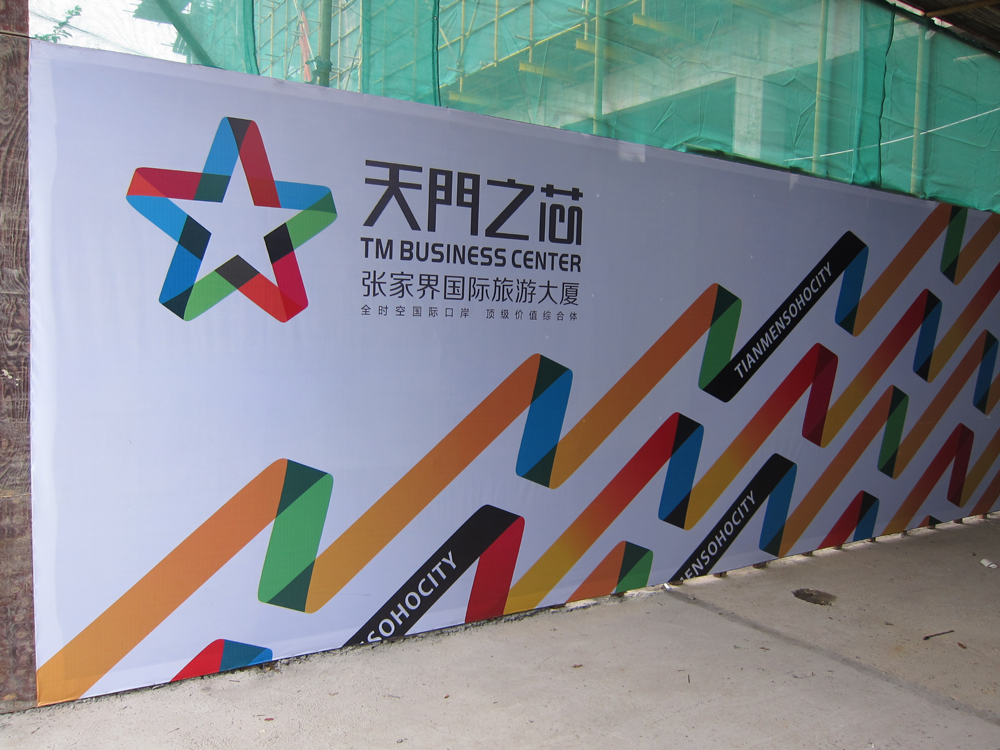
Once again, a story from China suggests that imitation is the highest form of flattery.  First, it was copying Apple stores.  Now, it’s copying an entire mall – and the most well-known American mall of all at that, the Mall of America.   Well, at least the logo and creative.  The Chinese mall appears to still be under construction, but if it is a copy of the entire mall, then I am sure the warmongers will come out requesting a swift response to this usurpation of American values and capitalism.  You cannot steal what Americans value – America’s preeminent shopping venue for products made in China!

Photos appeared yesterday on the interweb of a Tianmen mall using the Mall of America’s logo and creative (with a few very subtle differences in the star’s colors), rebranded just a few months ago by Minnesota-based Duffy & Partners group.  Check this out…

Mall of Tianmen

Mall of America

In a time where “thinking locally” is trendy, this is just one more example why it is more important than ever to think globally about your IP strategy.

Ylvis, the Norwegian music/comedy duo, recently revealed the secret of the fox to more than a hundred and twenty-three million viewers on YouTube (as of this posting), answering the vexing question: What does the fox say?

Not surprisingly, given this wide-spread attention, an individual apparently unconnected to Ylvis already has filed an intent-to-use trademark application for “What the Fox Say” for t-shirts.

No doubt, what makes a video go viral is yet another vexing question to ponder, but today, we thought we’d leave that one to our capable marketing friends, and instead tackle a slightly different question that we know something more about, by asking: What does the suffix say?

A frequently asked question by those who create brand names and trademarks is, how sacrosanct is another’s suffix, and must it be avoided to dodge a serious trademark conflict? While some trademark types appear to put little stock in the power of a suffix from a trademark enforcement perspective, search tools do exist to consider them, so it’s safe to say, it depends.

A lot will depend on the prior enforcement success of the trademark owner. And if the trademark owner has a family of marks sharing a common suffix, it would be wise to beware and prepare for a likely conflict. For example, Geoffrey LLC, owner of the TOYS “R” US and BABIES “R” US brands, puts enormous stock in the communicative power of its “R” US suffix, and one might also ask, at what financial cost? As it appears that just about anything close to the “R” US suffix crosses Geoffrey’s line for just about any goods or services, including LIGHTS R US for vehicle lights, STUDS “R” US for fitness education services; BINGO R US for gambling; HAIR ARE US for hair care preparations, THEY ARE US for customer service mananagement, and LABELSRUS.COM for inkjet printing services.

Remember my prior post called Trolls-R-Us? It appears the online retailer referenced there now goes by the name Trolls Trolls Trolls, so chalk up another “W” for the likely famous “R” US trademark suffix owner. In Geoffrey’s case then, it appears the mere presence of this suffix says “exclusivity” or, at least advises, “prepare for a fight.”

On the other hand, notwithstanding the early and likely famous GODZILLA brand dating back to the 1950s, nowadays when it comes to brands incorporating ZILLA as a suffix, even when inspired by the Godzilla name and/or character, the suffix appears to not say “exclusivity,” but instead it simply says, implies, or suggests some sort of excess in what precedes it.

Indeed, Toho, owner of the GODZILLA brand for toys, comic books, motion picture entertainment services, clothing, gaming machines, video games, and board games, among other goods, appears to have all but relinguished the ZILLA suffix to a multitude of third parties selling a wide variety of goods and services, including the DOGZILLA brand that John Welch recently wrote about over at the TTABlog.

Years ago, Toho, the owner of the Godzilla trademark appeared far more determined for a trademark fight and sought to enforce its rights against Davezilla.com (but for the straight scoop, check out Marty Schwimmer’s post at the Trademark Blog, from back in the day, circa 2002), and it even succeeded against Bagzilla for excessively large garbage bags sold by Sears. But current ZILLA enforcement by Toho appears more sporadic, with only six trademark oppositions filed at the TTAB since 2006, despite the proliferation of multiple third party marks incorporating the ZILLA suffix.

A recent trip to Iowa City revealed that the GOLFZILLA brand appears to be going strong. In addition, federally-registered trademarks such as PRETZILLA for pretzels, BACONZILLA for hamburgers, HOGZILLA for barbecue sauce, SHRIMPZILLA for sandwiches, NOMZILLA for restaurant services, GLUZILLA for adhesives, PLUMBZILLA for online retail stores featuring plumbing supplies and fixtures, GUARDZILLA for athletic mouth gaurds, and BITZILLA for power operated drill bits, all appear to peacefully coexist with the GODZILLA brand and mark, opening the door to yet more who want their own piece of the ZILLA suffix action.

Although our focus today has been on the suffix, prefixes are often said to be more important from a trademark perspective (think McDonald’s MC prefix and family of marks), because they are the first element seen and presumably remembered by consumers. But I’ve always understood that, in general, people will remember the first thing and the last thing, most likely forgetting the in between parts (please let me know if that rule applied to your reading of this post, assuming you’ve come this far). This blurb from across the pond discussing likelihood of confusion in connection with pharmaceutical brands and marks tends to reinforce the perspective that both prefixes and suffixes are important in multi-syllable brand names and marks, especially when both appear together in the same trademark enforcement target.

In the end, if a brand owner wants to enjoy broad trademark rights and prevent others from incorporating its unique suffix in other’s marks, two tactics and a reminder might help. First, consider creating and promoting a family of marks where each shares the same suffix, as Geoffrey has done. Second, consider making separable use of the suffix as an additional standalone trademark, so that third party enforcement targets will have incorporated the entirety of at least one trademark. Last, it would be important to recognize too, that once the first identical third party suffix is tolerated, more are guaranteed to follow in full ZILLA form.

Simon Bennett and Rachel Cook Fox Williams LLP

Chocolate giants Nestle and Cadbury have been trading blows in the UK and European Courts for several years. This latest round in front of the UK Court of Appeal related to Cadbury’s application to register the color purple (to be specific Pantone 2685C) for the packaging of specified products, including chocolate in bar and tablet form. Cadbury has been using purple for its packaging since 1914 and the UK trade mark registry had, in granting the application, accepted that the use of the color had acquired distinctiveness.

But this wasn’t the end. Nestle had lost the first two rounds but persevered. Under EU law a single color is, in principle, capable of being registered as a trade mark, whether it is spatially defined or not, although the Courts and the Registry generally will cast a sceptical eye on applications, usually requiring evidence of acquired distinctiveness.

Any trade mark application must be capable of graphic representation and distinguish the goods or services of one undertaking from those of other undertakings. Both of which really go without saying. European cases have built upon these aspects – requiring that marks be “clear, precise, objective and durable” and not relate to a property of the product being registered. All these criteria are intended to stop a color trade mark from allowing one business to obtain an unfair competitive disadvantage over other businesses.

Where did it go wrong for Cadbury? Cadbury’s application had stated that the mark would be applied to the whole visible surface of the packaging or be the predominant color applied to the whole visible surface of the packaging. Sufficiently certain? Cadbury thought so, the Registry thought so (even the guidance issued by the Registry on the description of color marks said that this was acceptable), the High Court thought so but the Appeal Court said no. As the mark was not fixed to specific depictions then it embodied a “multitude of different visual forms” and was too uncertain to be valid. The Court said that to find otherwise would allow Cadbury an unfair competitive advantage.

Stepping back from the Judgment, this does seem a little far fetched. There is no necessity for purple Pantone 2685C to be used for packaging of chocolate and it is difficult to see what competitive advantage Cadbury would in reality gain. However, this Judgment again shows up that color trade marks don’t just face a hard time in the US Courts.

Where do we go from here? Well, what is clear is that Cadbury will try to head to the UK Supreme Court. However, other holders of color trade marks may not be sitting comfortably in their seats. There are many registrations that do not have any depiction or description attached to them – following Cadbury these in theory would be invalid. Equally, while applications for goods could be submitted with pictures of their use, it is far more difficult to see how this would be applied to services.

Therefore, overall, this Judgment is likely to undermine the ability to register single color trade marks in Europe at all and seems a further barrier in the attempts to extend trade mark law to cover more “exotic” aspects of goods and services outside of a word or a logo.

As I was perusing Facebook the other day, I stumbled upon the following picture posted by a friend:

For reasons unknown to me, I inserted the letter “r” into “bands” while reading this shirt, and I thought to myself, “What a cool shirt!”  Then I read it again, realized my mistake, and thought immediately that the shirt was a lot less cool.  After all, I can’t recall all the times I’ve had to listent to some burnout telling me about how music these days is nothing like it used to be in the “good ole days.”  Of course, I tend to agree with him that music today sucks, but I’m sure he’d disagree with me that the music of the 90’s was awesome.  Surely it’s no coincidence that the 90’s happened to be my formative music-listening years…

But back to the point:  cool brands.  My initial, albeit incorrect, reading of the shirt made me curious about what the “cool brands” had been over the years and whether there were any defining characterstics that people could use to capture cool.  Using the magical powers of cool-brand Google, I did some totally non-scientific research and reviewed some cool brands of the 80’s, the 90’s, and today.  After racking my brain, I had difficulty discerning any particular trends other than recognizing that: (1) things that were cool in the 80’s and 90’s really aren’t any more; and (2) the 90’s was big on clothes.

People smarter than me have tried to quantify brand appealability.  And while “appeal” may not be the same as “cool”, it seems that people think the quantification of these concepts might ultimately be possible on some level.  For me however, I think brand coolness is ultimately a subjective concept, and you’re going to have a difficult time setting up a brand that will start out and remain cool over any long period of time.  Like the old guy in the picture, our views on brands will necessarily be colored by who we were and what we were doing when we encountered the brands.

Which leads me to my next point:  I don’t think you can ultimately force a “cool” brand.  After all, the entire concept of “cool” is about not trying too hard (or at least it was when I was a kid).  I’m certainly no branding expert, but it seems to me that reaching the “cool” stage is not the result of conscious effort, but is akin to capturing lightning in a bottle…or a shark in a tornado.  In my view, its better to strive for something that is memorable and/or informative.  While it may not ultimately reach the pantheon of “cool”, it will give you a strong foundation for developing and marketing your product or service.

Who would you expect to find sitting at the end of the bar in this recently re-named Minneapolis sports bar, formerly known as Halek’s Bar?

What if you were to queue a very familiar tune to these lyrics, would that help?

Yeah, I was thinking of these guys too:

But, what if these guys have nothing to do with it? And what if CBS Studios, owner of the Cheers brand, has nothing to do with this place either?

Are any permissions required? If so, who do you need them from? And, what legal theories are potentionally implicated? Copyright? Trademark? Unfair Competition? Misappropriation? Right of Publicity? Any others?

This signage would be great fodder for a law school exam in an intellectual property course, agree? Feel free to make up your own hypothetical on what adorns the walls inside, I’ve never been.

If the interior in your hypothetical plays up what one comment on the bar’s Facebook page suggests (“This place has been loved by many over the years; full of working class people. You could definitely call it the cheers bar of Minneapolis.”), beware Conan Properties, Inc. v. Conans Pizza, Inc., finding likelihood of confusion with use of Conan’s Pizza for a restaurant featuring decor that evoked the theme of the character “Conan the Barbarian.”

Gentle reminder, when you or your client is tempted by a name that everyone knows, it might be prudent to also visit a place where everyone knows your name (and everyone knows your rights under the intellectual property laws), so you can minimize the chances of this becoming the most applicable theme song: “Making your way in the world today takes everything you’ve got.”

– Draeke Weseman, Weseman Law Office, PLLC

When I think of Twitter, I think of — it’s really hard to define because we’re still coming up with the vocabulary — but I think it’s defined a new behavior that’s very different than what we’ve seen before.

— Jack Dorsey, Twitter Co-Founder in 2009

My, how time flies. Only four years ago, co-founder Jack Dorsey was still trying to figure out how, exactly, to define Twitter. Last week, Twitter filed its Form S-1 — the public prospectus required ahead of an initial public offering — with the Securities and Exchange Commission. In it, Twitter describes itself as “a global platform for public self-expression and conversation in real time” that has “democratized content creation and distribution.” Analysts evaluating Twitter’s S-1 suggest the company is worth $12 billion.

Trademark-types reading news coverage of Twitter’s S-1 discovered something else: Twitter is concerned that its trademarked 140-character messages, called “Tweets,” may become generic. Discussing the risks to its intellectual property assets, Twitter warns potential investors that “there is a risk that the word ‘Tweet’ could become so commonly used that it becomes synonymous with any short comment posted publicly on the Internet, and if this happens, we could lose protection of this trademark.”

For Twitter, such loss would be an unfortunate twist of fate because the brand was so well thought out in the beginning. Reading Jack Dorsey’s explanation of how the name “Twitter” (and from that, “Tweet”) came about provides an enlightening peek at how start-up entrepreneurs think about trademarks:

The working name was just “Status” for a while. It actually didn’t have a name. … So we did a bunch of name-storming, and we came up with the word “twitch,” because the phone kind of vibrates when it moves [from receiving an SMS message.] But “twitch” is not a good product name because it doesn’t bring up the right imagery. So we looked in the dictionary for words around it, and we came across the word “twitter,” and it was just perfect. The definition was “a short burst of inconsequential information,” and “chirps from birds.” And that’s exactly what the product was.

. . . So we just fell in love with the word. It was like, “Oh, this is it.” We can use it as a verb, as a noun, it fits with so many other words. If you get too many messages you’re “twitterpated” — the name was just perfect.

Like most start-up entrepreneurs, Jack Dorsey clearly understood the spectrum of trademark distinctiveness and the value of a suggestive name. Yet, a few other important trademark concepts eluded him.

First, he uses the dreaded D-word to tell the story of naming the company. This is a trademark no-no that has been discussed extensively here, here, and here. Second, he announces how versatile the word Twitter is: how it can be a “noun” (presumably generic?), how great it works with other words, and how it will make a great brandverb. Brandverbing – or turning a perfectly good trademark into a verb – is also a very dangerous trademark activity. It ranks right up there with with – I don’t know – tweeting while rollerblading (do that too often, and you’ll need a lot of band-aids.) Third, and perhaps most importantly, he is aware of trademark opportunities from extending the brand and is openly talking about them to the media, but he hasn’t filed an intent-to-use trademark application to protect them.

Case in point: Twitter ran into some trademark problems soon after the interview that produced the above quotes. About a month after the interview, Twitter filed for trademark protection for the word “Tweet” as applied to telecommunication services, blogging, and social networking services. But another company had already registered the trademark “Let your Ad Meet Tweets” for related services (yes, Tweet makes a great noun), and Twitter’s application for “Tweets” was refused. Adding to the refusal were two prior pending applications, one from the company Tweetdeck, Inc. for the trademark “Tweetdeck” (see how great Tweet works with other words?) and another for “Cotweet” filed by Launchability, Inc. (doesn’t Tweet make a great brandverb?). Twitter subsequently acquired all three trademarks, resorting to litigation in federal court for one.

Perhaps for that reason, we saw the following statement from another Twitter co-founder, Biz Stone, in a Twitter blog post just a few months after Jack Dorsey’s interview:

We have applied to trademark Tweet because it is clearly attached to Twitter from a brand perspective but we have no intention of “going after” the wonderful applications and services that use the word in their name when associated with Twitter. In fact, we encourage the use of the word Tweet. However, if we come across a confusing or damaging project, the recourse to act responsibly to protect both users and our brand is important.

In this statement, Twitter acknowledges that it didn’t get its trademark act together quickly enough, but shows a sensitivity to the problem and a recognition that earning the label of a trademark bully would be even worse. When faced with the choice between managing a tribe by giving permission or building a bullet-proof brand by revoking it, Twitter clearly favored the tribe and the freedom to associate. That choice will have a huge payoff for Twitter’s founders in a few months.

That choice, however, could also have continuing consequences for Twitter. As trademark-types know, trademark rights are dynamic; and, as Twitter’s S-1 discloses, there is still a real risk that the word “Tweet” could become generic and unprotectable as a trademark. Some of this risk is because of Twitter’s ubqiuity, and some of it is because of Twitter’s early trademark choices. Investors looking at Twitter will have some tough trademark questions to answer.

What do you think, with 100 million daily Twitter users tweeting 500 million Tweets each day, is the word “Tweet” at risk for genericide? Would it matter? Will Twitter need to do an about face from Biz Stone’s permissive statements to prevent genericide, or dilution? Will doing so get Twitter labeled a Trademark Bully? How should Twitter balance these seemingly competing interests?