This isn’t necessarily new news, but I thought it deserved a post regardless.  Back in late November, Google announced a new policy of pushing back against copyright holders issuing DMCA takedown notices regarding videos which Google believes make “fair use” of copyrighted material.  In Google’s words:

We are offering legal support to a handful of videos that we believe represent clear fair uses which have been subject to DMCA takedowns. With approval of the video creators, we’ll keep the videos live on YouTube in the U.S., feature them in the YouTube Copyright Center as strong examples of fair use, and cover the cost of any copyright lawsuits brought against them.

Hear, hear!  It appears that Google is taking seriously it’s changed corporate motto, which went from the passive “Don’t Be Evil,” to the active “Do the Right Thing” at the same time Google changed its corporate structure and put everything under the Alphabet umbrella.

Of course, it’s refreshing to see and it is “the right thing” for Google to stand up for fair use.  But let’s not be naïve.  This is undoubtedly a shrewd and calculated move for a company whose bread and butter is not creating its own content, but rather enhancing accessibility of content generated by others.  Google’s best known offerings other than search and website infrastructure–which themselves depend on content generated by others–are YouTube and Google Books.  Both depend heavily on a relaxation of traditional copyright norms and/or an expansion of fair use.  And this is BIG business-YouTube generated about $4 billion in revenue last year and will likely surpass that this year.

Fortunately, Google’s self interest in this case aligns with what I believe is the public interest.  Gigantic copyright holding organizations have, for too long, been able to throw their substantial weight around without any meaningful resistance.  The expense of litigation coupled with the possibility of life-destroying damages (or even imprisonment) authorized by the Copyright Act (seriously, copyright infringement can be punished more severely than violent crime), have allowed copyright holders to steam roll legitimate fair use, and they’ve had no qualms about the carnage.  We have been long waiting for someone to bring balance to the Force, and Google can fill this role.  In addition to the policy described above, they’ve also put together some nice materials on YouTube that make Copyright law accessible to the general public.  Consider me a fan, for now.

-Martha Engel, Attorney

Even amid the December hustle and bustle of the holidays, my mind is never very far from trademark and patent issues – especially when getting Christmas songs stuck in my head while shopping for friends and family.  I’m prone to get two Christmas songs in particular stuck in my head – Mariah Carey’s “All I Want For Christmas” and the Twelve Days of Christmas.

Frankly, all I want for Christmas is to not get Mariah Carey’s song stuck in my head, but Santa never seems to grant that wish.  Now Tay Tay (whose trademark issues we’re certainly fond of discussing here, like here) seems poised to overtake Mariah’s songstress Christmas throne, if not Santa’s spot.  Taylor Swift recently filed 4 applications for SWIFTMAS.  Last January, a video was released showing Taylor’s Christmas gift giving and promptly labeled “Swiftmas.”  This month, Taylor’s squad filed for the SWIFTMAS mark in connection with a litany of paper goods, apparel, online store services, and entertainment services.   Even Oprah never tried to own Winfreymas (which I’ll acknowledge doesn’t quite roll off the tongue like Swiftmas).  What might you want for Swiftmas?  Is it like Festivus with an airing of grievances of the squad?

While visions of the 12 Days of Swiftmas danced in my head, I decided to see whether I could find a trademark for each of the verses of the well known Christmas carol – and mission accomplished.

On the 12th day of Christmas
my true love sent to me:
Twelve Drummers Drumming,
Eleven Pipers Piping,
Ten Lords a Leaping,
Nine Ladies Dancing,
Eight Maids a Milking,
Seven Swans a Swimming,
Six Geese a Laying,
Five Golden Rings,
Four Calling Birds,
Three French Hens,
Two Turtle Doves,
and a Partridge in a Pear Tree.

Spoiler alert before you click on all of those links, all of the applications or registrations belong to a single entity and were applied for or registered for beer.  The Bruery, a brewery located in Orange County, cleverly applied for these marks back in June 2012 to protect the names of their Twelve Days of Christmas line of beers.  However, the brewery seems to release these holiday beers in packs of 3, which sets up a bit of a problem when it comes to these trademark applications.  The marks were promptly allowed in late 2012 and early 2013, and applicants have only 3 years from the Notice of Allowance to show use of the mark, otherwise their application will be abandoned.  This Christmas season, The Bruery has released Six Geese a Laying, Seven Swans a Swimming, and Eight Maids a Milking in their 2015 holiday pack.

twelvedaysofchristmasbeer

That leaves some ladies, some lords, some pipers and some drummers without an appearance on beer labels to support use of the mark within the 3-year period and at least one of those applications has been abandoned for failure to show use.  While the foresight to file for all 12 of these at the same time in order to protect their rights in the mark based on their intent to release a line of 12 holiday-themed beers is laudable, complementing beer production goals with a trademark filing strategy is important to an effective trademark protection strategy.  If instead they had  released more beers per holiday season, they may have been able to get all of them through before the period to show use.

What’s one of your favorite Christmas songs and can you tie it to a trademark or patent?  Have you spotted any interesting trademarks or patents in your holiday shopping this year?

For years, Samsung and Apple have battled over intellectual property rights associated with each party’s smart phones. Apple sued Samsung in 2011 and the jury found that Samsung had infringed Apple’s trade dress, design patents, and utility patents. On May 15, 2015, the Federal Circuit upheld the findings regarding infringement of design and utility patents, but found that Apple’s claimed trade dress was functional and vacated the damages award associated with the trade dress claims. Earlier this week, Samsung filed its request for Supreme Court review of the ruling. Although Samsung won an important battle for itself and all of Apple’s competitors, a recent filing by Samsung with the U.S. Patent and Trademark Office suggests that the smart phone trade dress battle may not be over.

On December 7, Samsung filed an application to register claimed trade dress for the product configuration of a smart phone. Samsung submitted the following drawing of the mark:

Samsung - Trade Dress DrawingThe drawing appears to show the Samsung Galaxy S6 Edge, shown below:

Samsung Phone

Samsung’s application contains a number of features that overlap with Apple’s claimed trade dress. So why file the application at all? Well, the latest rumors suggest that Apple may be introducing a curved display for its iPhone 7, similar to the Samsung Edge feature. Apple also recently received patent registration for technology that would enable its products to employ a curved screen. Assuming that the parties’ technology does not infringe the other’s patent rights, it could be possible for Samsung to prevent Apple from selling a curved display if Samsung can prove that it has protectible rights in a curved display trade dress.

Currently, Samsung’s application does not claim any rights in a curved display, but instead describes the mark as “a three-dimensional configuration of a smartphone.” However, an application for trade dress must specifically identify the aspects that are claimed as a feature of the mark and, just as importantly, the aspects that are not claimed as a feature of the mark. For example, when Apple sued Samsung for trade dress infringement, Apple claimed rights in the following configuration: (1) rectangular product with rounded corners; (2) flat clear surface display; (3) black borders around the surface display; and (4) when in use, an unchanging bottom dock of square icons, with a matrix of changing square icons above it. Likewise, Samsung will be required to specifically identify these features in its application.

However, this isn’t the only hurdle that Samsung will face. In order to be protectible, trade dress must be both distinctive and non-functional. Trademark rights can normally be established where the claimed mark is either inherently distinctive or has acquired distinctiveness. But the Supreme Court’s decision in Wal-Mart v. Samara Bros. Inc. clarified that product configuration marks can never be inherently distinctive. Instead, there must be proof that the claimed mark has acquired distinctiveness. Normally this is done through a claim of a period of use of five years or more. However, Samsung’s claimed first use date for this design is Feb. 3, 2015, about four and a half years short. Acquired distinctiveness can also be proven through significant sales, advertising, and publicity. However, with less than a year of use, Samsung may have difficulty proving that this particular design has acquired distinctiveness among consumers.

Samsung’s burden doesn’t get any easier with regard to proving that the claimed mark is non-functional, either. Samsung succeeded in proving that Apple’s trade dress (referenced above) was functional. Specifically, the Federal Circuit found that these features provide utilitarian advantages, making the product more usable, providing user friendly features, quick access to programs, greater pocketability, and better durability. Most of these features, if not all of them, appear to be present in Samsung’s current application.

Of course, the primary difference is the curved display. Although I don’t own a Galaxy S6 Edge, I presume the feature is popular because it increases the screen size, allows users to view notifications even if the phone is face down, and provides increased functionality for applications. Samsung also appears to be digging itself a pretty big hole with quotes like the following on its own website:

The device’s unique curved Edge screen provides quick access to frequently used apps, alerts and device functionality all with the swipe of a thumb, even when the cover is closed.

Right now, Samsung’s odds of obtaining a registration for the claimed trade dress seem low. Maybe Samsung plans to disclaim a number of these functional features, possibly increasing its odds; we’ll have a better idea once Samsung defines its claimed mark. However, in light of Samsung’s past statements (and success) in the Apple litigation and its promotion of the “edge” feature, this application may be dead on arrival, regardless of any future amendments.

– Draeke Weseman, Weseman Law Office, PLLC

Musicians love their trademarks. Whether its Taylor Swift, applying to register everything imaginable in connection with her album “1989,” or Lionel Richie, wondering about Adele’s use of the word “Hello,” musicians seem delighted by the prospects of owning the English language.

Mark Kassa is one such grocer musician. In his words:

You’ve got to approach a band like it’s a business. A lot of musicians, they have the art side down, but not the business side. For the business aspect, you get the right side brain usage. For the music, the art, you get the left brain creative side.

As front man of a Detroit hard rock band called Slight Return, Kassa has been a busy businessman, building a brand around the phrase “Welcome to the D.” In addition to operating a website at welcometothed.com, where he sells t-shirts and other items with “Welcome to the D” on it, he hosts an online talk show called the “Welcome to the D Show.” His band’s latest album was titled “Welcome to the D.” Kassa even owns trademark registrations for the phrases “The D” and “Welcome to the D” in connection with clothing and live music performance. Unfortunately, Kassa also appears to believe he owns part of the English language – at least as far as “Welcome to the D” is concerned.

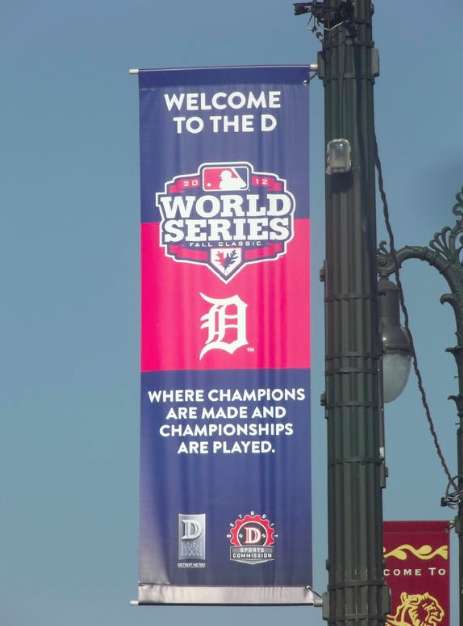
When the Detroit Tigers made it to the World Series in 2012, the Detroit Metro Convention & Visitors Bureau put up banners throughout the city like the one here:

Welcome to the D


Later, Detroit Metro used similar banners for the USA Volleyball Open National Championships.

So, Kassa sued. His complaint alleged that Detroit Metro infringed his trademark rights to the phrase “Welcome to the D” by displaying the banners around Detroit without his permission.

My guess is that Kassa doesn’t read DuetsBlog. If he did, he’d know about the dreaded D-word, and he’d have grasped the irony of trying to defend “Welcome to the D.” I don’t want to discourage musicians from registering trademarks, but what Kassa and other musicians fail to grasp is that just because they own some trademark rights to some words in connection with live music performance or clothing doesn’t mean that they own – and get to completely control – a part of the English language. Trademarked words or phrases can still be used by anyone, anywhere, in non-trademark ways to refer to their commonly understood descriptive meanings. It was therefore not surprising to learn that on December 9, the court dismissed Kassa’s case.

As the court explained:

If a defendant is not using a mark as an identifier, then the mark is being used in a ‘non-trademark way’ and trademark infringement laws, along with the eight-factor analysis, do not even apply.

The court went on to find that Detroit Metro did not use the phrase “Welcome to the D” to identify the source of any goods or services, but rather as a greeting to those arriving in Detroit. This conclusion was supported by the other logos on the banners and the inclusion of the phrase “Where Champions Are Made And Championships Are Played,” which established that “the “D” in “Welcome to the D” referred to a geographic location, “a purely descriptive reference” to Detroit. This type of greeting, the court held, is a non-trademark use.

The court didn’t stop there. Invoking the D-word a second time, the court held that Detroit Metro also prevailed on its affirmative defense of fair use. Fair use can be established whenever a mark is used descriptively in good faith:

In evaluating a defendant’s fair use defense, a court must consider whether the defendant has used the mark: (1) in its descriptive sense; and (2) in good faith. . . . [T]he holder of a trademark cannot prevent others from using the word that forms the trademark in its primary or descriptive sense.

This is true even if the mark is used in a commercial setting (thus implying use as a mark) where there may be some degree of consumer confusion; and as the court noted, it is a second and independent basis for defense against infringement. With these two grounds established, the court had little trouble dismissing Kassa’s complaint.

The outcome of the “Welcome to the D” case is not particularly surprising, but it does remind us how important the big D-word is in settling a trademark dispute. For that reason, it’s a great a case with a lesson that applies to more than just the over-reaching by some musicians.

Come to think of it, when the Big Game or the Big Dance roll around next, the phrase “Welcome to the D” may take on an even bigger meaning:

D_Fence

SilverPatron

When we write about non-traditional trademark enforcement here on DuetsBlog, we almost always are referring to the protection of non-traditional marks like product configurations, product containers, product packaging, color marks, scent marks, tactile marks, and other non-verbal indications of source for a product or service. But, today we’re adding a little twist to our normal discussion of non-traditional trademark enforcement.

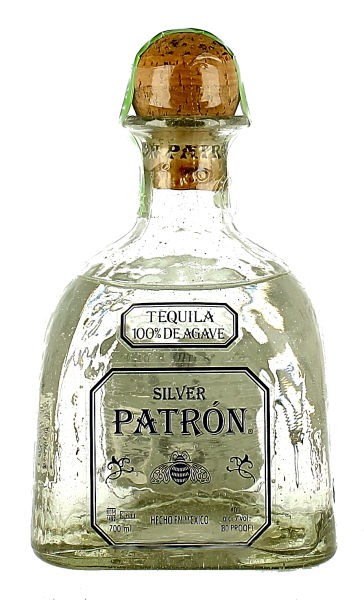
Last month, the PATRÓN tequila brand poured a non-traditional trademark enforcement action on the CASA NOBLE tequila brand, alleging likelihood of confusion and dilution of PATRÓN’s federally-registered and distinctive bottle design trademark. CASA NOBLE’s answer is due today.

Several aspects of this enforcement action are non-traditional, beyond the fact that PATRÓN seeks to enforce rights in its bottle design, i.e., a distinctive product container and a form of product packaging, that is by definition, a classic non-traditional trademark.

Given the variety of assertions mixed in by PATRÓN that go well beyond whether CASA NOBLE has the right to register a particular bottle design (apparently used in commerce since 2008), you’d think the action might have been filed in federal district court with claims of trademark infringement and dilution, unfair competition and passing off, instead of simply with the USPTO. Something tells me this action eventually will spill into federal court too.

PATRÓN is not only agitated and stirred by the shape of CASA NOBLE’s bottle, but it seeks to label CASA NOBLE with a questionable motive and intent, blending in allegations about trade dress, copying, passing off, use of a similar advertising slogan, and even unusual allegations about how CASA NOBLE’s parent hired PATRÓN’s previous advertising agency (Cramer-Krasselt), “because of its close familiarity with all aspects of the advertising and promotion of the PATRÓN brand” and who “had been charged with promoting the PATRÓN brand” until August 2014:

“Thus, by copying the famous PATRÓN Bottle Design Mark; adopting the slogan ‘Perfection,’ which is very similar to Patrón’s ‘Simply Perfect’ slogan and its senior use of ‘Perfection’; adopting the word ‘crystal’ in the face of Patrón’s senior use of that word; and hiring the same advertising agency that Patrón formerly used to advertise and promote its tequila, Applicant has engaged in a deliberate and willful strategy to pass off its tequila as being sponsored by, connected to, or associated with Patrón and the famous PATRÓN Tequila brand.”

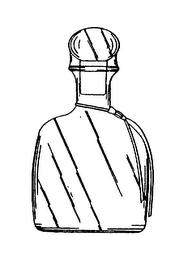
While I suppose much of this potentially could be generally relevant to the question of intent, in the likelihood of confusion analysis, it seems to go well beyond the basic question of whether Casa Noble’s application to federally register its bottle design on the right below is too close to PATRÓN’s federally-registered bottle design mark on the left:

Patron Bottle Design U.S. Reg. No. 2,147,067
Patron Bottle Design
U.S. Reg. No. 2,147,067
Casa Noble Bottle Serial No. 86/383,941
Casa Noble Bottle
Serial No. 86/383,941


Of course, strength and context will be important in answering that question; provided the samples of alternative and competing tequila bottle designs submitted by PATRÓN are truly representative of the range of designs available in the marketplace, CASA NOBLE will have some serious explaining to do when it comes to its own design choices:

TequilaBottlesTequilaBottlesMore

Nevertheless, if I were in CASA NOBLE’s camp, I’d be anxious to explore any design changes to the PATRÓN bottle over time — is it just me, or do you too have questions about whether the current SILVER PATRÓN bottle actually shows use of the mark as registered and appearing in the above drawing?

I’d also be pretty interested in whether PATRÓN is aware of any instances of actual confusion over the past seven years, presumably if any existed, they’d be referenced in the opposition.

And, if the CASA NOBLE first use date of 2008 is accurate, doesn’t that mean the allegedly infringing bottle was created at least six years before PATRÓN’s previous advertising agency was hired by CASA NOBLE?

No doubt, this will be an interesting one to sip on from time to time, any predictions on how long it stays in the USPTO?

PatronOpposition

Chipotle has certainly had a rough few weeks. With news of at least another 80 people sickened (apparently from a norovirus this time) after eating at a Boston area Chipotle (on top of at least 52 people in six states from E. coli), I can’t help but think of Jack in the Box.

Jack in the Box logo

For those of you who don’t remember, in 1993 an E. Coli outbreak at Jack in the Box restaurants sickened more than 700 people, resulted in the deaths of four children, and brought the company to the brink of bankruptcy. The damage to its brand was so extensive that the chain atrophied, shrinking from a national chain to regional one in the West (it’s birthplace). So intense was the media coverage and public fear that it forever imprinted “Jack in the Box = E. Coli” on my then 7 year old mind. I still haven’t eaten at one, though I don’t often have the opportunity as there aren’t any near me that I know of.

Of course, there are a few differences, not least of which is the size and severity of the outbreak(s). For one, the public had never really heard of E. coli until the Jack in the Box outbreak. The novelty of the bacteria and lack of understanding by the public probably hurt Jack in the Box more. There have also been a number of high profile outbreaks since then, making the topic at least more familiar to consumers now. Importantly though, Jack in the Box is, or at least was at the time, just like any other fast food joint. Chipotle, on the other hand, pioneered the “fast casual” concept and markets itself to health conscious people (1000 calorie burrito aside).

Chipotle Homepage

Chipotle touts its use of free range, locally sourced, non-GMO, fresh ingredients. While everyone is concerned about contaminated food, I can’t help but think this may cause more harm to Chipotle’s reputation than your average fast food chain. The drop in its stock price bolsters that view. On October 13 its shares closed at $750.42 and today are around $550. That’s an impressive drop in about 2 months time.

Food with Integrity

In some ways, Chipotle is a victim of its own success. Chipotle took a new concept and branded it brilliantly. Rapid growth is difficult to manage with a commitment to locally sourced, non-GMO, etc. foods. It had to set up numerous local relationships with producers that met their label criteria. These producers tend to be fairly small as well. This led to supply chain issues earlier this year resulting in Chipotle’s carnitas being pulled from the menu in many of its locations because some suppliers were not complying with the company’s animal welfare standards. All of these requirements, though noble, make it difficult to grow rapidly without some things falling through the cracks. With suppliers providing only a few of Chipotle’s ingredients, and at more local levels, Chipotle has to monitor far more sources.

Responsibly raising the bar

Though an outbreak of E. Coli linked to other fast food chains would hurt their sales, Jack in the Box is a testament to the fact that they can recover. The damage to most would be far less now that people have actually heard of E. Coli. Chipotle may have a tougher time of it though. I’m not suggesting it will fail. But it certainly is taking a hit. When you market yourself with the healthy food tags, you can’t expect to bounce back from an E. Coli outbreak as quickly as some of the less healthy, MSG soaked alternatives.

Perhaps they should add an E. Coli free tag to their advertising.

sipsmithWhen I was in London last month, I had the pleasure of meeting one of the owners of SIPSMITH® independent spirits. I had noticed the fabulous label on the gin with the swan’s neck pipe motif while dining at Berners Tavern in our hotel.

Being that trademarks are never far from my thoughts, I asked if the distillery had registered its fabulous name as a trademark. Of course, the savvy distillery had done so both in Europe (CTM E62511720) and in the United States (SIPSMITH® U.S. Reg. No. 3,858,977).

SIPSMITH® originated in 2009 with its mission to bring gin of uncompromising quality and character back to London. It has succeeded! The distillery’s Prudence is the first copper still to launch in London for nearly 200 years. She is the only one like it in the world. Her sister stills include Patience and Constance. I look forward to taking a tour next time I am in London.

prudenceIn keeping with the determination to protect its intellectual property, SIPSMITH® has a patented process for distilling its spirits. SIPSMITH® makes the spirits by hand in genuinely small batches. The process is described as old (two hundred years of London distilling history) meets the new.

SIPSMITH® also has a trademark for V.J.O.P.® (U.S. Reg. No. 4,816,021) which stands for A Very Junipery Over Proof gin. The Web site explains that the gin is a result of its own symphony in ‘J’ major.

SIPSMITH® might also consider (if it has not already done so) protecting its iconic “swan’s neck pipe motif above the still” with a trademark registration or copyright.

sipsmithlogoNot only does SIPSMITH® sell great spirits, but they also are bloggers.  We have a lot of fun at DuetsBlog and I am sure they also do at SIPSMITH blog.

As it is the holiday season, pick up a bottle of SIPSMITH® for your holiday parties or bring it as a hostess gift. Happy Holidays!

-Wes Anderson, Attorney

When a company puts “DISTINCTIVE” on its own packaging, its usually a sign that it highly values its trade dress and product configuration rights. That’s certainly the case for Pepperidge Farm and its Milano cookies.

The commercial bakery giant has taken aim at Trader Joe’s, the popular grocery chain, for selling house-branded “Crispy Cookies” that borrow a few design cues from Pepperidge Farm’s MILANO cookie, the oval-shaped cookies held together with chocolate filling. See for yourself:

cookies34325

Taking umbrage at Trader Joe’s rounded-rectangle sandwich cookies, Pepperidge Farm filed a complaint in the District of Connecticut, alleging trademark infringement and trademark dilution under the Lanham Act, common law, and Connecticut state law.

While Trader Joe’s isn’t using the MILANO name, it turns out Pepperidge Farm has a registration in hand for both MILANO the word mark and a separate registration for “a configuration of a cookie comprised of a filling sandwiched between two oval-shaped cookies.” The complaint makes reference to this as the “MILANO Configuration.” Obtaining such a registration can often be a significant undertaking, but Pepperidge Farm did not receive any functionality refusals and was able to show acquired distinctiveness in its cookie configuration.

cookie

And Pepperidge Farm’s complaint meticulously claims other elements of its packaging – a “fluted paper tray” to hold the cookies, and the use of vertical, rather than horizontal, packaging – as part of its overall trade dress that Trader Joe’s mimics.

A sidenote: though they are ostensibly “for adults,” I haven’t had MILANO cookies since childhood, and in my past trips to Trader Joe’s I never noticed they were selling a similar product. Unfortunately, in doing my due diligence for this blog post, I was informed that the local Trader Joe’s was all out of the Crispy Cookies – even in the back! Evidently, they are quite the popular item in St. Louis Park, Minnesota, or there is such a thing as a “cookie-litigation hold.” In any case, my would-be taste test was foiled. I regret the omission.

Back to the merits: a likelihood-of-confusion claim may be tough sledding for Pepperidge Farm. Trader Joe’s is known for filling its stores with its own private label products in its stores, and these products frequently borrow naming and design cues from more famous brand names. What’s more, the products do not appear side-by-side in the marketplace; Trader Joe’s products are sold only in their own stores — so you won’t find the offending treats sold alongside MILANO cookies at your more conventional big-chain grocery store. In essence, it’s hard to envision a consumer buying TJ’s cookies and having any confusion as to whether they come from or are affiliated with Pepperidge Farm.

On the other hand, Pepperidge Farm’s dilution claim may have considerable merit: a dilution claim does not require consumer confusion, only that the MILANO Configuration be deemed a “famous mark” and that Trader Joe’s similar cookie configuration is likely to diminish the distinctive quality of the MILANO Configuration.

Proving the fame of the MILANO Configuration may be the sticking point, and Pepperidge Farm will need to marshal a wealth of evidence to show third-party recognition of the cookies’ shape, configuration, and packaging. The Pepperidge Farm complaint does make some reference to this, stating “the MILANO® cookies are instantly recognizable and due to their popularity, have appeared in pop culture and TV shows like Frasier, Will and Grace, Seinfeld, and Two and-a Half Men.”

I’d be shocked if this clip from Family Guy didn’t make its way into the conversation, with references to the MILANO name, packaging, and cookie shape along with an irreverent reference to the old tagline “Pepperidge Farm Remembers”:

IMG_0518

Remember those sweet, warm New England summers? Remember sippin’ lemonade underneath a shady tree? Remember when you hit that pedestrian with your car at the crosswalk and then just drove away? Pepperidge Farm remembers. But Pepperidge Farm ain’t just going to keep it to Pepperidge Farm’s self free of charge. Maybe you go out and buy yourself some of these distinctive Milano cookies, maybe this whole thing just disappears.

So, armed with all this public recognition, will the MILANO Configuration reign supreme? I suspect Trader Joe’s might just have a different product on store shelves once they are back in stock at my local shop.

For those interested in learning more about the valuable benefits of federal trademark registration and how to successfully navigate the registration process at the USPTO, it’s time to mark your calendars for an upcoming educational opportunity in Minneapolis on Tuesday February 16, 2016.

Here is the official brochure for the event, here is an online link for information on how to register for this event, and a listing of the talented panel of speakers for the day.

Attendees of this live Minnesota Continuing Legal Education full day seminar will learn how to overcome a wide variety of grounds for refusal, benefit from strategies and valuable tips for handling ex parte appeals and requests for reconsideration, understand how TTAB proceedings can help a brand owner’s registration efforts, especially in light of the Supreme Court’s recent B&B Hardware decision, and receive valuable insights from former USPTO Examining Attorneys.

As an added bonus over the lunch hour, attendees will learn how to develop a reputation for thought leadership using various social media tools, as I moderate an engaging discussion with these social media mavens: Aaron Keller of Capsule, Shayla Stern of Fast Horse, Seth Leventhal of Minnesota Litigator, and last, but certainly not least, Ron Coleman of Likelihood of Confusion.

We’re counting the days, and we hope to see you there . . . .

Jason Voiovich, VP, Marketing, Analytics & Research Services, Logic PD

distinctive |disˈtiNGktiv|
adjective
characteristic of one person or thing, and so serving to distinguish it from others: juniper berries give gin its distinctive flavor.
– New Oxford American Dictionary

I hadn’t heard of kombucha, much less Certified Organic craft kombucha. (Somewhere, a hipster is crying for me.) I had to look it up. To the rest of you who are as new to this as I am, here’s what Wikipedia has to say:

“Kombucha refers to any of a variety of fermented, lightly effervescent sweetened black or green tea drinks that are commonly used as functional beverages for their unsubstantiated health benefits.”

If the last part of that statement seems a little like a backhanded compliment, you should see the Revision History on this Wikipedia article!

But I digress. I’m certainly not here to discuss the merits of drinking kombucha. However, as a matter of market positioning, the Barefoot brand of Certified Organic craft kombucha follows a familiar organic marketing playbook.

  • Play the healthful angle. Anecdotal evidence is just fine for this market. That said, Barefoot Bucha is much more careful than most others I see regarding the “unsubstantiated claims” issue.
  • Play up the “organic cred” of the founder or founders. In this case, Barefoot is the brainchild of husband-and-wife team Ethan and Kate Zuckerman.
  • Play the “mission” card. Barefoot claims to have saved over 350,000 bottles by insisting their customer refill versus bottle and ship. It’s an interesting business model and the logical foundation of their “Barefoot” brand name. The name implies a smaller “footprint” on the global ecosystem.

It’s that last part that gets them in trouble. Specifically, wine giant Ernest and Julio Gallo markets a Barefoot Wine. I’ll bet you’ve heard of those guys.

From a trademark perspective, is it a problem that a brand of organic fermented tea and a brand of fermented grape drink share a name? Gallo seems to think so, and has started the nastygram process.

To get a better sense of the legal issues involved, I recommend reading Lisa Provence’s C-VILLE Weekly column on the subject. Our own blogger extraordinaire Steve Baird gets extensive quote time in it. It’s a good read, a little over my head in a number of places, but it seems to come down to this: One person’s infringement is another person’s fair use. I’m certainly not qualified to offer an opinion on the legal merits. But the branding; that’s another story.

The trademark bullying issue is a red herring. Barefoot, as a brand name concept, sucks.

The “barefoot” concept relates to how the product is distributed and not what it is. That’s not necessarily a poor strategy if it wasn’t so easy to duplicate. There’s very little unique about their approach. In fact, asking your customers to refill containers is pretty common in the organic foods industry.

But more than an approach easily duplicated, the brand name itself contains a fatal flaw. Common words such as “barefoot” (by definition) are not distinctive. Before you trot out “Apple”, “Target” or “Delta” as counter examples to prove me wrong, consider that these brands are only seen as distinctive after they’ve spent literally billions of dollars in advertising over the course of multiple decades.

For a broader perspective, take a look at Interbrand’s ranking of the world’s top 100 brands. How many “common words” do you see? I’ll save you the trouble: No matter how you slice it, it’s always less than 10%.

As a smaller company, you simply can’t afford want to play those odds.

Using a common word simply isn’t memorable, and you need all the help you can get. Your objective with a brand name must be to choose one that your target audience will associate with nothing else.

I’m sorry, while it is certainly vitally important from a societal perspective, “making a smaller impact on the environment” is not exactly a unique value proposition at your average Whole Foods. It’s table stakes. It’s expected. It’s forgettable.

So here’s the situation: Barefoot Bucha’s small (but motivated!) group of fans and followers have taken social media to attempt to shame Gallo into backing down. Barefoot Bucha has righteousness on their side. Gallo has millions of dollars (and time) on theirs. The bad news for Barefoot Bucha? While one can certainly point to a few cases where public shaming has worked against a trademark bully, the vast majority of cases don’t turn out that way.

If it were me, I’d take advantage of the attention Barefoot Bucha is getting right now to kick start a rebranding effort.

P.S. Back in 2012, Sara Rufener and her brand “Live the Beauty of Being Strong” got the virtually the same smackdown from then-seemingly-good-guy Lance Armstrong and his Livestrong legal team. At that time, we wrote about how to use corporate judo to defeat the effort. But alas, he seems to have defeated himself. If you’re interested, have a read here.